Showing posts with label A Funny Thing Happened On The Way To The Game Store. Show all posts

Wednesday, August 13, 2014

[AFHOTWTTGS] Agents of Chaos

I haven't forgotten about the system review. It's coming, I swear. I'm just a bit busy this week, and my freelance work eats away at the same set of mental resources that are involved in learning/running/reviewing an RPG. In the meantime, have some sketchy ideas for villains.

Scribbling up ideas for an adventure in a location which affords at least two historical moments to faff around with - maybe three if we count the original entombment of the Silurians - has me thinking about time-travelling meta-villains, the guiding hand between three separate adventures in the same location; one for each system, almost.

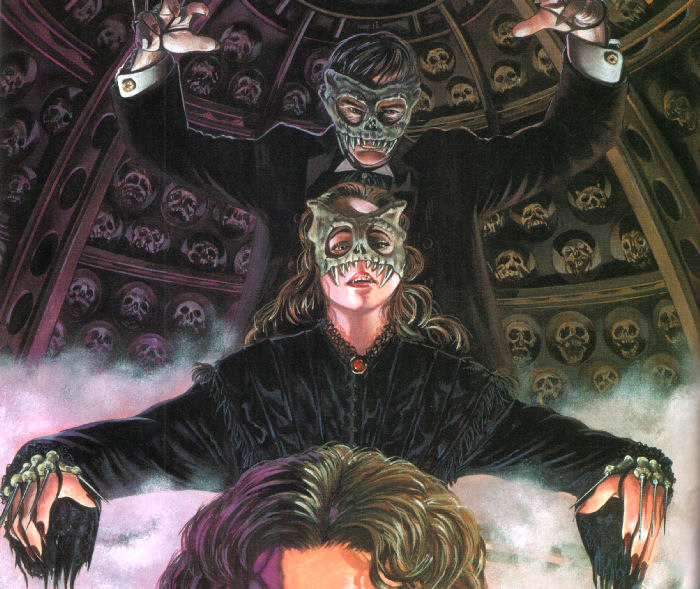
'Time travelling meta-villains', of course, gets me thinking about Faction Paradox. Who are Faction Paradox? I couldn't possibly comment on that, but if you want an immediate visual idea of what's going on with Faction Paradox, you could do worse than this:


Schemes layer upon schemes, strings tangle with strings. What is seen is seldom what is meant. There's an air of the macabre and theatrical about the whole business, and a distinct sense of the convoluted, and an investment in the history of a planet that will one day become their refuge.

Of particular interest, perhaps, is the idea of the eighteenth century; beginning with the end of the Restoration (a setting of history back on its proper track, perhaps) and the Enlightenment, and concluding with Revolutions (American, of course, and later French).

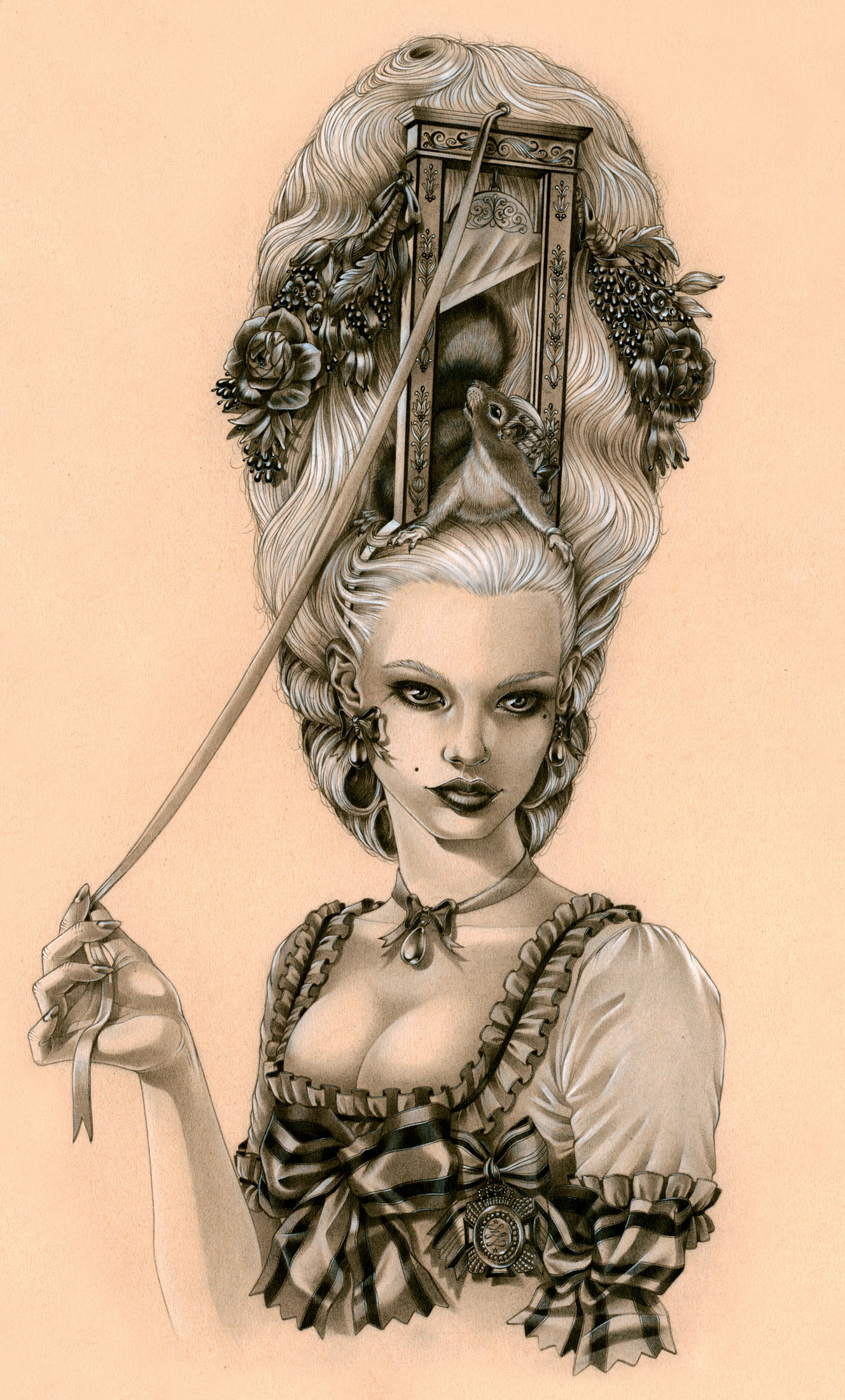
The French Revolution presents us with an archetype who easily slides into the Faction's conceptual armoury - I give you Madame Guillotine, ladies and gentlemen.

Image by Zoe Lacchei and used utterly without permission.
The flamboyant, elaborate costume needs but a demure little skull mask (opera-derived, anyone?) and she's ready to go; a charming murderess with the hint of a French accent. I'm not sure about the squirrel yet. It's probably a spy. Squirrels are beyond suspicion.

The other idea I've had knocking around for a Who antagonist, for the longest time, has been... well, again, you'll see.


The Plague Doctor; the mask is worn to prevent the ingestion of contaminated air, and the role is to intercede in outbreaks of the most fatal diseases. I see this one as a grand vizier figure; a power behind a throne, a necessary evil, a sort of Rasputin character. The presence of the Plague Doctor seems to grant unnaturally long life and great vitality, and his counsel verges on the omniscient.

Of course, neither of them fits remotely in the Middle Ages. Perhaps that's the point; wilful anachronism. Research continues, as does the process of statting this stuff up; it's useless unless it's rendered gameable, after all.

Wednesday, August 6, 2014

[AFHOTWTTGS] The Terror of Llanberis

For those not in the know, I've recently spent ten days on holiday, in the mist-wreathed mountainous wilderland of North Wales (and it made a lovely change from the sun-baked nightmare-scape that London becomes in the summertime, too). Leaving aside the part where I got engaged to the lovely and infinitely patient Hark (although that happened, and it was terribly cute, even the part where she headbutted me in the chest four times before she could say yes), I've also spent a good week of that time living in a Doctor Who serial - probably a Pertwee-era one, all location filming and quarries and stock footage of gorgeous Welsh scenery.

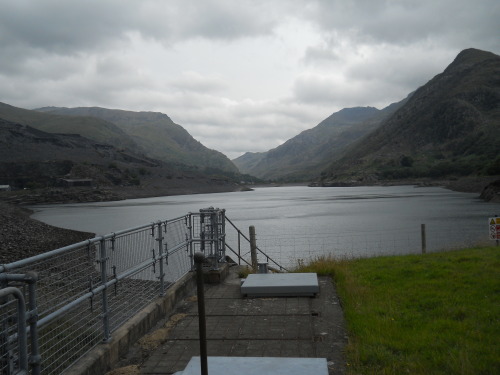
Don't believe me? Have a dekko at this lot.


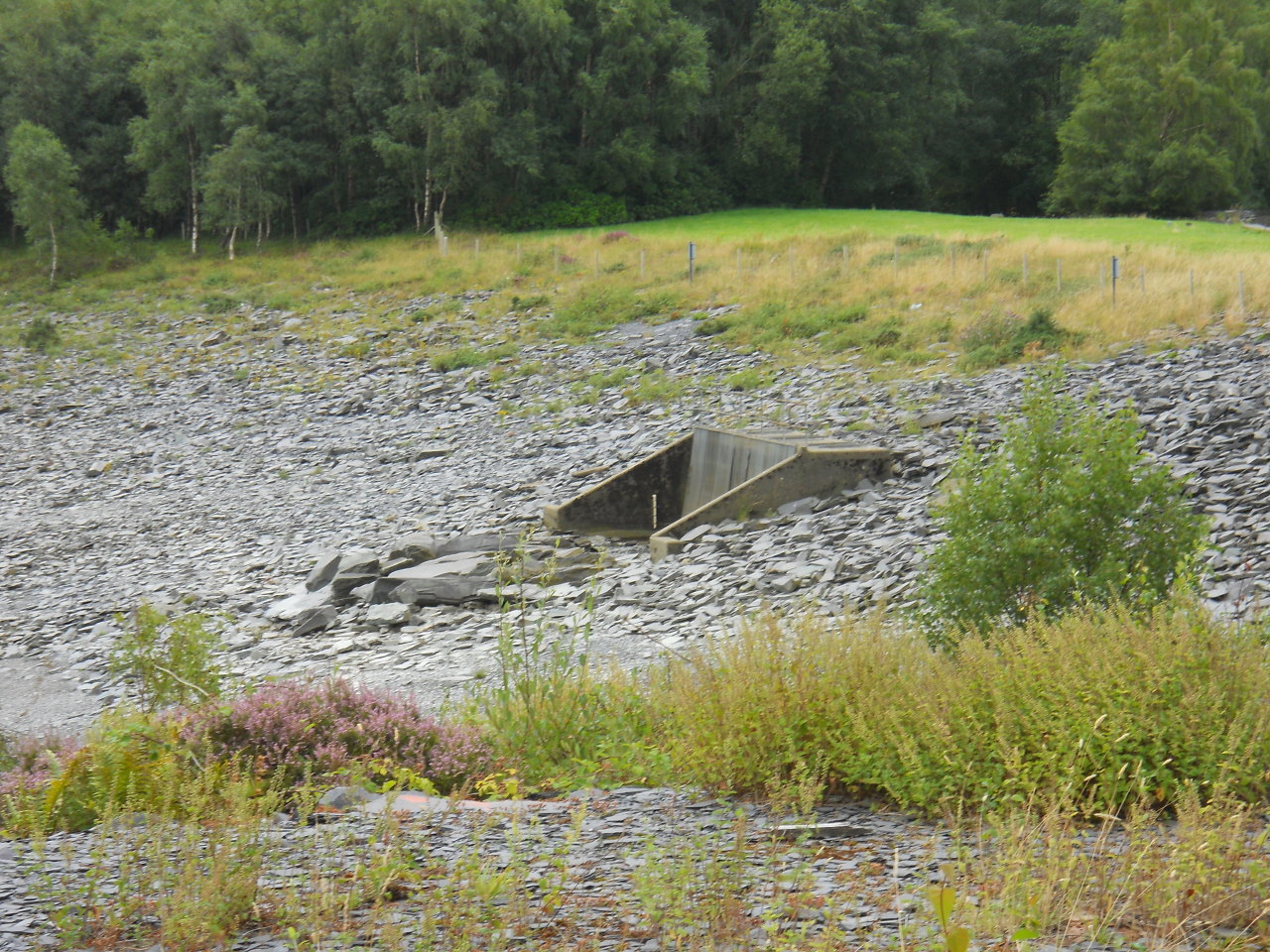
At the foot of Mt. Snowdon lies an ominous-looking artificial lake at the bottom of a foreboding slate valley. At the far end, if you squint, you can just about make out a small village; I'd check the name, but Google Maps is being an arse today and I didn't write it down. I know it's not Llanberis, because that's at the end where this photo was taken.


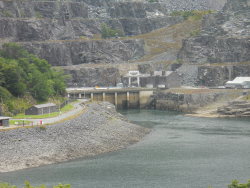
On one side of the reservoir, for such it be, we have the First Hydro power station. Lovely place to work, surrounded by glorious scenery and with the National Slate Museum just up the road. (Tell me you can't hear any companion of the last ever uttering the words "the National Slate Museum? Sounds fascinating" in tones of low dudgeon and great sarcasm. Except Barbara or Evelyn, who would pop inside quite cheerfully for a potter around and a nice cup of tea and doubtless discover a Clue there. If I were a cruel bastard, I might put a plot hook in there just to see if any Who RPG players would take the bullet. Your Call of Cthulhu group would be on that.)


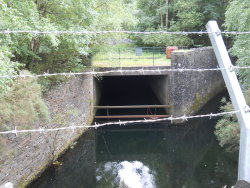
The beaches around the reservoir are honeycombed with these little outflow tunnels, some of which look like nobody's gone near them since they were dug. I wonder what might have burrowed its way into that network, or been inadvertently disturbed? Obviously, I default to Silurians, although Silurians in Wales has been done to frustrating effect by our Mr. Chibnall of contemporary Who fame. I welcome the nerd fight over which Silurians are best, given that either three-eyed heat-rayed weirdos or scaly Neve McIntosh are fine by me.


Overlooking the whole ensemble, you have Castell Dolbadarn, built by Llewelyn the Great in 1220, and final seat of the kingdom of Gwynedd before its conquest by the English (hawk, spit, up the Celtic Nations etc. etc.) Here's where you get your time travel on. Somehow, Dafydd ap Gruffydd, in the last years of Welsh independence, could well be swept up in one of those change-the-course-of-history plots; imagine if the English army had been broken by scaly wossnames from the deep, and the Welsh resistance aligned with its 'demonic' allies...

'liberated' from Dominic Self
Incidentally, the Monk is pulling my GM face. That said, I don't think this is a Monk story. It's more of a Faction Paradox plot... and if it is, I have just the agent for it. Stay tuned.


Wednesday, July 30, 2014

[AFHOTWTTGS] Doctor Who RPG Reviews

Every once in a while, the stars align and my nerd interests correlate in a moment of glorious synchronicity. Some kind-hearted soul saw fit to provide me with access to FASA's mid-Eighties Doctor Who RPG; like me, it was born during the terrible year of 1985, in which Colin Baker was taken off the air for perceived crimes against television (and one day, when I'm sufficiently drunk or cross, I shall regale you all with my explanation of how this accusation is both one hundred per cent true and absolute codswallop), and like me, it manages to combine a fundamental sense of elegance with a tendency toward rambling on unnecessarily.

I laid my paws on it at the implied request of a Mage player; we'll call this person Khaos, since all the cool kids use pseudonyms around here (I'm assuming Salem is either using a pseudonym or not cool). Khaos essentially wants to play a Time Lord, let's not mince words here, and their excitingly fizzy brain tends to disgorge thoughts about Doctor Who at roundabout the same rate as most people's autonomic functions. Anyway, the long and the short of it is that while Mage is still on the cards, the impression was given that a Who RPG would be a fitting follow-up... and so I promptly acquired the FASA book, had a read through, scratched my head, and looked up the other forms of roleplaying in the Whoniverse to see what they had to offer.

Over the next month I'll be talking about each of them in turn, and trying to playtest each one to boot. There'll doubtless be some dribble about the adventure design and GM style wrapped around it, but essentially we're looking at the system as a means of enabling a game. I might round up by cooing over some Doctor Who miniatures for those who like their square paper and playing with toys.

I'll also be eliciting input from my players, as is generally the way with my reviews. Khaos' comments will appear in Prydonian red; Erin's in Arcalian green; Hark's in the ghastly heliotrope of the Patrexes.

This post is going to serve as the index to the whole affair:

  • The Doctor Who Role Playing Game (FASA, 1985)
  • Time Lord (Virgin, 1991)
  • Doctor Who: Adventures in Time and Space (Cubicle 7, 2012)
  • Miniatures... if you like that sort of thing.
Forgive the slight brevity of this instalment; I'm on holiday and off the grid. Normal service will resume next Wednesday.

Wednesday, July 23, 2014

[AFHOTWTTGS] It's Constantinople, Not Istanbul

Since Erin's doing it, I thought it was high time that I raided the 'inspirations' file and showed off some of the things behind my long-serving Dark Ages Vampire game - the one into which I've put the most effort in terms of resourcing, showing-rather-than-describing.

The following are a series of pillagings from my various folders, which may illustrate something about how I devise and run my settings, or may just be an excuse to look at some pretty medieval (mostly) things. Who knows?


The chronicle (yeuch) began with the fall of Constantinople to the Fourth Crusade; theoretically that's twenty-five or so years before the setting date for Dark Ages Vampire, but screw that - why start after the world-shattering cock-up when you can drop players right into the middle of it, have them lose everything they hold dear, and then casually slide in with "oh by the way you're a vampire now"?


I'm a big fan of vaguely medieval maps, too, at least for showing to players. It's a gesture that has a certain verisimilitude about it - modern, Ordnance Survey style maps with grids and scales lead to a sort of modern way of thinking, whereas this kind of thing sort of... grounds people in the moment. This one creates the illusion of a crowded, crammed city, without being overburdened with details or crowding out the larger features (I can easily spot the Hagia Sophia, Hippodrome, Mese, Varangian Palace, dockmaster's mansion, Jewish and Latin quarters, and all the ways in or out - and that's all that's really needed).

I do use more modern ones with things like gradients and all the churches and distances staked out for planning - this one is the in-game resource. Among its other virtues, incidentally, is its resemblance to the hyper-detailed map from Sold Down The River, which is one of my favourite RPG supplements ever and one I wish I'd kept hold of during the Great Nerdstuff Purge of '08.


The refuge of Lacadaemonia. Just imagine that the land you can see in the background is water, and you'll get there. On this one small slice of land in the middle of the Med, Cainites are safe; they're not obliged to conceal their nature, and they're encouraged, nay instructed, to leave their politicking at the door, on pain of having a pair of Brujah jump up and down on their faces.


Sometimes, of course, the guest is a half-crazed Toreador Methuselah who's recently done diablerie par exellence, is also a closet infernalist, and who will not take "get out or be stomped" as an answer. Isabelle Adjani has exactly the right kind of haunted, fragile-yet-powerful beauty I wanted Mary the Black to have.

(Yes, she's a Toreador in my setting, because thirteen clans is quite enough and I prefer infernalism as a purely cultural practice. If this bothers you, I'm sorry. I also abolished the Ravnos because I hate Chimiestry... Chimerastry... that stupid reality-warping discipline. The Laibon are my thirteenth clan. I'm sure I've committed other blasphemies against canon at some stage.)


Varangian soldiers. Apparently there were, effectively, expatriate Vikings in Byzantium. I can roll with that. The Varangian Guard's keep in the north of the city is a desolate symbol of the Latin conquest, haven to a powerful Nosferatu, a resonant site for our Brujah (who's of Varangian descent himself) and will one day be the centre of resistance against the usurper Prince.


A view from the Med, on returning home from a subplot in Alexandria; a great city under a hunter's moon (yes, it is the moon; be quiet at the back there).

Wednesday, July 9, 2014

[AFTHOTWTTGS] Character Generation: the First Hurdle

I want you to imagine something for me, dear readers (both of you).

I want you to imagine, if you can, that you have no passionate interest in pretending to be an elf, or a vampire, or a space mercenary, or - le sigh - a squeaky cartoon pony. You're sort of aware that these things exist - you've seen The Hobbit or Only Lovers Left Alive or Guardians of the Galaxy (and as an aside, doesn't that look like a lovely little palate-cleanser? Also insert obvious commentary on bald blue space pirate Karen Gillan, "another sensual massage, Pirate Queen?", yadda yadda yah) or some resurrected apparently-for-children show which I honestly did try to watch once but didn't gel with me in the slightest.

(I'm not even joking. I'm sure that Friendship is, indeed, Magic, but when I say 'it physically hurt me to watch it', that's not fanboy rhetoric; I found the animation style and the sound of the theme music and the voices viscerally off in the same way that I find spoiled chicken not only inedible but repulsive - "do not put this in you, get this out of your environment". It's nothing personal, I swear. Anyway, back to RPGs.)

You might be interested in roleplaying because you have a slightly geekier friend who's into it, and you sort of like board games, and you figure it might or might not pass a few wet weekends in November, and so you agree to sit down and play for a bit - and someone hands you this piece of paper and the first thing you have to do when playing a game is, effectively, fill out an application form.

Think about it. You must fill in these boxes, declare these aspects of your 'self', complete the paperwork in order to start playing a game. I know board games have set-up time, some more so than others, but come on - filling out forms?

If I weren't already predisposed to roleplaying from having started shortly after my age hit double figures, i.e. before filling in application forms and doing sums and documenting my use of resources became the blight on my life that it is today, I wouldn't touch that shit with a standard-issue ten-foot pole. The first stage in playing an RPG is something which, to 'straight' adults, to adults not already locked into this stuff, is associated with work - often busywork, or the soul-sapping state of unemployment.

Over the years I've seen several ways of working around this big stick-in-the-craw opening... thing.

With my old Vampire group (which had a gamer or two, but where the common interest was 'theatre and art and stories and stuff about vampires' rather than 'playing games'), the workaround was to sell it as part of a theatrical process - you workshop the characters before you get into devising the story, and part of that is deciding what sort of person they are and what they can and can't do.

Quite often, the two-part nature of New World of Darkness gaming comes to my aid. Devise a human first, get a feel on a person you want to be, then play them for a bit, then apply your supernatural template. Yes, I'm aware that that might mean you don't get the full range of choice about where your Merits and freebie points and suchlike go, but we're talking about new players, and 'straights' to boot. I don't think optimisation is half the issue that entitlement and 'following the rules' are - again, the idea that the rules are guidelines and it's OK for only one person to know what's going on and you have to trust that person not to fuck you over just because are often quite challenging to people who are coming to these games in adulthood.

Sometimes, character generation is super-streamlined. Fighting Fantasy and Backsword and Buckler (my favourite of the OSR systems largely because its magic is elegant and low level and also because that whole Elizabethan-Lovecraft thing is very much my jam) both have character creation that can be over and done with in a few minutes per person. I like that.

What my mate Chris (who's a very good GM for someone who isn't me) does is to start you off in media res - you pick things like Nature/Demeanour, Virtue/Vice, race/class/alignment, and then accumulate your stats based on the choices you make during the first session. He drops you into a situation - someone's following you home - and if you whip round with a weapon in hand, he quietly assumes that combat will be your first recourse and advises you to put some points into combat stats and skills. If you turn and challenge them verbally, social stuff. If you try to lose them in the maze of streets, intellectual stuff. You get the idea. It works quite well, and it's my standard choice for experienced groups of roleplayers who know each other quite well...

... but right now, I'm gearing up to run Mage for a couple of journeyman tabletoppers, an experienced MMO-roleplayer who's never touched a d10 in her life, and a full-bore geek who, while roleplay-positive, is also quite difficult to focus and about as disinclined to paperwork as I am. Two pairs of players know each other well; I know all the players (one pair less well); we have no idea if we're going to get on as people who do a thing together.

For once, I'm feeling like the paperwork might be a blessing. It gives us a chance to sit around a table and get a feeling for the other players in the prospective group, become used to each other and comfortable with each other or at least over the initial awkwardness. And I suppose it gives me an idea for who their characters are, and what they're capable of, and what will be appropriate challenges for them (very important, I think, with Mage, where lacklustre adversary design results in something that can almost be handwaved away). Yet it still feels... dull, this asking people to fill out forms before they can play a game. You'd have trouble selling me on that, these days.

I'll let you know how it works out.

Wednesday, July 2, 2014

[AFHOTWTTGS] Apparently I'm An Elitist

These days, the majority of my roleplaying seems to be done through World of Warcraft. Since you're all readers of Erin's you'll have an inkling of how this works - or do I need to remind you about Silence Do-Good, hmm? People investing heavily into characterising their MMO characters, using the chatboxes and emote commands to form dialogue and describe actions beyond the game's purview, deploying its roll command to form primitive (or in some cases needlessly elaborate) rule sets (I'm not even joking - someone once ran one that was based on rolling prime numbers on a percentile die...).

From WoW-RP I have a) developed my distaste for mechanics that can't be subsumed into a single die roll, more or less, b) learned that in Sweden, roleplaying is apparently much more freeform and less concerned with making things 'fair' through elaborate granularity, and c) come to harbour some unbecoming thoughts about the imaginative limitations of my peers.

Now, let's establish something here; this isn't about smug superiority. This isn't me looking down from my ivory tower, scoffing at the peons scruffling in the dirt below: I have done all of the things I'm about to lambast in my time, when I was first starting out with tabletop and later with MMO roleplaying. This isn't an excuse for me to feel like I'm better than people, this is an excuse for me to pontificate about how our experiences of gaming define it.

In the comments to last week's post, Toastrider raised the very salient point that sometimes people limit the kinds of things they put in their RPGs, the kind of approaches they take in constructing and running their games - like Shiny and his creating a dungeon with only two monsters in it, for instance, or the RP event I went to last week which... well.

The actual roleplaying was limited to making speeches, listening to speeches, or rolling a d100 to see whether we'd have to type a miss, a hit that killed one goon, or two, or three - typage that went by in a flash, uncared for, as people just wanted to get to the next round. There were about twenty-five people there. There was a lot of speechmaking, and a charge into a fortress. There was a small army of goons inside and a big bad doing magic stuff while making more speeches. Someone lost their patience and charged the big bad, there was a huge magical kablammo with a 70% chance of scrobbling us on the spot, and that's about the time that I got bored, rejoiced at failing my roll, and just left quietly, thankful that the character I'd attended on was fairly disposable.

The thing is that it felt like raiding. Twenty-five people, someone losing their patience and getting us all killed, a lot of standing about listening to stock villain cliches and seeing reading descriptions of special effects extravaganzas... and I didn't even get any Valour Points for my trouble. If I'd wanted to raid I'd have queued for a raid; I'd expected my roleplaying time to offer me something that the game itself wouldn't. And... people liked it.

The more I think about it, the more I wonder if it isn't that people's expectations were formed by the medium - if roleplaying in an MMO has some, well, MMO-ish qualities. If you're exposed to this kind of experience over and over and over again, often before discovering the roleplaying element of the game, then maybe it's no surprise that you come to replicate it when you start to define your own narratives set in Azeroth. As far as you know, that's how the world works, right?

It's not like I'm having a go. I started off doing things like this. It was very much like the early tabletop RP I ran - GM-centric, preoccupied with d100 rolls, chiefly concerned with splatting dudes, and full of self-indulgent descriptions, although I like to think I offered people a bit more than "roll to see how many goblins you kill and describe it in a paragraph that nobody will bother to read because they've been waiting ten minutes to find out what they can do next." I just don't see how people can be content with doing that time after time. You... surely you might as well just raid?

Apparently, though, only elitists ask this sort of question. Le shrug.

Wednesday, June 25, 2014

[AFHOTWTTGS] Habits of the Pripyat Beast

Dr. Shiny gave me a buzz the other day and said:
Can I have some GM advice? I recently ran a Call of Cthulhu game set in Pripyat (with two Pripyat Beasts wandering around). The problem is, with such a large play area, there are too many places to run away and hide, and only so many times the creatures can randomly stumble over the player without it becoming ridiculous after a while. It was a really good game (and I really want to use Pripyat again), but how would you go about plausibly upping the risk of an encounter?
First things first: here's what he's on about.

-- art and text by Keith Robertson, Drawing and Painting the Undead. 
When the secondary nuclear reactor exploded, it spewed forth a torrent of radioactivity. The inhabitants of the surrounding towns survived just long enough to dig mass graves for their dead. The unprotected and ultimately doomed clean-up volunteer force sent a flurry of distress signals, reporting the emergence of jumbled beasts from underneath piles of bodies. These creatures, sickening amalgamations of people and livestock, varied in appearance.

So, basically, it's an eldritch horror spawned of radiation and Forces Unknown acting in terrible, unconscious concert to bring forth a shambling wossname that rends and devours the living.

So far, so good, and something I'd expect intelligent players to use the environment provided to avoid or defeat. It's a good monster. The problem, as I see it, Herr Doktor, is... well, in classical roleplaying terms, it's that you've built a city-sized dungeon and you've only put two encounters in it. You have a few choices.

First, and this is my least favourite one, you engineer the environment so that there are fewer ways to avoid your two Beasts. I always thought that part of the dungeon's popularity, as a setting for RPG events, was that it offered a way to keep things segregated and tidy and players moving along a general route between planned events - they could certainly move around them in a different order, revisit them, bypass them and generally subvert them, but they'd be interacting with the stuff you put in there because the space they're moving through doesn't really let them do much else. I don't like this sort of thing. Not letting people do things is not how I think RPG is formed. I also think it sits ill with the open-ness of the devastated cityscape; have you ever played through a computer game that won't let you go down side streets even though you can see them, right there?

Second, I suppose you could always just put more Beasts in. There were 50,000 people in Pripyat. How many of them died there? How many of them came back? In this case the horror of the game becomes much more conventional - "what happens if these things get out? look at the size of them! look at their claws!" Whether this one works or not is largely down to what you want your game to be About. If it's About managing, controlling, and otherwise limiting the actions of the Beasts, which pose a terrible threat to something-or-other, then having more than two Beasts seems sensible. But you only had two, which makes me wonder whether your game is About the Beasts at all...

Thirdly, and this is the one that I prefer, you refocus your expectations as a GM away from "the players encounter the Beast" and towards... something else. I usually go for "make players feel something" - not setting out with a specific something in mind, but always looking for ways that things can be turned up, so that whatever the players happen to be feeling can be intensified. I wouldn't set out with a theme and mood in mind for Pripyat - I'd set out thinking "what else can I put in this nuclear-blasted city besides the Beasts, and how can I make that into an encounter?" It does have to -be- an encounter - let's not have too many rooms containing a mysterious gewgaw that you either find or don't find and that's the end of it.

I think there have to be people - survivors. Survivalists, even. There are supposed to be 3,500 or so people still inside the irradiated area - those who couldn't or wouldn't leave. There's potential horror there. There could be living miners. Beast-hunters. Black marketeers, on the lookout for some tasty irradiated material. Tourists, if we're going to go a bit crazy - touring the scene, gravely assessing the devastation, and scooping up some decayed crystals to show Grandma when they get home. People who derive a certain illict thrill from being there. Perhaps someone like Elena, too, whether her story's true or not: a kind of adventurer, there for the same reason your PCs are there - whatever that is. Someone a bit more ambiguous - are they there because it's there, are they there because they want to feel all dangerous and free-spirited, are they there because someone has to see it and tell the world? They're not on the tour, that's for certain!

I'd treat it like a dungeon, or like a WoD city, rather than a narrative, in the way Call of Cthulhu scenarios tend to be devised. There always seems to be a sense of linear flow to the pre-written Cthulhu stuff - this happens, then this happens, the PCs need to go here and do this and then that and then the other before that happens or they all get eaten/driven mad by grobble monsters. I think it's something to do with the literary source of the game; there's a tendency to think about it as a related narrative, a kind of ghost walk, something which has its shape before the players come to it and which they explore rather than devise. What I'd be tempted to do would be to draw up a bunch of factions and NPCs - people who are all there, for whatever reason they're there - and let them react to the Beast and let the players react to them. In other words, don't make the game about the Beast, and don't get hung up if the players only encounter the thing once.


It's a big place. Put more stuff in it. If necessary, include a Quantum Beast - no matter where the players go or what the players do, they will encounter a Beast at a dramatically appropriate point. The important thing here is making sure that the players' choices continue to have an impact after the Beast has turned up; that the places they've gone and the people they've interacted with are affected by and affecting because of the Beast's appearance. It's not really about the monsters, after all. It's about the people who run from them.

Wednesday, June 18, 2014

[AFHOTWTTGS] The Tilean Rat

So, last week, during my unfortunate complete and utter failure to produce a few hundred words on the topic of RPGs, our gracious and currently absent hostess told you all about the Curse of 7th Seas.

I don't have a repeat offender game, as such, but I do have a few little stories that I want to get out of my system. I'm bound to refer to them again at some stage, so let's get 'em on paper (proverbially speaking) here and now.

First up, the Curious Case of the Tilean Rat.

While I was doing my MA, I had the strange hankering to a) introduce my beloved and saintly life-partner Hark to roleplaying and b) run some Warhammer Fantasy Role Play for the first time since high school.

Warhammer Fantasy Role Play, hence WFRP, was my formative RPG; though I technically came in with Advanced Fighting Fantasy and though in later years I became a World of Darkness man to the core, WFRP was the first game that I actually sat down to run with other people in more or less the manner that the developers intended. That game has a certain style associated with it; a sense of blackly comedic futility which merged seamlessly with the part of my brain that chain-binges Terry Pratchett novels and the tendency I have, as a GM, to create complex social and political situations, set the plates spinning, know what would happen if there were no PC wildcards involved, and then just... let things resolve themselves. Society as puzzle and interpersonal conflict as combat, in other words.

The threat of actual in-character violence is very strong, there's an undercurrent of it, but weapons are seldom drawn, mostly 'cause I've made it quite clear that I don't fudge; once you draw, it's you and your brains against the dice and the environment, and I'm a referee - I'm not here to be kind. Combat in my games is scary precisely because it doesn't happen often and someone usually comes very close to death. The consequences are genuine; killing someone who didn't deserve it will have repercussions even if you don't get knobbled while doing it.

The WFRP campaign was wildly improvisational; I had a pretty detailed mental map of Marienburg, a letter containing a dark ritual, half a dozen groups wanting to get their hands on it and, by the end of the first session, at least three inaccurate copies floating around the city, courtesy of appropriately paranoid player characters. It was, I thought, gravy all the way.

I didn't realise that one of the players was growing steadily more frustrated with the whole 'Maltese Falcon gone Warhammer' style until he lost his patience with a scribe they'd hired to translate the ritual and produce yet another dud copy and simply stabbed the guy. I was mildly flabberghasted. "You're... just going to kill him? In his office, in the middle of town, in mid-morning? You don't... think you might, y'know... that might have... consequences?"

That was the first time I've ever run face-first into such a clash of styles. In the past, I'd either taught the entire group to play, or I'd included enough action sequences to keep the variety fresh for the players who just wanted to smack things with their axes. It was the first time I'd had cause to actually think that I might not be GMing 'properly' for a given value thereof. It was not, however, the last.

Wednesday, June 4, 2014

[AFHOTWTTGS] Somwhat Overcast Sunday Teatime of the Soul

I'm flitting a lot, at the moment.

I can't seem to settle on a Project - by which I mean Game to Play, but you know how it is - if it isn't taken seriously and treated like work it feels like a waste of time, and if I'm just running something out of the box I generally feel bored and unfulfilled; I haven't really had to engage my mind and grapple with anything... but isn't that what a hobby is supposed to be? An opportunity to not do that? But don't I have an obligation to engage my mind and grapple with things if I'm not having cause to do that anywhere else in life? But doesn't that in turn mean that I should be doing something important and challenging and improving my life instead of faffing around playing wizard games?

You see what I mean? I'm asking too many questions instead of just doing things and having fun with them. Overanalysing. Fretting. Flitting. Doubting. Not actually doing things. Blogging about why I'm not actually doing things.

Not a good head-space to be in, especially over games - which, while they are part of 'real life' and don't let anyone tell you otherwise - are not ultimately going to put roofs over heads and potatoes in tummies, and are consequently Not Worth The Fuss in the first place.

Last week it was the IKRPG, this week it's D&D, next week it's Mage (although Mage is something actual people have expressed an interest in, so maybe I'll actually see that through - who knows?). All the verb-ing described above means there's not a lot of actual gaming going on in Von-town at the moment, and that's bad - but trying to get a game on the go results in more verb-ing.

It's probably a sign of underlying dissatisfaction with my life, manifesting itself in the harmless, consequence-less space of gaming (except it's not consequence-less, because real time and real money and real effort are invested in games and real fun is not a guaranteed output... you see?)

This is the sort of thinking that prompted me into Cognitive Behavioural Therapy so I could try to avoid it.

This is the sort of thing that prompts friends and guildmates and colleagues to say "just be spontaneous."

This is the sort of thing that leaves me out of pocket and out of time when I've been spontaneous and been disappointed.

This is the sort of thing that leads to whiny, self-indulgent blog posts like this one.

Maybe I need to browbeat someone else into GMing for me? Seeing other people do a crap job (by which I generally mean "running their game the way they want to and not the way I would") generally makes me want to outdo them.

Either way, talking about doing ain't the same as doing.

I'll be back when I have my head sorted out and my priorities straightened and some actual gaming on the go.

Wednesday, May 28, 2014

[AFHOTWTTGS] Kapt. Von vs. The Generic D&D Setting

"Look at us. We're an age so steeped in escapism that we manage to find mundanity in something that doesn't exist, and never will, no matter what your Otherkin friend might say. Why is it accepted fact that elves fire arrows and commune with trees? That was Tolkien's thing - without him, elves would just about be qualified to sell Rice Krispies - and he made dwarves all wear braids and beards and have battleaxes... Are we all but children, playing on the same swing set while J. R. R. is the grumpy dad watching from the park bench and trying not to get aroused?"
-- some other British beardy-weirdy gaming type who is funnier and more successful than me because he's into console gaming and yellow backgrounds

Libellous comments at the expense of Professor Tolkien aside, the man has a point. One of the things that's always ground my gears about D&D is the rather slavish adherence to Appendix N - and yes, yes, there's nothing inherently wrong with the four Tolkienan races, Vancian magic, stealing all your best lines from Robert E. Howard or any of the other flim-flam that fantasy indulges in. I can see the argument for them being the default choice for those players out there who are not in and of themselves predisposed to arguing about the novelty or otherwise of fantasy settings, for whom 'fantasy' is either Middle Earth or, I guess, in these modern times, Westeros.

(As an aside: I'll take a setting with politically interesting humans, ominous armies of undead or whatever amassing on the far side of a capital-W Wall built by our ancestors and patrolled by bastards of all stripes, and dragons that actually do things, thanks. Game of Thrones has a lot to answer for, not least the sudden rise of everyone sticking 'of House' between their characters' names and incompetently running political storylines all over my WoW-RP server... but Westeros itself has potential. ANYWAY.)

There's already quite enough buy-in crap with RPGs - a hobby where you have to fill out forms before you can participate is always going to impose buy-in problems, and if you have to recruit newbies as often as I do you become very, very good at streamlining that process of getting people into the game - without asking people to negotiate a quagmire full of unfamiliar choices. A player like this one is not going to have the patience to wade through your setting bible before they even choose who they want to be - hell, I'm not going to and I am naturally predisposed to playing these games.

'Elf', 'dwarf', 'orc' and - sigh - 'hobbit' have a certain cachet. They are recognisable: they are, as some smug bastard who nevertheless says halfway clever things about D&D now and then puts it, things you can refer to and generally expect people to recognise and have some idea about, regardless of what those people get up to at the weekend.

However. The new players I tend to recruit are people who already know Fantasy and are often in similar positions to me; they look at post-Tolkien generic 'elf' and 'dwarf' and bloody 'hobbit' as concepts, yawn hugely, and ask why we can't play Race for the Galaxy instead. Right now, as I snuffle around the prospect of doing a spot of D&D over the summer holidays, I find myself wondering about how to handle these core notions and the concept of buy-in. My instincts are pulling me every which way. My options, as I see it, are as follows.

  1. Roll with the generic D&D experience, regardless of my contempt for it, and save any bright-eyed ideas I might have about My Fantasy Setting for some more appropriate medium.
  2. Keep the elves and dwarves on board, mechanics unchanged, but alter their manifestations within the setting. My elves are urbanised and virtually extinct, bred in with humans (lots of half-elves), but pure-blood ones occasionally pop up as a kind of parasitic supra-aristocracy in 'high magic' parts of the setting, with playable ones being minor scions on some eldritch elf business of their own; my dwarves are heavy metal theocratic fascists who live in an infernal underworld, summon fire demon things to do their dirty work, and occasionally throw up someone who's not a complete gobshite and runs off to be an adventurer instead. My hobbits are absent without leave because this isn't Middle-Earth and I insist on drawing the line somewhere.
  3. Say 'sod the lot of them' and maybe allocate the same niches to things I find more interesting, or maybe not. Rakshasa are interesting; they wander into your reality from their own and act like they own the place. Goblins are interesting; the little blighters get everywhere and anyone who's seen and likes Labyrinth should see the merit in a playable one. Hamakai (vulture-headed geezers I might have stolen from Fighting Fantasy and who did something catastrophic and stupid to their civilisation a long time ago) are interesting. Even drow are quite interesting (matriarchal, highly stratified but still 'chaotic' society, murder as legitimate tool of advancement, deranged theocracy, slave-taking... I can work with that) and are more uniquely D&D than anything nicked from Tolkien. Humans are... not especially interesting but feel more or less mandatory so that there's something pretty familiar, something to contrast the fantasy elements against.
1 would be accessible and reassuringly 'this is the D&D thing I've always wanted to try' for the newbies' sake, 2 seems like an unfortunate compromise since the whole point of having elves and dwarves is that you know what they're like, and 3 is intrinsically cool but I worry about creating buy-in issues.

What would you do if you were me?

Wednesday, May 21, 2014

[AFHOTWTTGS] Iron Kingdoms: Three House Rules

Recently, I've been mulling over my experience with playtesting the Iron Kingdoms Role Playing Game, as reviewed on this very blog last month, and in my reflective trance I have hit upon a few things which I'd consider altering by default.

First up is 'Unconventional Warfare' - an Intellectual feat which enables the character to turn some aspect of the environment to their advantage, by spending a feat point and describing how they'll do it. This sort of thing is the behaviour I try to encourage in all my players - hell, it's the way most people with whom I play RPGs approach them by default - and having to tell the players who haven't picked Intellectuals and haven't chosen that feat that they're not allowed to be clever players because their character build doesn't include that sort of cleverness.

As far as I'm concerned, Unconventional Warfare should just be a part of the player character's armoury. I'll be keeping it as a Feat, in order to restrict it to player characters and important NPCs, and trusting the regular churn of feat points to keep up regardless. I suppose, for balance's sake, I should probably replace it with some extra doohickey for Intellectuals... perhaps a Moment of Genius feat which works like the Idea roll in Call of Cthulhu, to whit a 'reactivate the plot if the players get stuck' button?

Second up is an extra playable race. I'm a big fan of the Nightmare Empire of Cryx and quite a few of my players are big fans of the Satyxis - and why would you not be? I mean, look at 'em!


Fortunately, the Designated Monster Race here are in essence human; they just come with these rather fetching horn-like things. I'm thinking 'replace the free stat upgrade you get for picking Human with the Head-Butt ability, no prerequisites required'. That gives them their game effect - they nut you and you fall over - and the option to enhance that effect with extra STR and Unarmed Combat points.

And finally, there's the area of play. The notion of using squared or hex paper is nothing remotely new to RPGs, but to an RPG that's so heavily and directly derived from a wargame in which measurement - precise and frequently argued down to the micron - is so vital and failing to accurately calculate distances such a big deal, it's quite a fundamental shift.

The thing is, though this isn't Warmachine. We're not playing a competitive game. We're not standing here shaking our heads and going "well, that's your fault for not knowing exactly how far 9.5 inches is and no, I don't have to divulge my intent to stay out of that range, second-guessing me is part of being good at this game" - we're supposed to be having fun, making cool action-hero-movie-stuff happen, and I don't think that failing your charge move by a sixteenth of an inch is part of that. Sure, sometimes it's dramatic to break cover and be mown down in a hail of bullets... but not, I think, by accident, in some random combat where you just happened to eyeball a distance slightly less than perfectly.

Lest it be thought that I am in some way pledging allegiance to the church of story gaming, let me sliiide gracefully in here with a closing thought. As a GM, my personal principle is this: I am not trying to kill the PCs. I am not opposed to the players. I am simply a referee. I administer the operation of the game system on an environment which I designed - an environment in which, through recklessness, or ignorance, or overconfidence, or lack of awareness, players might get their characters killed. I am not of the opinion that players who have been cautious, informed themselves, selected their challenges carefully and paid attention to their surroundings should be fucked over just because they can't eyeball distances down to fractions of an inch, or roll more than two or three on a few dice.

Wednesday, May 14, 2014

[AFTHOTWTTGS] The Fantasy Encyclopaedia and the Taste of Crow

Recent events, with which I shall not bore you on this blog upon which I am a guest, have led me to look askance at my collections of various rules systems and ask myself "Self, dear boy, why when you espouse the virtues of this and that, do you persist in playing the other at great expense?", and do you know, I've come up flummoxed every time I grope and scrabble for an answer.

As a result, I've been perusing my various sources of campaign guidance; that's M. A. R. Barker's excellent essay on creating religions for fun and profit, the last half-dozen things I read*, a handful of rulebooks and the archives of Some King's Kent.

Whilst abiding by Kent's advice to simply cram everything in which you're interested into something of a potboiler and then sweat over it until it makes a sort of sense - it also worked for Alan Moore when he was working on V for Vendetta, apparently - I'm beginning to see why RPG writers take the approach they do, often beginning with the cosmology of the world if it's going to be anything unusual, and producing all those scads and scads of fantasy encyclopaedia text in which the world is given the depth and... not 'realism' as such, but verisimilitude, the sense that it's an actual living, breathing, inhabited, dynamic place rather than just a series of elements thinly nailed together to justify dungeons.

Not that there's anything wrong with the latter, of course - I've played enough Diablo in my time to accept that sometimes all you want to do is get down in the catacombs and bash some skellies - but the pretentious oaf and thwarted writer in me are both demanding a game world that's a bit more than that, and if truth be told, a bunch of mates gathered around the table for some skelly-bashing might as well just play Talisman or Descent or something of that ilk. I sort of feel like the RPG, as distinct from the board game, demands something that makes the R worth Ping, as it were - something engaging and broad.

None of this means that I'm going to go out and recant my convictions or anything. I'm still of the opinion that everything that's worth knowing about a game setting should be expressed in gameable terms. I am, however, seeing the merit in doing the fantasy encyclopaedia as a means of thinking the world out, of knowing it in the depth and detail necessary to answer player questions confidently and generate the world as a played space.

I'm still not sure that needs to be shared though. The thinking and world-building are, to me, essentially personal - they are Your Thoughts On Yaoi Everything, where You are The Master Of Games, and attempting to calcify them into a setting bible that I can pick up and run, void of the thought processes and interests that have made you make your world this way seems... somewhat doomed, to me.

It's the process that counts. I think that's what I want to see demonstrated. I want to see your setting and your gameables and your inspirations for them as a demonstration of how to build gameable worlds, rather than because I necessarily want to play in your gameable world.

That's what I'm gearing up to do.

* - This month's Appendix N contains Fight Club; Sharon Penman's The Queen's Man; E. R. Eddison's The Worm OuroborosMen At Arms; Michael Moorcock's The City in the Autumn Stars; and about a fifth of Yggdrasil and the Cross in the North, a non-fiction work on the Christianising of Scandinavia which I have to review at some point over the summer.

Wednesday, May 7, 2014

[AFHOTWTTGS] I Think I'm A Retroclone Now

Retroclone, n. Role-playing game derived from and imitating an out-of-production role-playing game of years gone by, with similar mechanics and stylistic goals. Particularly common among, though not exclusive to, Dungeons and Dragons players comprising the Old School Revival movement (OSR).

Whether the goal is to resist the pernicious rise of a new edition (see also: "D&D 4 sucks because it's like tabletop WoW!"*), to evoke the memories of one's youth (see also: "I've never enjoyed any game as much as second edition AD&D...") or to produce something mechanically recognisable that wears its influences on its shoulder but isn't coasting on the nostalgia factor (see also... ummm...), retrocloning is a part of the roleplaying world now.

I'm not here to give a potted history of the retroclone, because I'm not a D&D archivist and I'm bound to get it wrong, but to poke and prod at the concept itself. Retrocloning fascinates me, you see. Not being old enough to have played the Original Game - I came in at the tail end of AD&D second edition - I'm curious about this strange, hoary artifact which, despite not being especially well written, or organised, or presented, ensnared the hearts and minds of millions for a while.

Insofar as I can work out, the idea of the retroclone is to take the essential mechanics and spirit of one's preferred roleplaying experience, run them through the editorial wringer a few times, bolt on one's favoured house rules, and then release same as a self-contained RPG in its own right. It's generally done for the earliest editions of D&D, though there is of course the small matter of Pathfinder (which derives from the windy, bloated, quite-elegant-at-its-core-shame-they-didn't-know-when-to-STOP Third-And-One-Half edition, but which is shaped by the same principle - the refusal to put down something you like just because the 'official' variant has changed).

Critics of the retroclone are swift to point out that this is often an exercise in copying, pasting and selling the works of others to a niche market that still has echoes of the gift economy about it, and will consequently feel obliged to buy any old guff if it looks like Russ Nicholson did the cover art. This is not an inaccurate observation, I feel; the essential business of cloning an earlier edition of one's favourite RPG is the sort of thing which only really needs to be done once. I don't think the world needs OSRIC and Labryinth Lord and Lamentations of the Flame Princess and Swords and Wizardry and argh. Nope. 

In terms of gameable, a lot of these are... very similar concepts. The devil's in the details, as one might expect - personally, I quite like Lamentation's upgrade to a Renaissance setting, drift away from conventional 'monsters', arcane summoning mechanics and focus on 'gentleman adventurers' who have the independent means required to pursue shenanigans like these. I also quite like Swords and Wizardry's options for a second-edition style pseudo-THAC0 hit system, or a third-edition style armour-changes-how-high-you-need-to-roll one. I also quite like... you get the idea, I'm sure. There are good ideas scattered all over these things, but each is embedded in a self-contained product, and I can't help but feel that if the OSR didn't keep reinventing the wheel, it could be doing something significantly more useful than copying-and-pasting the AD&D or OD&D rules again.

What I'd like to see instead is modules - good ones, mind you, none of that "this room contains d6 rats and d100 copper piece" malarkey, I can invent boring rooms all day long, you know- and above all setting books. Dungeon Master's Guides. Volumes which tell me how to run a game like yours, what alterations you've made to the core rules and why. Exemplary materials, not yet another self-contained RPG distinct from all others but demonstrations of fantastic imagination and inventiveness.

I'm not saying that major alterations shouldn't be made to one's preferred rules system in order to achieve one's goals (I am, after all, the Disintegrator GM around here), but why bother copy-pasting the rest? State your core system of choice, state alterations with brief justification (friends don't let friends write like White Wolf developers), demonstrate through example materials (NPCs, encounters, short adventure paths, dungeon environments - samples of playable content!) how your setting works, chuck in a reading list, but don't waste your time and mine on telling me, yet again, how a Fighting Man works and how much his bardiche costs.

And for anyone who's wondering about me putting my money where my mouth is; I'll be doing it the second I decide what kind of D&D I want to run.

ETA: I'd like it noted that I'm not ignoring the comments, especially not just because they disagree with me. I love being disagreed with. What I don't love is Disqus (and IntenseDebate) both deciding to lock me out and trap me in endless login loops. If anyone has a suggestion to resolve this, leave it in the comments - pat on the back from me if it works!


* - which is ironic, to me, since the bits of World of Warcraft which vex me most are... the most D&D-ish bits - random loot tables, obligatory 'fantasy' races etc. etc.

Wednesday, April 30, 2014

[AFTHOTHWTTGS] The Bridge of Worlds

The Bridge Of Worlds

I've been a bit of a plum this week, folks.

Actual deadlines for things that have actual deadlines have snuck up on me, seething and roiling, and I need all the time I can scrape together in order to attend to those.

However, I don't want to go a week without offering a bone to the ravenous hounds of Erin's readership, so here's something I've been wanting to do something with ever since I found it.

My question: what would you do with this?


Wednesday, April 23, 2014

[AFHOTWTTGS] Playtest Review: Iron Kingdoms Role Playing Game

In theory, I should hate the IKRPG.

No, really. It's a three-hundred-page rulebook with great slabs of abilities, skills, spells and complicated item construction systems; it starts with a Fantasy Humanities Textbook and doesn't hit the gameables until a third of the way in; and, while it insists that it can be played without miniatures, it reads like such a straight upgrade of Warmachine/Hordes into a single-figure action-RPG that you'd probably be a bit mad to try it.

Then again, in theory, I should love the IKRPG.

I play Warmachine and Hordes - have done for eight years - and can generally be counted on to give Privateer Press the benefit of the doubt (not always: see also character upgrade kits, Colossals, and the increasingly transparent attempts to make No Quarter a must-buy). I owned (though never quite found time to play) the D&D 3.0 sourcebooks for the Iron Kingdoms and generally liked them (although I've never forgiven them for The Longest Night, 'that adventure where you follow a DM PC around for a three-day murder-tour of Corvis).

Since I enjoyed it from the player side of the screen (an unusual seat for myself) and since I know the rules and setting fairly well and it's been suggested that my ongoing attempts to teach new players might be enabled by working with something that's known rather than something I'm making up as I go along, on balance, I thought it might be worth a pop with my usual Dark Ages Vampire / Star Wars d20 rabble.

To start with, I decided to pre-build a batch of characters. Character generation is fairly fluid once you've gotten into it, but could really benefit from a Call of Cthulhu style walk-round-the-character-sheet summary/quick version. There's some information - the formulae for determining derived stats like Defence, Initiative and Willpower - that's only available on the character sheet, and some - the exact means by which the life spirals that chart one's damage taken are populated - that I managed to miss the first time round, although that one's more on me because I didn't think to look for something important in a sidebar.

A certain amount of flip-flopping's also involved, with every playable species and a couple of dozen careers receiving a full-page spread each (archetypes don't get a full-page spread, oddly), while gear and abilities and spells are all tucked away in their own section. It makes for a more fluid reference during play but, again, a double-page spread walking you through and showing page references for each section of the sheet wouldn't have gone amiss. That said, I had two starting non-spellcaster Heroes ready to go within forty-five minutes, and subsequent efforts have taken about fifteen minutes a shot.

Our first playtest involved a combat encounter, with Squirrel (Trollkin Mighty Duellist/Investigator) and Hark (Human Skilled Aristocrat/Pistoleer) as P.I. and client, looking for the Aristocrat's kidnapped sister in the back streets of Clocker's Cove, and encountering a Cephalyx and its handful of Drudges.

In their first fight with five Drudges and their totally-not-a-steampunk-Mind-Flayer Cephalyx master, the players gave a credible account of themselves, but were ultimately bogged down and overcome as they ran out of what we've variously been calling 'fate points', 'feat points', 'hero points' or 'magic beans'. My fault, as it happens; I'd built the Drudges like little PCs, with crap offensive stats but with full quota of wounds and decent ARM, as tough as a player. Turns out you're meant to give little baddies a 'vitality' track - the conventional five to eight boxes recognisable to Warmachine players - and save the spirals for important people.

We opted to play on; our heroes awoke strapped to crude operating tables in a burned-out building, with one box in each spiral and one magic bean left. This time, with only two Drudges (one badly wounded) and the Cephalyx to worry about, and some quick thinking by the players (environment play from Squirrel and the deployment of Social skills by Hark) the fight went much more in their favour. With its dying hiss, the Cephalyx informed its interrogators that it feared its allies more than death... and that its allies were death itself.

In many ways, these two are the perfect playtesters for a new system; they both have issues with crunch and sums, and they both have a distinct preference in terms of play (Squirrel likes violence and challenging-but-fair encounters, Hark likes silly voices and using everything on the character sheet). Here's what Hark had to say about the IKRPG:
I quite liked it. I think the fact that it was one character, that you're controlling one thing rather than half a dozen things, and that it's a bit more directed (because you're roleplaying, you have your GM refereeing and saying "well THIS happens"), made it better for me than Warmachine. It does have all those cool monsters, too, thanks to being a wargame as well... 
It's quite simple - just a handful of d6s. I like the boxes system of taking damage - it's quite a fun little mechanic, rolling to see where the damage goes and what it does to you when you get rid of all your Intellect or Physique or whatever. 
As one of those RPGs where you wander around looking for a fight it was definitely good - you could have an abstract wander mechanic and then focus in on the fighting. I'm not sure what it would be like if you were doing a more... Vampire-esque game. I'd quite like to try it with that, because there's some really cool stuff in the Iron Kingdoms and it'd be interesting to see and play through stuff like the religions and species, being slightly more developed than is usual in that sort of fantasy world. 
I'm not sure I could rank it compared to other systems - I haven't played with too many other GMs, and there definitely tends to be a 'Von game'. The short fight that we did... it was what it was. You gave your Cephalyx a funny voice, which was appreciated, but I wonder how much more depth you could give it. You could play in a bad one of those but you'd have to really try to mess up a one-shot fight... and I'm not sure how you'd differentiate a good one from an excellent one. I think the Iron Kingdoms has that Pratchettian flavour that you put into Vampire, so I suspect it'd fit very well with your style of GMing.
Thus emboldened, I decided to go for something a little more grandiose in our next session. Putting two and two together, our heroes twigged that the missing aristo-sprog had probably been swapped with Cryx, and that it was high time they set sail for Blackwater Port. Our second session would be a bit more of a challenge. I'd have a variable number of players - between three and six depending on who turned up - and, obviously, a larger group, requiring both more stuff to interact with and more dynamic environments so that the game didn't just become one smackfest after another.

I spent a couple of early mornings hunched over the core book, this time actually bothering to look up things like my Encounter Points budget. I quite like this mechanic: the GM can cross-reference the number of players with the amount of XP in the group and find the appropriate number of Encounter Points for a challenging punch-up; then, over the page, find the costs for Battle, Single-Career or Comprehensive NPCs with varying levels of experience under their belts.

There are also, as I discovered later, stats for many of the core models in the Privateer Press range, if not in the book then available for free download, with allotted EP costs for quick and easy setup. As a benchmark it's pretty neat, and the sliding scale means that a chap in my position can design tiers to an encounter by adding extra NPCs or minions who'll get involved if there are X number of players.

In our case, the Big Fight was with a Cryx warcaster (the signature spellcaster class of the Iron Kingdoms) - a top-end-of-Hero-level Comprehensive NPC with some military kit and a warjack (steam robot) of his own. He'd be sitting at 18 Encounter Points - challenging for a group of two, about right for three, relatively easy for four and a pushover for five or six.

I also statted up the Deathripper itself - if I had a six-player group to deal with the warjack would enter the fray alongside its owner - and the captive sister, who may or may not have gone willingly and may or may not step in on one side or the other, depending on how the final encounter went down. In the end, I made up a little spot system for tracking how she was likely to behave (blatantly stolen from the Fighting Fantasy book Night Dragon) and had that ticking over while the group - Ben's Dwarf Intellectual Explorer/Rifleman, Simon's Human Gifted Priest/Man-At-Arms and Squirrel piloting the Trollkin from before - explored Blackwater.

Mechanising all that took a while, so I ended up raiding the list of provided monsters for Thrall and Thrall Warrior stats, and bodging together a few Blighted Trollkin from their Warmachine profiles, plus a single-career Fell Caller NPC to lead them. What we'd be testing here was the system's ability to track and manage increasingly complex fights with a large group of players, without leaving anyone behind in a long, tedious turn sequence. Ben thought:
The system's simple. Once I understood what it could do, the interaction between DEF and ARM and how they differ, everything came down to one or two rolls. I like that everything uses a 2d6 roll - it makes for a very simple system where you're not going to need massive amounts of dice. The system doesn't hold things back, and it's generally very fluid, very streamlined. I can't really anticipate it grinding down into something like the AD&D "have you got the right feats, have you got this, have you got that, do we need the grapple rules, where are all the miscellaneous dice we need..." situations. 
Another thing I like: banter earns beans. Magic beans make the combat system tick, and as I belatedly realised shortly before Conry's death, a canny player spends them rapidly. Giving multiple ways to earn them back is a good idea and encourages their use - players don't get frugal or scared to spend them - but of the ways to earn them back I particularly like the 'make the GM laugh' option. It encourages people to have a fun time. 
As for the setting... when I start thinking of it as cartoony, things start fitting together a lot better. After long exposure to 40K, you show me any fantasy setting that isn't Tolkien and I reflexively go GRIMDARK - but that's just me as a player, not a criticism of the IKRPG. If I try to take Cryx seriously they're silly - they're trying too hard to be evil - but if you consider them as Saturday morning cartoon villains, they're still evil, they still have horrible plots and do nightmarish things, but the appearance of them doesn't make me shake my head sadly. 
I suspect that the final boss fight you gave us was possibly tougher than you anticipated - once Angus was down and I was badly injured, I was expecting a TPK any second. I also think the game's quite vulnerable to style clash - Simon and I are 'avoid combat' players, and Squirrel shuts down between his opportunities to hit something. That said, if I were about to restart my Star Wars game, I might look at the IKRPG and see if I can cannibalise bits of it for that - the warcaster rules would transfer quite nicely to Jedi, for instance, and it's really fluid. The mechanics of the game don't get in the way of the game, and I like that.
This session took a lot longer to get going, mostly because I insisted on roleplaying out the exploration of Blackwater, setting up possible fights that didn't turn into actual fights, and causing a few false starts. Once the violence actually got into the swing... well, we had fun, but it became clear that if I'm going to run the IKRPG I'm going to need some tighter encounter design than usual, and a very clear awareness of what rules are in play on both sides.

We ended up forgetting that Squirrel's character had Riposte, thus skipping a couple of crucial attacks on a bonejack that was able to zap Ben when it shouldn't have, and having to pull a couple of fiats (a very small cheat in my favour and a rather more significant OH LOOK A MIRACULOUS RESURRECTION in Simon's, which I felt much less bad about when I realised we'd also forgotten there was an incapacitation table) in order to see the fight through. I should also have designed the environments much more carefully, establishing how big they were and exactly where folks would be starting; I might even go so far as to flout the game's principles and use grid paper (yeah, so everyone gets to pre-measure, but life's more interesting when you don't have to guess).

Another major difference, in the cold light of dawn, was the approach I took to running the games. First time out, it was a railroad - "go here, fight this, wake up there, get out of this one somehow" - second time, I let the players investigate and poke their noses in and it all felt a little bit... directionless. The approach I might take to avoid this is something akin to Final Fantasy, or Diablo - something derived from computer gaming in much the same way as I've sometimes felt the parent wargame to be.

The Final Fantasies I've seen played have had that zoomed-out, slightly-abstract navigate-through-the-world interface for travel/exploration/lorehunting/social RP and then a zoom in and shift to much closer, arena-style turn-based combat, zooming out again when the fight is done. The Diablo I'm envisioning is III - continuous combat in a dynamic environment, with the occasional pause when a social NPC or a lore artifact is found, and the occasional longer break for plot and things.

Maybe the game needs a sandbox that's developed in advance, with the usual plot hooks and so on, or some sort of framework where people can be sent on missions and have information provided to them, or some very definite cause to operate under. I've been scoping out the rules for adventuring companies, and they definitely seem to have some promise in terms of getting the party together and on task. I'll test those out next time.

Bottom line: the IKRPG is what it is, and what it is is a combat engine which needs you to give it some purpose, and is probably more interesting for people who are already into the Kingdoms as a setting. It is, however, a damn good combat engine for a group that ain't too hot on maths and likes their fantasy to run on steam. I'll be running it again at some point.

The Fine Print


This work is licensed under a Creative Commons Attribution- Noncommercial- No Derivative Works 3.0 License.

Creative Commons License


Erin Palette is a participant in the Amazon Services LLC Associates Program, an affiliate advertising program designed to provide a means for sites to earn advertising fees by advertising and linking to amazon.com.