

Showing posts with label Silence Saga. Show all posts
Showing posts with label Silence Saga. Show all posts
Tuesday, January 10, 2012
The Face of Liberty
Courtesy of Anne Terres, talented artist and close friend of mine, is a beautiful rendition of the All-American Golem Girl, Silence Do-Good.
 She's lovely, Anne! Thank you so much. :D

 PDF
PDF

Tuesday, April 26, 2011
The Silence Saga
It's funny, really; I never intended for the story of Silence Do-Good's origin to be as long as it is. I figured I could tell her story in one post, maybe two if I got wordy, but the more I wrote the more I realized the sheer amount of history she was not only witness to, but also part of. The more I wrote, the more needed to be written. Frankly, I'm surprised I was able to stop at all.
I want to thank you for your interest in my centuries-spanning fictional biography, and for your patience in reading what felt like (to me, at least) something that would never end. Still, I did manage to finish it, which is a rare enough accomplishment for me, and I am justly proud of it.
I still worry that perhaps I made Silence a bit too Mary Sue-ish. If you agree, I can only apologize; I tried my damnedest to make her multi-faceted and interesting.
At any rate, the Silence Saga has its own page now, for ease of reading, and all entries in this blog have been made easily printable through a button at the bottom of each post. While the Saga itself is finished, I do intend to add to it, with art and addenda such as an "Official Handbook" version of Silence's powers and abilities.
I have every intention of returning to what I have begun calling "Poor Richard's Universe". Silence's tale may be told, but she has left an amazing legacy that deserves revisiting.
Thanks for reading, and don't shout in the library. ;)
PS: "El Capo" was Al Capone, which means that "Prohibitor and the Gangbusters" were Eliot Ness and his Untouchables. I'm surprised no one caught that.
I want to thank you for your interest in my centuries-spanning fictional biography, and for your patience in reading what felt like (to me, at least) something that would never end. Still, I did manage to finish it, which is a rare enough accomplishment for me, and I am justly proud of it.
I still worry that perhaps I made Silence a bit too Mary Sue-ish. If you agree, I can only apologize; I tried my damnedest to make her multi-faceted and interesting.
At any rate, the Silence Saga has its own page now, for ease of reading, and all entries in this blog have been made easily printable through a button at the bottom of each post. While the Saga itself is finished, I do intend to add to it, with art and addenda such as an "Official Handbook" version of Silence's powers and abilities.
I have every intention of returning to what I have begun calling "Poor Richard's Universe". Silence's tale may be told, but she has left an amazing legacy that deserves revisiting.
Thanks for reading, and don't shout in the library. ;)
PS: "El Capo" was Al Capone, which means that "Prohibitor and the Gangbusters" were Eliot Ness and his Untouchables. I'm surprised no one caught that.
Sunday, April 17, 2011
The Strange and Storied History of Silence Do-Good, part 9: The End
In the wake of her visit to the Senate (in what Chicago Tribune reporter Max Fairfield called "The Constitutional Clobbering"), Silence avoided politics* to concentrate on what she did best: Doing Good.
*With one exception: She became the figurehead for repealing prohibition, not only because she felt it would reduce crime but also because, according to her father, "Beer is proof that God loves us and wants us to be happy." However, her duties in this vein were limited to appearing at various functions and giving interviews; at no time did she engage in any active campaigning or politicking.
Without access to the government intelligence reports which had previously made her nearly omniscient, she was forced to take a different stance when it came to fighting crime. Her ability to act as role-model and figurehead was not lost upon her, and so she concentrated her efforts upon becoming the most effective symbol of justice and integrity possible. In this endeavor she was quite successful, and her popularity rose with her recognition. When she was not fighting crime, averting disasters, or rescuing people from harm (which she could do on a near-constant basis because as a construct she had no need for food or sleep), she was promoting patriotism, civic awareness, and the importance of selfless contribution to society.
She soon became the All-American Golem Girl, and the people loved her. One could hardly go a week without seeing her face on a magazine (she was especially beloved by The Saturday Evening Post and LIFE, appearing on their covers at least once a month), hearing her interviewed on the radio, or seeing young girls emulate her. In cities across the country, she was granted ceremonial keys and honorary police officer status; elementary schools and libraries were named in her honor. She frequently appeared at military and patriotic functions (had the USO existed at the time she would surely have been involved), and her 4th of July appearances in Boston, Washington D.C., and other Revolutionary War locations were the stuff of legend.
She was equally beloved by crime-fighters, who by this time had started organizing into groups that were part civic association, part fraternal order, and part neighborhood militia. Calling themselves "Silent Partnerships," they assembled to pool their resources and aid one another in taking down organized crime. In most of these organizations, Silence Do-Good was elected to an honorary position such as Sergeant-at-Arms or Chief Librarian. In this manner she became a constant but subtle reminder to "fight the good fight".
The rest of the 1920s passed without significant historical alteration. The Great Depression still happened, albeit slightly earlier due to the economic downturn of the First World War; similarly early was the repeal of prohibition. The 1930s, however, saw a booming population of costumed characters on both sides of the law. Inspired by the actions of El Capo, many criminals adopted fantastic aliases and outlandish costumes. Not only did this grant instant recognition and help quell resistance during the commission of their vile deeds, but it also allowed them to move freely among the population in their secret identities. Some of the more popular villains of the time included:
As this tide of villainy rose, so did the number of heroes who dedicated their lives to fighting it. The decade saw a change in heroes as well, as the original World War 1 veterans retired or died in the line of duty, and others --who had not been soldiers -- took their places. Some were stage magicians who used sleight of hand and the power of suggestion; others were scientists or mechanics who exploited the fringe ideas of the day to gain an upper hand. Gentleman adventurers and death-defiers replaced grizzled veterans; science and showmanship became the order of the day.
Silence, however, did not change one whit. Stoic as ever, she stayed the course, the only change in her life being what she did in her off-time. When not fighting super-villains, she was using her knowledge of agriculture and earth-moving abilities to combat the devastation of the Dust Bowl (a super-catastrophe if ever there was one) or planting trees alongside the Civilian Conservation Corps.

When a reporter asked her which task she thought was more important, she answered "That is like asking which is more important, water or shelter, when you are in the desert. Clearly a man needs both. Do not think that because I fight crime I am just a crime-fighter. I am the defender of this nation, and will do whatever is necessary to protect its present and safeguard its future."
Unfortunately, all of this changed in 1941.
On December 7, Imperial Japan declared war on the United States by bombing Pearl Harbor. Silence, through her magical connection to American soil, instantly knew of the attack the moment the bombs began detonating, and immediately transited to ground zero of the disaster. While unable to aid the burning ships along Battleship Row -- they were in the water, after all -- she was able to do something about the bombs still falling on the naval base. Assuming her Golem Form, she began extinguishing fires, shifting rubble, and swatting bombs out of the sky with her gigantic stone hammer.
Unfortunately, the Japanese were waiting for this exact event, because lingering high overhead was a dive bomber carrying an extraordinary payload. When it was reported that the American hero had arrived, this Aichi D3A began streaking towards it target: Silence Do-Good.
It detonated as she was directing the fall of a water tower towards an out-of-control fire. The experimental weapon -- designed by Nazi science, and built by the Japanese -- was specifically designed to destroy golems. It emitted an intense, high-frequency vibration which temporarily liquefied Silence Do-Good's armored form and melted the Jewish word "Emet" which, inscribed upon her brow, animated her and gave her life.
The magic disrupted, she dissolved into her component parts. A secondary charge obliterated them. Silence Do-Good, America's first super-hero, was dead.

It was well-known at the time that Silence Do-Good's strength came from her country, and Japan felt that link could work both ways: by destroying the beloved figure, the tragedy would compound the major tactical defeat, and America would be both weakened and demoralized.
They thought wrong. Americans were heartbroken at their loss, but also angered at her murder. As one people, they rose up to avenge her death. Costumed Crusaders enlisted alongside their civilian counterparts and were placed in elite, free-roving units as super-commandos. Their battle-cry of "Silent No More!" was heard on the battlefield as often as "Remember Pearl Harbor" and "Give 'em hell, boys!"
Surprisingly, it was during the Second World War that other super-powered individuals began to emerge. It is thought that, as the magic which animated her drained away, Silence's last remaining wish -- to protect the United States -- was absorbed by the earth of Hawai'i and transmitted across American soil, imparting a portion of that magic to all who would stand up and defend their country.
The first super-hero was dead, but the era of the super-human had begun.
This work is licensed under a Creative Commons Attribution- Noncommercial- No Derivative Works 3.0 License.

*With one exception: She became the figurehead for repealing prohibition, not only because she felt it would reduce crime but also because, according to her father, "Beer is proof that God loves us and wants us to be happy." However, her duties in this vein were limited to appearing at various functions and giving interviews; at no time did she engage in any active campaigning or politicking.
Without access to the government intelligence reports which had previously made her nearly omniscient, she was forced to take a different stance when it came to fighting crime. Her ability to act as role-model and figurehead was not lost upon her, and so she concentrated her efforts upon becoming the most effective symbol of justice and integrity possible. In this endeavor she was quite successful, and her popularity rose with her recognition. When she was not fighting crime, averting disasters, or rescuing people from harm (which she could do on a near-constant basis because as a construct she had no need for food or sleep), she was promoting patriotism, civic awareness, and the importance of selfless contribution to society.
She soon became the All-American Golem Girl, and the people loved her. One could hardly go a week without seeing her face on a magazine (she was especially beloved by The Saturday Evening Post and LIFE, appearing on their covers at least once a month), hearing her interviewed on the radio, or seeing young girls emulate her. In cities across the country, she was granted ceremonial keys and honorary police officer status; elementary schools and libraries were named in her honor. She frequently appeared at military and patriotic functions (had the USO existed at the time she would surely have been involved), and her 4th of July appearances in Boston, Washington D.C., and other Revolutionary War locations were the stuff of legend.
 |
In 1934 she even threw out the first pitch of the New York Giants' home opener. Needless to say, it made it across the plate. |
She was equally beloved by crime-fighters, who by this time had started organizing into groups that were part civic association, part fraternal order, and part neighborhood militia. Calling themselves "Silent Partnerships," they assembled to pool their resources and aid one another in taking down organized crime. In most of these organizations, Silence Do-Good was elected to an honorary position such as Sergeant-at-Arms or Chief Librarian. In this manner she became a constant but subtle reminder to "fight the good fight".
The rest of the 1920s passed without significant historical alteration. The Great Depression still happened, albeit slightly earlier due to the economic downturn of the First World War; similarly early was the repeal of prohibition. The 1930s, however, saw a booming population of costumed characters on both sides of the law. Inspired by the actions of El Capo, many criminals adopted fantastic aliases and outlandish costumes. Not only did this grant instant recognition and help quell resistance during the commission of their vile deeds, but it also allowed them to move freely among the population in their secret identities. Some of the more popular villains of the time included:
- The Jackrabbit
- Creepy
- Pretty Boy Blue
- Baby Faced Killer
- Machine Gunner (the Thompson SMG he carried was taken from the dead body of the youngest Callaghan brother, aka Pvt Quiet of the Quiet Men)
- Cache & Carrie
- The Owl
- Oklahoma Jack
- Blonde Tigress
- The Baron
- Mad Dog
As this tide of villainy rose, so did the number of heroes who dedicated their lives to fighting it. The decade saw a change in heroes as well, as the original World War 1 veterans retired or died in the line of duty, and others --who had not been soldiers -- took their places. Some were stage magicians who used sleight of hand and the power of suggestion; others were scientists or mechanics who exploited the fringe ideas of the day to gain an upper hand. Gentleman adventurers and death-defiers replaced grizzled veterans; science and showmanship became the order of the day.
Silence, however, did not change one whit. Stoic as ever, she stayed the course, the only change in her life being what she did in her off-time. When not fighting super-villains, she was using her knowledge of agriculture and earth-moving abilities to combat the devastation of the Dust Bowl (a super-catastrophe if ever there was one) or planting trees alongside the Civilian Conservation Corps.

When a reporter asked her which task she thought was more important, she answered "That is like asking which is more important, water or shelter, when you are in the desert. Clearly a man needs both. Do not think that because I fight crime I am just a crime-fighter. I am the defender of this nation, and will do whatever is necessary to protect its present and safeguard its future."
Unfortunately, all of this changed in 1941.
On December 7, Imperial Japan declared war on the United States by bombing Pearl Harbor. Silence, through her magical connection to American soil, instantly knew of the attack the moment the bombs began detonating, and immediately transited to ground zero of the disaster. While unable to aid the burning ships along Battleship Row -- they were in the water, after all -- she was able to do something about the bombs still falling on the naval base. Assuming her Golem Form, she began extinguishing fires, shifting rubble, and swatting bombs out of the sky with her gigantic stone hammer.
Unfortunately, the Japanese were waiting for this exact event, because lingering high overhead was a dive bomber carrying an extraordinary payload. When it was reported that the American hero had arrived, this Aichi D3A began streaking towards it target: Silence Do-Good.
It detonated as she was directing the fall of a water tower towards an out-of-control fire. The experimental weapon -- designed by Nazi science, and built by the Japanese -- was specifically designed to destroy golems. It emitted an intense, high-frequency vibration which temporarily liquefied Silence Do-Good's armored form and melted the Jewish word "Emet" which, inscribed upon her brow, animated her and gave her life.
The magic disrupted, she dissolved into her component parts. A secondary charge obliterated them. Silence Do-Good, America's first super-hero, was dead.
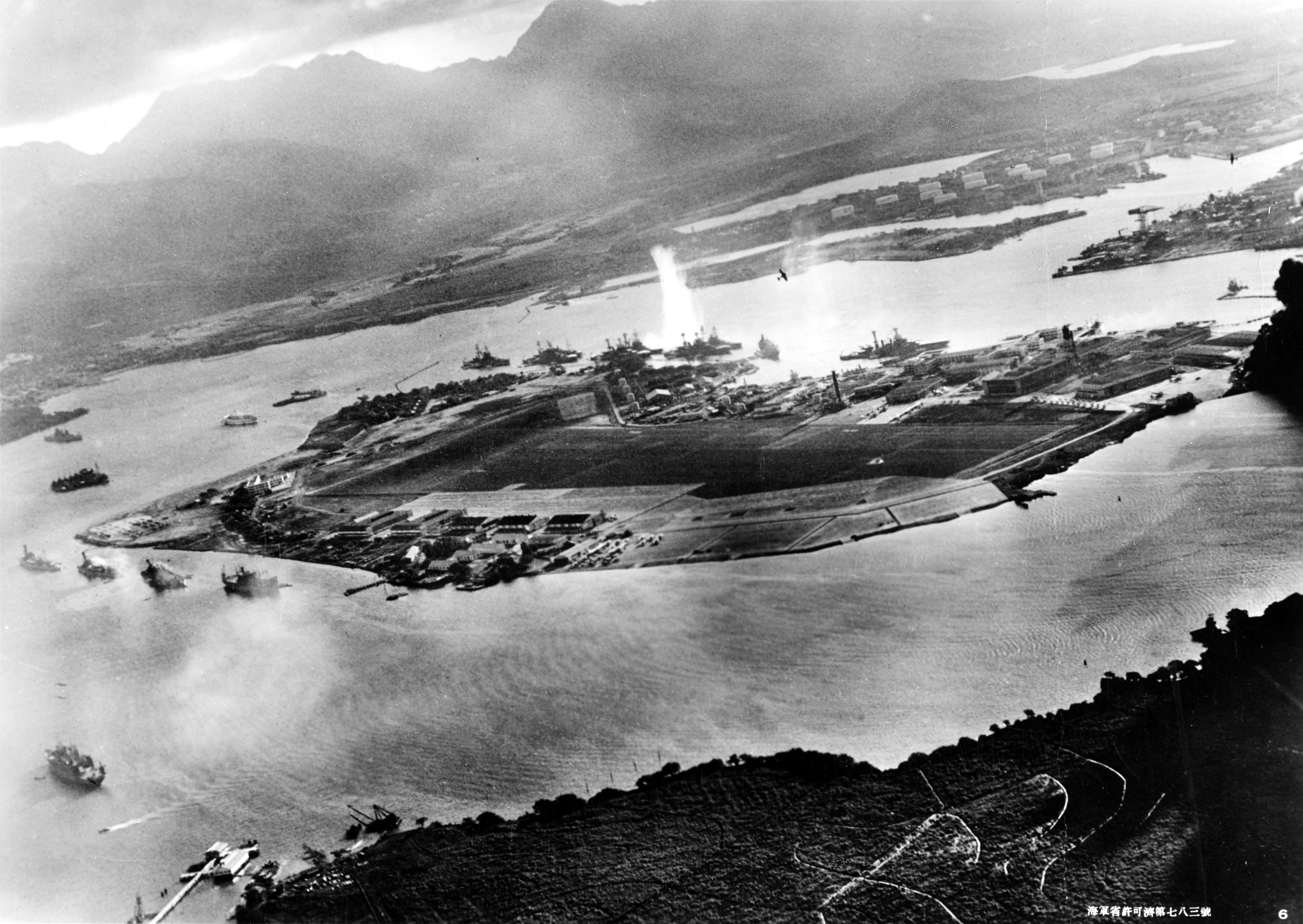
It was well-known at the time that Silence Do-Good's strength came from her country, and Japan felt that link could work both ways: by destroying the beloved figure, the tragedy would compound the major tactical defeat, and America would be both weakened and demoralized.
They thought wrong. Americans were heartbroken at their loss, but also angered at her murder. As one people, they rose up to avenge her death. Costumed Crusaders enlisted alongside their civilian counterparts and were placed in elite, free-roving units as super-commandos. Their battle-cry of "Silent No More!" was heard on the battlefield as often as "Remember Pearl Harbor" and "Give 'em hell, boys!"
Surprisingly, it was during the Second World War that other super-powered individuals began to emerge. It is thought that, as the magic which animated her drained away, Silence's last remaining wish -- to protect the United States -- was absorbed by the earth of Hawai'i and transmitted across American soil, imparting a portion of that magic to all who would stand up and defend their country.
The first super-hero was dead, but the era of the super-human had begun.
The character of Silence Do-Good is copyright Erin Palette 2011. All art in these sections is either public domain, or machinima from the City of Heroes MMO. I do not claim any ownership of art.
Tuesday, April 5, 2011
The Strange and Storied History of Silence Do-Good, part 8: The Golden Age
The 1920s were a Golden Age of heroism. Nicknamed "do-gooders" by the police because of the federal statute which authorized them, costumed crusaders became a fad of the day alongside flappers, flagpole-sitting, and hair bobbing.
The term was originally one of disdain and amusement (c.f. poseur), as many socialites found it fashionable to dabble in vigilantism, though for most their actions amounted to little more than dressing up outlandishly and performing highly-visible "patrols" (walking or driving slowly through town) or "steak-outs," where they would eat expensive dinners at outdoor tables while ostensibly keeping watch on frequently non-existent criminal enterprises across the street.

Ironically enough, there was a good chance of there actually being a speakeasy across the street. Sometimes the do-gooders were ignorant of this, but just as likely they knew about it and chose to do nothing. They were frequently used as lookouts and signposts ("Turn left at the dame in fuchsia") and in at least one instance they helped the patrons escape a police raid by having conveniently raided it themselves just moments prior.
Despite all this, however, there were crime-fighters who legitimately followed in the footsteps of Silence Do-Good. Although they were mostly men and former soldiers, more than a few women also took up her mantle. The more notable crime-fighters of the time were:

But where was Silence Do-Good during this time? Sadly, she had become ensnared in politics, beginning with a nearly immediate arrest by Federal Marshals after her interview with Max Fairfield was published. The charges were treason and dereliction of duty.
Perhaps "arrest" is an overstatement. While it is true that Marshals from the Chicago field office -- nearly the entire staff, in fact -- converged on the public library, where Silence was quietly reading, they did not accost her. To a man, they all removed their hats in deference to her and, in hushed and reverential tones, one of them asked her "Miss Do-Good, would you be so kind as to come with us, please?" She nodded politely and rose, another agent helping her with her chair. The word "arrest" was never used; guns were never drawn and handcuffs never shown, let alone used against her. She was treated as an honored guest, not a prisoner, riding in the passenger seat of a Marshal's car all the way back to Washington, D.C. and never once seeing the inside of any holding cell.
Part of this was purely practical. It was plain for all to see that shackles and bars wouldn't contain her, and she could leave any time she wanted, so manners held her more tightly than any restraints. But practicality could not account for the sheer deference she was shown, from the lowliest agent up to J. Edgar Hoover himself. As one man put it, "It was as if the Statue of Liberty herself had stepped down from her pedestal to walk among us. No proper man could fail to tip his hat and call her ma'am. I would sooner arrest my own sainted grandmother than put shackles on a living symbol of liberty like Miss Do-Good."
She was to be tried in Federal court, but that strategy fell apart the moment charges were filed. Silence knew American law -- indeed, she had been present for most of its creation -- and ran rings around the prosecutor. She could not be charged with dereliction of duty because she had never been properly employed by the Justice Department; she could not be charged with treason because she had never waged war upon the United States nor given aid and comfort to its enemies. The case was brought before the highest court in the land, but the Supreme Court refused to touch it; there was no basis for trial.

The government, intent on exerting its will and proving that it could force Silence to obey them, found themselves stymied. Eventually, they were able to subpoena her to appear before the Senate and compel her to explain how she could justify her actions.
"The Thirteenth Amendment," she declared, and left. No one dared stop her. That she was a person, free to do as she pleased within the confines of the law and not an object to be owned and controlled, had become blindingly self-evident with only those three words.
The "Do-Good Statute" was passed with only token opposition shortly afterwards.
Next: The End
*The name "Sweet Georgia Brawn" was created by Troy Hickman and is used with permission.
This work is licensed under a Creative Commons Attribution- Noncommercial- No Derivative Works 3.0 License.
The term was originally one of disdain and amusement (c.f. poseur), as many socialites found it fashionable to dabble in vigilantism, though for most their actions amounted to little more than dressing up outlandishly and performing highly-visible "patrols" (walking or driving slowly through town) or "steak-outs," where they would eat expensive dinners at outdoor tables while ostensibly keeping watch on frequently non-existent criminal enterprises across the street.

Ironically enough, there was a good chance of there actually being a speakeasy across the street. Sometimes the do-gooders were ignorant of this, but just as likely they knew about it and chose to do nothing. They were frequently used as lookouts and signposts ("Turn left at the dame in fuchsia") and in at least one instance they helped the patrons escape a police raid by having conveniently raided it themselves just moments prior.
Despite all this, however, there were crime-fighters who legitimately followed in the footsteps of Silence Do-Good. Although they were mostly men and former soldiers, more than a few women also took up her mantle. The more notable crime-fighters of the time were:
- the Quiet Men (Chicago) (later immortalized in a 1925 poem by T.S. Eliot)
- the Lamplighter (New York City)
- Goldengate (San Francisco)
- the Chartreuse Chanteuse (Lost Angeles, specifically Hollywood)
- Sweet Georgia Brawn* (Atlanta)
- Gateway Archer (St. Louis)
- the Philly Filly (Philadelphia)

But where was Silence Do-Good during this time? Sadly, she had become ensnared in politics, beginning with a nearly immediate arrest by Federal Marshals after her interview with Max Fairfield was published. The charges were treason and dereliction of duty.
Perhaps "arrest" is an overstatement. While it is true that Marshals from the Chicago field office -- nearly the entire staff, in fact -- converged on the public library, where Silence was quietly reading, they did not accost her. To a man, they all removed their hats in deference to her and, in hushed and reverential tones, one of them asked her "Miss Do-Good, would you be so kind as to come with us, please?" She nodded politely and rose, another agent helping her with her chair. The word "arrest" was never used; guns were never drawn and handcuffs never shown, let alone used against her. She was treated as an honored guest, not a prisoner, riding in the passenger seat of a Marshal's car all the way back to Washington, D.C. and never once seeing the inside of any holding cell.
Part of this was purely practical. It was plain for all to see that shackles and bars wouldn't contain her, and she could leave any time she wanted, so manners held her more tightly than any restraints. But practicality could not account for the sheer deference she was shown, from the lowliest agent up to J. Edgar Hoover himself. As one man put it, "It was as if the Statue of Liberty herself had stepped down from her pedestal to walk among us. No proper man could fail to tip his hat and call her ma'am. I would sooner arrest my own sainted grandmother than put shackles on a living symbol of liberty like Miss Do-Good."
She was to be tried in Federal court, but that strategy fell apart the moment charges were filed. Silence knew American law -- indeed, she had been present for most of its creation -- and ran rings around the prosecutor. She could not be charged with dereliction of duty because she had never been properly employed by the Justice Department; she could not be charged with treason because she had never waged war upon the United States nor given aid and comfort to its enemies. The case was brought before the highest court in the land, but the Supreme Court refused to touch it; there was no basis for trial.

The government, intent on exerting its will and proving that it could force Silence to obey them, found themselves stymied. Eventually, they were able to subpoena her to appear before the Senate and compel her to explain how she could justify her actions.
"The Thirteenth Amendment," she declared, and left. No one dared stop her. That she was a person, free to do as she pleased within the confines of the law and not an object to be owned and controlled, had become blindingly self-evident with only those three words.
The "Do-Good Statute" was passed with only token opposition shortly afterwards.
Next: The End
*The name "Sweet Georgia Brawn" was created by Troy Hickman and is used with permission.
The character of Silence Do-Good is copyright Erin Palette 2011. All art in these sections is either public domain, or machinima from the City of Heroes MMO. I do not claim any ownership of art.
Monday, March 21, 2011
The Strange and Storied History of Silence Do-Good, part 6: Rise of the Mystery Men
It is a sad irony of this timeline that even though the actions of Silence Do-Good made it a better world than our own, this very goodness made the awfulness of the First World War so much worse, if for no other reason than there was so much more to lose. And lose the world did: the Great War lasted until 1920, slaughtering nearly an entire generation of European men and hastening the economic downfall of the United States.
Upon the surrender of the Mexican government in August 1920, Silence was classified as a strategic asset and recalled to Washington D.C. where, pending future conflicts, she would remain hidden. Mothballed until the next war, she was once again relegated to analysis of intelligence data, this time on behalf of the Departments of State, Justice, and War in the hope that her superior abilities of cognition and memory would be able to predict and prevent another such conflict. Ever the dutiful daughter, Silence complied, but even though she had been put into deep storage as a secret weapon, her actions during the Great War would have lasting repercussions.
As American soldiers returned home from the Mexican Front, they found a different world than one they had left. Many of them suffered from shell-shock, as post-traumatic stress disorder was known, and had turned to alcohol to deaden their pain even while still at war. These same men, who had fought and bled for their country, were not only able to properly reintegrate into society, but also forbidden the solace of drunkenness by that selfsame society (ironically, it was the high alcoholism of injured and discharged soldiers, and the drunken disturbances they caused, that was one of the contributing factors for Prohibition in the first place).
In addition, the streets were no longer safe. Moonshiners and bootleggers rose to fill the gap in the black market. Organized crime was on the rise, as was petty violence. And above it all rose the spectre of depression, looming just over the horizon, fueling desperate notions of theft and fraud.

Some of these former soldiers fell into a dissolute lifestyle as petty criminals or hired muscle for organized crime. Some just tried to adapt as best they could to a world that had changed without them. But a very select few knew what had to be done, and possessed both the courage and the ability to make those changes.
The War Department had been able to censor letters and reports mentioning Silence Do-Good, but silencing the hundreds of men who had served under and fought beside her in her role as Col. Cudgel was impossible. They knew what a living force of liberty could do, having seen greatness firsthand. She was an inspiration to them, a role-model, a symbol more powerful than the Statue of Liberty because she was a real person. Silence Do-Good had moved among them, talked with them, led them and cared for them. She had sheltered them from harm and cried for their losses. She was symbol, mother, and country all rolled into one, and in true fulfillment of Benjamin Franklin's dream, many men decided that no, their term of service had not ended; it had in fact only begun. They took their Colt pistols or Springfield rifles or Thompson submachineguns out of their closets, turned up the collars on their trenchcoats, put their fedoras low on their heads, and went out into the world to make Mama Silence proud.
They began operating small-scale at first, cleaning up their neighborhoods of criminals and ne'er-do-wells. Some worked in pairs, and in Chicago the legendary "Quiet Men" were a group of three brothers, but for the most part they were solo. Some took jobs as police officers or private detectives to pay the bills and give them better crime-fighting tools, but at least one cavalry officer was from a rich family and could dedicate his life to his newest passion.
Their early work was often indistinguishable from gangland warfare, because they were soldiers first and foremost; they knew how to kill, brutally and effectively. This had the unfortunate side-effect of escalation of force, as organized crime responded to what it thought was another group muscling in on its turf. The death toll rose, as did collateral damage.
But all of this changed on November 15th, 1920. With her access to FBI reports and her powers of earth perception, Silence knew that another war was about to erupt in America -- a gang war that would engulf entire cities. She knew that some of "her boys" were responsible, and acting in emulation of her ideals. But they were soldiers, and their actions were only making things worse. They needed a leader. They needed her.
And on that cold day in November, for the first time in her life, Silence Do-Good disobeyed orders.

Next: Costumed Crusaders
This work is licensed under a Creative Commons Attribution- Noncommercial- No Derivative Works 3.0 License.
Upon the surrender of the Mexican government in August 1920, Silence was classified as a strategic asset and recalled to Washington D.C. where, pending future conflicts, she would remain hidden. Mothballed until the next war, she was once again relegated to analysis of intelligence data, this time on behalf of the Departments of State, Justice, and War in the hope that her superior abilities of cognition and memory would be able to predict and prevent another such conflict. Ever the dutiful daughter, Silence complied, but even though she had been put into deep storage as a secret weapon, her actions during the Great War would have lasting repercussions.
As American soldiers returned home from the Mexican Front, they found a different world than one they had left. Many of them suffered from shell-shock, as post-traumatic stress disorder was known, and had turned to alcohol to deaden their pain even while still at war. These same men, who had fought and bled for their country, were not only able to properly reintegrate into society, but also forbidden the solace of drunkenness by that selfsame society (ironically, it was the high alcoholism of injured and discharged soldiers, and the drunken disturbances they caused, that was one of the contributing factors for Prohibition in the first place).
In addition, the streets were no longer safe. Moonshiners and bootleggers rose to fill the gap in the black market. Organized crime was on the rise, as was petty violence. And above it all rose the spectre of depression, looming just over the horizon, fueling desperate notions of theft and fraud.

Some of these former soldiers fell into a dissolute lifestyle as petty criminals or hired muscle for organized crime. Some just tried to adapt as best they could to a world that had changed without them. But a very select few knew what had to be done, and possessed both the courage and the ability to make those changes.
The War Department had been able to censor letters and reports mentioning Silence Do-Good, but silencing the hundreds of men who had served under and fought beside her in her role as Col. Cudgel was impossible. They knew what a living force of liberty could do, having seen greatness firsthand. She was an inspiration to them, a role-model, a symbol more powerful than the Statue of Liberty because she was a real person. Silence Do-Good had moved among them, talked with them, led them and cared for them. She had sheltered them from harm and cried for their losses. She was symbol, mother, and country all rolled into one, and in true fulfillment of Benjamin Franklin's dream, many men decided that no, their term of service had not ended; it had in fact only begun. They took their Colt pistols or Springfield rifles or Thompson submachineguns out of their closets, turned up the collars on their trenchcoats, put their fedoras low on their heads, and went out into the world to make Mama Silence proud.
They began operating small-scale at first, cleaning up their neighborhoods of criminals and ne'er-do-wells. Some worked in pairs, and in Chicago the legendary "Quiet Men" were a group of three brothers, but for the most part they were solo. Some took jobs as police officers or private detectives to pay the bills and give them better crime-fighting tools, but at least one cavalry officer was from a rich family and could dedicate his life to his newest passion.
Their early work was often indistinguishable from gangland warfare, because they were soldiers first and foremost; they knew how to kill, brutally and effectively. This had the unfortunate side-effect of escalation of force, as organized crime responded to what it thought was another group muscling in on its turf. The death toll rose, as did collateral damage.
But all of this changed on November 15th, 1920. With her access to FBI reports and her powers of earth perception, Silence knew that another war was about to erupt in America -- a gang war that would engulf entire cities. She knew that some of "her boys" were responsible, and acting in emulation of her ideals. But they were soldiers, and their actions were only making things worse. They needed a leader. They needed her.
And on that cold day in November, for the first time in her life, Silence Do-Good disobeyed orders.

Next: Costumed Crusaders
The character of Silence Do-Good is copyright Erin Palette 2011. All art in these sections is either public domain, or machinima from the City of Heroes MMO. I do not claim any ownership of art.
Wednesday, March 16, 2011
The Strange and Storied History of Silence Do-Good, part 5: All Silent on the Mexican Front
It is beyond the scope of this article to give an exhaustive account of the military operations that occurred along the American Front of World War 1. It is hoped that an overview of Silence Do-Good's actions within the Mexican Theatre, along with excerpts from her journals, will give a sense of the flow of history. Further study is left as an exercise for the interested reader.
It is of interest to note that it was not the Secret Service, but rather the War Department censors, who kept her identity hidden from the public. Official dispatches and personal letters home, from enlisted to officer, were scrutinized and all references to Silence -- including use of her powers, or even errant uses of the pronoun "she" when referring to Col. Cudgel, were redacted.
This secrecy proved rather difficult to implement after the war, as demobilized soldiers could not be prevented from talking. But that is a dilemma for a later time...
The following are excerpts from correspondence and reports throughout the campaign.
Sadly, this is the last existing journal entry, as Silence started a new diary soon thereafter, which was subsequently lost during the campaign. Here is a brief timeline of the war:
June 21, 1916: An exceptionally bloody battle is fought between Mexican and American forces in the town of Carrizal. The "Massacarizal," as it became known by the journalists of the day, helps fuel anti-American sentiment. Germany expresses its support for Mexico and begins openly supplying military advisors and ammunition, including poison gas.
September 25, 1916: Commencement of Operation Valence begins. It is a three-pronged assault designed to penetrate deeply into the heart of Mexico while simultaneously denying it critical resources.
October 1916 - May 1920: This has been dubbed "The Great Southward Slouch" due to the speed at which the American forces made progress. To illustrate the fatigue in this campaign, imagine every World War 1 movie you have ever seen, with the trenches and barbed wire and machine guns and huge lumbering tanks and useless cavalry and endless artillery barrages and liberal use of poison gas. Now add to that having to fight through the tropical heat, with fatigue born from desert dehydration and jungle rot. Now add to THAT the extreme population density of central Mexico, specifically around the capital, and realize that before you can take the city you have to do something about all the people, because you don't want to kill civilians. If you let them go, they could escape behind your supply lines and wage guerrilla war upon your rear-echelon elements, but if you bottle them up then you are just increasing the density of defenders around your final goal.
May 18th, 1920: The Siege of Mexico City. Exhausted by the Southward Slouch, supply lines stretched to bursting, the American forces decide to simply dig in around the capital and let the punishing summer heat take its toll upon the natives.
August 8, 1920: The population of the city rioting due to lack of water, the nation of Mexico surrenders. Wilson does not demand land concessions or reparations, and seeks only a stronger and more formalized border between the U.S. and Mexico. This is due largely to the fact that the economies of both nations are nearly in ruins, and more territory for the U.S. would result in more citizens to feed and clothe and more infrastructure to repair. The only exception to this is a large U.S. Naval base permanently stationed at Veracruz. General Arámbula is imprisoned here, where he is tried for war crimes. He is eventually found guilty and executed by firing squad in 1921.
October 12: The last occupying American forces return home. Thousands of men, suffering from shell-shock and alcoholism, try to reintegrate back into the work force. Many of them fail. More than a few of these men have managed to hold onto their rifles.
Prohibition is enacted. Organized crime rises. Violent criminals become the norm. And many of these men, trained to fight but unable to fit in, who served with the mythical Silence Do-Good, decide to follow in her footsteps...
Next: Rise of the Mystery Men
This work is licensed under a Creative Commons Attribution- Noncommercial- No Derivative Works 3.0 License.
March 9, 1916
For the first time in over a hundred years, American soil was violated by a hostile invading force and her citizens killed. I do not rightly know how I knew such had occurred; I credit both Providence and my perceptum terrarum in this regard. With much haste I left the Canal Zone, transiting forthwith unto the disturbance.
A mighty rage came upon me as I saw a detachment of the Mexican Army, at least 500 strong, assaulting American soldiers and townsfolk alike. The soil of our nation itself responded to my rage, offering up great boulders which I in my fury reached down, seized, and threw like gargantuan cannonballs. These shattered with great force among the Mexican cavalry, scattering them and breaking their charge.
The officers responded by turning their artillery upon my position, and the land rose up to protect me from harm. Gevurah surged within me and I became, in that moment, fully what my father had intended. As the Golem of Prague had defended the Jews of the ghetto, so did I finally become the Golem of America.
I strode among them unharmed. I desired something with which to smite them, and the land responded, creating a mighty granite cudgel which I wielded with both hands. I challenged them, and they trembled; I struck the ground, and they fell.
I smote them, and they died.
God help me, I ended their lives and do not regret my actions. I fear for them, and what I must do to them. I fear what I have become.
March 10, 1916
We are at war with Mexico. God help us all.
 |
| Silence at her enlistment (and subsequent commissioning) ceremony, 1916 |
March 11, 1916
At the behest of President Wilson and General Pershing, I have joined the war effort. I tried to argue that the army was no place for a lady, and to my chagrin was reminded of my quite unladylike historical activities. Sometimes I forget that I am not a real woman of flesh and bone, but a tool forged in the fire of rebellion. But I shall honor my nation and the desires of my father. Today, this tool became a weapon of war and enlisted with the Punitive Expeditionary Force, swearing an oath before God and Country to serve until discharged.
I was both honored and amused to be immediately brevetted to the rank of Colonel and attached directly to Gen. Pershing's HQ unit. The men refer to him as "Black Jack"; apparently I am to be known in official documents as "Col. Cudgel." I look forward to discovering how the Secret Service shall keep my identity secret from the men who serve under me.
It is of interest to note that it was not the Secret Service, but rather the War Department censors, who kept her identity hidden from the public. Official dispatches and personal letters home, from enlisted to officer, were scrutinized and all references to Silence -- including use of her powers, or even errant uses of the pronoun "she" when referring to Col. Cudgel, were redacted.
This secrecy proved rather difficult to implement after the war, as demobilized soldiers could not be prevented from talking. But that is a dilemma for a later time...
March 15, 1916
We have invaded Mexico. I find it odd that invading another nation does not feel especially different from any other stroll in the desert.
It is obvious the men know who I am, but are polite enough not to discuss it in front of me. They are nice boys, and I worry how many of them will die.
Ides of March, indeed.
The following are excerpts from correspondence and reports throughout the campaign.
I do not care for General Pershing's aide. He is stubborn, hot-headed, and dangerous. Mark my words, this Lieutenant Patton shall come to a bad end, and I can only hope he does not take many with him.The growing feeling of unease was soon to be proven correct.
We have pursued the Mexican Army into the foothills of the Sierra Madres. Following them is a death sentence, but what choice do we have? Both General Pershing and myself are uneased by an army that neither stands and fights nor routs, but instead withdraws deeper into their country.
Today I learned the true meaning of "taking point." The men learned the true meaning of "taking cover." When being shot at, many of them become as little boys and hide behind my figurative skirts. It is fortunate for them that my skirts are large and bulletproof.
Even though we vastly outnumber the Mexican forces, they continue to pick us off a few at a time. They lure us into bad terrain, trap us, and then fade away. They mean to win this war by inches and hours, and damn them for the effectiveness of their ignoble tactics.
May 5, 1916
General Arámbula, it is un-Christian to hate a man as much as I do you. Pray that I am not the one who finds you. We are commanded to love our enemies but I can find no charity in my heart for a monster.
We have been duped, and damn me for a fool for not seeing it sooner. Whilst we were pursuing Mexican forces through the mountains, and taking heavy fire from the body which was luring us further away, the main body of their army crossed the border into Texas, assaulting and occupying the city of El Paso. My heart cried out to defend my country but I could not abandon my post and leave the men in my command to die.
Today I carried a field gun over my shoulder, as I would an errant lamb, and strode into the killing zone. Immediately upon taking fire I emplaced it and the men sheltering behind me fired it. Artillery as a direct-fire weapon is crude but undoubtedly effective. If I have to level every square inch of these mountains to defeat Arámbula then I shall. If I must flatten all of Mexico to bring this monster to justice, then I shall. To judge the murderer of a city I shall shake the very pillars of heaven itself.
Just see if I do not.
May 14, 1916
I still do not like Lt. Patton, but he is effective, albeit in a rough manner. Today he and a small force of men raided a house in San Miguelito and after a short but vicious battle was able to kill a high-ranking general in the Mexican army. What is most troubling is that he reported hearing shouts of German as several white men fled the scene. General Pershing thinks that Imperial Germany is supplying Mexico with military advisors and war matériel. I am inclined to agree.
The revelation clarifies a mystery. HQ could not understand why an educated Mexican general, by all reports and scholar and a gentlemen, would act as a common border bandit. It is now obvious that the initial assault was a test of our defenses, and their withdrawal a means of luring us from our fortifications. Were we any lesser unit, the Punitive Expedition would have been caught in enfilade and slaughtered. I thank Providence that my presence here grants us greater defensive capacity.
We have dug in and fortified our position with barbed wire and trenches. With the National Guard garrisoning our southern border and the draft instated, more Americans will soon be flowing south to reinforce us with infantry, heavy artillery, cavalry and these experimental "tanks." Now it is the Mexican army which is flanked between our fortifications and our advancing heavy units.
We are no longer the Punitive Expeditionary Force. We are now the vanguard of the American Army along the Mexican Front, and soon we shall be pushing towards Mexico City. The Great War has met us, and found us ready to fight.
Sadly, this is the last existing journal entry, as Silence started a new diary soon thereafter, which was subsequently lost during the campaign. Here is a brief timeline of the war:
June 21, 1916: An exceptionally bloody battle is fought between Mexican and American forces in the town of Carrizal. The "Massacarizal," as it became known by the journalists of the day, helps fuel anti-American sentiment. Germany expresses its support for Mexico and begins openly supplying military advisors and ammunition, including poison gas.
September 25, 1916: Commencement of Operation Valence begins. It is a three-pronged assault designed to penetrate deeply into the heart of Mexico while simultaneously denying it critical resources.
- Force Indigo, a naval battlegroup out of New York City, bombards the port of Veracruz before landing marines to occupy what is left of the city. This breaks the critical supply chain between Mexico and Germany and gives a beachhead for American forces to attack westward into the interior of the country.
- Force Ivory, a naval battlegroup from San Franciso, similarly assaults Puerto Vallarta (a much smaller municipality) and offloads army troops from passenger ships before moving south to secure the Panama Canal. The army forces drive east with the goal of meeting up with elements of Force Indigo just south of the capital.
- Force Crimson, led by General Pershing and supplemented with planes from Army Air Corps, drives south towards Mexico City. Forces Indigo and Ivory form the anvil; Crimson is the hammer.
October 1916 - May 1920: This has been dubbed "The Great Southward Slouch" due to the speed at which the American forces made progress. To illustrate the fatigue in this campaign, imagine every World War 1 movie you have ever seen, with the trenches and barbed wire and machine guns and huge lumbering tanks and useless cavalry and endless artillery barrages and liberal use of poison gas. Now add to that having to fight through the tropical heat, with fatigue born from desert dehydration and jungle rot. Now add to THAT the extreme population density of central Mexico, specifically around the capital, and realize that before you can take the city you have to do something about all the people, because you don't want to kill civilians. If you let them go, they could escape behind your supply lines and wage guerrilla war upon your rear-echelon elements, but if you bottle them up then you are just increasing the density of defenders around your final goal.
May 18th, 1920: The Siege of Mexico City. Exhausted by the Southward Slouch, supply lines stretched to bursting, the American forces decide to simply dig in around the capital and let the punishing summer heat take its toll upon the natives.
 |
| Generals Obregon, Arámbula and Pershing, at the Surrender of Mexico, 1920. |
August 8, 1920: The population of the city rioting due to lack of water, the nation of Mexico surrenders. Wilson does not demand land concessions or reparations, and seeks only a stronger and more formalized border between the U.S. and Mexico. This is due largely to the fact that the economies of both nations are nearly in ruins, and more territory for the U.S. would result in more citizens to feed and clothe and more infrastructure to repair. The only exception to this is a large U.S. Naval base permanently stationed at Veracruz. General Arámbula is imprisoned here, where he is tried for war crimes. He is eventually found guilty and executed by firing squad in 1921.
October 12: The last occupying American forces return home. Thousands of men, suffering from shell-shock and alcoholism, try to reintegrate back into the work force. Many of them fail. More than a few of these men have managed to hold onto their rifles.
Prohibition is enacted. Organized crime rises. Violent criminals become the norm. And many of these men, trained to fight but unable to fit in, who served with the mythical Silence Do-Good, decide to follow in her footsteps...
Next: Rise of the Mystery Men
The character of Silence Do-Good is copyright Erin Palette 2011. All art in these sections is either public domain, or machinima from the City of Heroes MMO. I do not claim any ownership of art.
Saturday, March 5, 2011
The Strange and Storied History of Silence Do-Good, part 4: A Butterfly Flaps its Wings
We have arrived at the point in our narrative where divergent history truly catches up with us.
In 1814, Silence Do-Good saves the Library of Congress from a fire, and a butterfly flaps its wings. Early American government is just slightly better off than in our own timeline; congress has better information upon which to make its decisions. America, as a whole, is slightly smarter and slightly better off, the benefits of which radiate outward...
In 1865, Silence Do-Good becomes America's first "computer", analyzing countless streams of intelligence and counter-intelligence data, and a butterfly flaps its wings. The infrastructure for national law enforcement is laid at an earlier time, and better communication is encouraged...
In 1905, Silence Do-Good takes over the construction of the Panama Canal in all but name, and a butterfly flaps its wings. Fewer deaths occur due to industrial accident and the canal opens earlier than in our timeline; those workers return to their families with more money, and increased trade improves the economies on both sides of the canal...
All of these changes, added up, have produced a world where Mexico is better off economically than in our timeline, due to profits from inter-oceanic trade flowing upwards from Panama, and improved relations with the United States. As a result, a young boy named José Arámbula did not grow up as an impoverished peasant in the Mexican state of Durango; instead, he grows up in the much richer (and much closer to the U.S.) state of Chihuaha. With the benefits of proper nutrition and better education, he does not become a petty bandit who joins the army in desperation; he instead is inducted into the Officer's Corps after graduation, and rises to the rank of General of el División del Norte (Division of the North).
Pancho Villa -- bandit, revolutionary, ruthless dictator -- never exists. Instead, the honorable José Doroteo Arango Arámbula -- soldier, scholar, gentleman -- takes his place. A butterfly flaps its wings....

Halfway around the world, Imperial Germany's Merchant Navy is thriving. Larger and more profitable, its trade with China and other nations opened to it through the Panama Canal, increases German prosperity. Its colonies in the Pacific, long-neglected since their creation by Bismarck in the 1880s, likewise begin to thrive as commercial ports-of-call. Indeed, all of Europe enjoys increased prosperity. A butterfly flaps its wings...
All this flapping was bound to create a hurricane eventually. Ironically enough, when Serbian nationalist Gavrilo Princip assassinates Archduke Franz Ferdinand and ignites the First World War, the result is even worse because there is so much more to lose.
A brief history lesson: in our timeline, America was neutral throughout most of World War 1, due mostly to the efforts of President Woodrow Wilson. Two events conspired to provoke American involvement: the sinking of the RMS Lusitania by a German U-Boat in 1915, and the Zimmermann Telegram of 1917.
The sinking of the Lusitania was a tragedy which resulted in a death toll of 1,198 out of 1,959 souls aboard (128 of them American), but Wilson's administration chose to view it as an accident, rather than an act, of war. But the Zimmermann Telegram, sent by the Germans to Mexican diplomats and intercepted by British Intelligence, changed the tenor of American perception of the German war effort:
But what if Mexico was a stronger power, and Imperial Germany had the resources -- money, war matériel, advisers -- to make this a realistic notion? What if the Zimmermann Telegram was sent years earlier, and not intercepted by Britain? And what if, instead Pancho Villa the bandit, there was General Arámbula to invade the United States?

For a start, there would not have been a Punitive Expedition (aka the Pancho Villa Expedition) into Mexico. In our timeline, Villa invaded Columbus, NM in 1916-- a raid which soon became a full-fledged battle between Villa's forces and those of the U.S. Army. In response, the United States sent a force led my General John J. Pershing into Mexico, whose mission was to capture or kill Villa. Ten months later, however, Villa remained un-captured, and Pershing was transferred to the European theatre and his expedition recalled.
But this timeline had two things ours did not: a better-trained, better equipped Mexican Army, and Silence Do-Good. Instead of a year-long police action against guerrilla bandits, the assault upon Columbus was in fact the opening volley in a Mexican war against the United States, and the creation of a new line of hostilities in the First World War. Pershing and Arámbula became the Patton and Rommel of their time, and Silence was right in the thick of it.
View Larger Map
Next: All Silent on the Mexican Front
This work is licensed under a Creative Commons Attribution- Noncommercial- No Derivative Works 3.0 License.
In 1814, Silence Do-Good saves the Library of Congress from a fire, and a butterfly flaps its wings. Early American government is just slightly better off than in our own timeline; congress has better information upon which to make its decisions. America, as a whole, is slightly smarter and slightly better off, the benefits of which radiate outward...
In 1865, Silence Do-Good becomes America's first "computer", analyzing countless streams of intelligence and counter-intelligence data, and a butterfly flaps its wings. The infrastructure for national law enforcement is laid at an earlier time, and better communication is encouraged...
In 1905, Silence Do-Good takes over the construction of the Panama Canal in all but name, and a butterfly flaps its wings. Fewer deaths occur due to industrial accident and the canal opens earlier than in our timeline; those workers return to their families with more money, and increased trade improves the economies on both sides of the canal...
All of these changes, added up, have produced a world where Mexico is better off economically than in our timeline, due to profits from inter-oceanic trade flowing upwards from Panama, and improved relations with the United States. As a result, a young boy named José Arámbula did not grow up as an impoverished peasant in the Mexican state of Durango; instead, he grows up in the much richer (and much closer to the U.S.) state of Chihuaha. With the benefits of proper nutrition and better education, he does not become a petty bandit who joins the army in desperation; he instead is inducted into the Officer's Corps after graduation, and rises to the rank of General of el División del Norte (Division of the North).
Pancho Villa -- bandit, revolutionary, ruthless dictator -- never exists. Instead, the honorable José Doroteo Arango Arámbula -- soldier, scholar, gentleman -- takes his place. A butterfly flaps its wings....

Halfway around the world, Imperial Germany's Merchant Navy is thriving. Larger and more profitable, its trade with China and other nations opened to it through the Panama Canal, increases German prosperity. Its colonies in the Pacific, long-neglected since their creation by Bismarck in the 1880s, likewise begin to thrive as commercial ports-of-call. Indeed, all of Europe enjoys increased prosperity. A butterfly flaps its wings...
All this flapping was bound to create a hurricane eventually. Ironically enough, when Serbian nationalist Gavrilo Princip assassinates Archduke Franz Ferdinand and ignites the First World War, the result is even worse because there is so much more to lose.
A brief history lesson: in our timeline, America was neutral throughout most of World War 1, due mostly to the efforts of President Woodrow Wilson. Two events conspired to provoke American involvement: the sinking of the RMS Lusitania by a German U-Boat in 1915, and the Zimmermann Telegram of 1917.
The sinking of the Lusitania was a tragedy which resulted in a death toll of 1,198 out of 1,959 souls aboard (128 of them American), but Wilson's administration chose to view it as an accident, rather than an act, of war. But the Zimmermann Telegram, sent by the Germans to Mexican diplomats and intercepted by British Intelligence, changed the tenor of American perception of the German war effort:
While Imperial Germany had hoped that a war with Mexico would delay American involvement in the European Theatre, the telegram instead accelerated it. Mexico had no desire to go to war with the vastly stronger United States, and later that year America joined the fight against Germany."We intend to begin on the first of February unrestricted submarine warfare. We shall endeavor in spite of this to keep the United States of America neutral. In the event of this not succeeding, we make Mexico a proposal of alliance on the following basis: make war together, make peace together, generous financial support and an understanding on our part that Mexico is to reconquer the lost territory in Texas, New Mexico, and Arizona. The settlement in detail is left to you. You will inform the President of the above most secretly as soon as the outbreak of war with the United States of America is certain and add the suggestion that he should, on his own initiative, invite Japan to immediate adherence and at the same time mediate between Japan and ourselves. Please call the President's attention to the fact that the ruthless employment of our submarines now offers the prospect of compelling England in a few months to make peace." Signed, ZIMMERMANN

But what if Mexico was a stronger power, and Imperial Germany had the resources -- money, war matériel, advisers -- to make this a realistic notion? What if the Zimmermann Telegram was sent years earlier, and not intercepted by Britain? And what if, instead Pancho Villa the bandit, there was General Arámbula to invade the United States?

For a start, there would not have been a Punitive Expedition (aka the Pancho Villa Expedition) into Mexico. In our timeline, Villa invaded Columbus, NM in 1916-- a raid which soon became a full-fledged battle between Villa's forces and those of the U.S. Army. In response, the United States sent a force led my General John J. Pershing into Mexico, whose mission was to capture or kill Villa. Ten months later, however, Villa remained un-captured, and Pershing was transferred to the European theatre and his expedition recalled.
But this timeline had two things ours did not: a better-trained, better equipped Mexican Army, and Silence Do-Good. Instead of a year-long police action against guerrilla bandits, the assault upon Columbus was in fact the opening volley in a Mexican war against the United States, and the creation of a new line of hostilities in the First World War. Pershing and Arámbula became the Patton and Rommel of their time, and Silence was right in the thick of it.
View Larger Map
Next: All Silent on the Mexican Front
The character of Silence Do-Good is copyright Erin Palette 2011. All art in these sections is either public domain, or machinima from the City of Heroes MMO. I do not claim any ownership of art.
Friday, February 25, 2011
The Strange and Storied History of Silence Do-Good, part 3: Reconstruction of Nation and of Mind
The 1860s, as a whole, were not kind to Silence Do-Good.
After the formal surrender of the Confederacy at Appomatox Courthouse on April 9, 1865, her condition began to improve as the nation was whole once more. It was hoped that not only could she be used as a bellwether for the health of the nation, she could heal herself by working towards a peaceful reunification and reconstruction. As a skilled diplomat and maternal figure, many plans for the Reconstruction of the South hinged upon her role as symbol of a unified, nurturing United States.
These hopes lasted for approximately 5 days. On April 14, John Wilkes Booth fatally shot President Abraham Lincoln in Ford's Theatre -- the first ever assassination of a U.S.President. Instead of madness, Silence fell into a deep melancholy, blaming herself for being unable to protect Lincoln. The symbol for the wholeness of the nation had failed the symbol for its head.

At a loss for how to proceed, and unwilling to write off one of their greatest assets as a lunatic, Silence Do-Good was quietly subsumed into the fledgling Secret Service as an intelligence analyst, where she was able to lose herself in her first love: learning. All historical traces of her were subtly obliterated, or altered to appear as artistic license and hysterical hyperbole. The Franklinian Giantess was an artifact of historical mythology, much like Washington being unable to lie about cutting down a cherry tree as a young boy.
The Secret Service was America's first domestic intelligence and counterintelligence agency, and Silence was able to submerge herself in data from across the country. She was a living computer a century before the term gained its modern meaning: a lighting-fast mind, photographic memory, and over a hundred years of experience enabled her to remember disparate details and reach conclusions faster than an entire department.
Left alone in a basement office for over 40 years, she had become the secret weapon of the United States' intelligence community, and in the process had developed another ability: the power of "earth perception." As she explained it, Silence was able to extend her senses outward to any point on American soil, perceiving it as a person would perceive the nose upon his face or the small of his back: feeling its status, as if the nation were an extension of her own flesh.
It is interesting to note that this power is entirely symbolic; any place designated as "American Soil" is vulnerable to her perception. This was discovered during the creation of the Panama Canal, as the principal engineer, John Findlay Wallace, needed her expertise on how to overcome several structural difficulties. Upon looking at the designs, Silence realized she could perceive the entirely of the Canal Zone, which was a U.S. Territory at the time.

Desiring to see this great undertaking in person, Silence manifested another power: that of "earth teleportation." Any spot of American soil, no matter how symbolic or far away, could be the the terminus for her transit. She is simply absorbed by the earth, much as how a person would step into a swimming pool, and reappears instantly at her destination. It is unknown exactly how this transfer works, other than the simplistic explanation of "Magic".
Upon her arrival at the Canal Zone -- the first time she had left the Secret Service basement in 40 years -- she immediately tendered her resignation and took control of construction efforts. There were three Chief Engineers of the Canal between 1904 and 1914, but there was only one foreman: Silence Do-Good.
This marks the second, and perhaps more influential, divergence from our timeline: the Panama Canal in this world was built more efficiently and with much less loss of life than in our own. In addition, while it did not open any sooner, under Silence's guidance the canal did not need the later improvements of the 1930s, such as Madden Dam or a third set of locks; foreseeing the need for them, they were integrated into the original design.
She remained in Panama, overseeing the operation of the Canal and making fine-tune adjustments to its engineering, until 1916.
Next: The First World War
This work is licensed under a Creative Commons Attribution- Noncommercial- No Derivative Works 3.0 License.
After the formal surrender of the Confederacy at Appomatox Courthouse on April 9, 1865, her condition began to improve as the nation was whole once more. It was hoped that not only could she be used as a bellwether for the health of the nation, she could heal herself by working towards a peaceful reunification and reconstruction. As a skilled diplomat and maternal figure, many plans for the Reconstruction of the South hinged upon her role as symbol of a unified, nurturing United States.
These hopes lasted for approximately 5 days. On April 14, John Wilkes Booth fatally shot President Abraham Lincoln in Ford's Theatre -- the first ever assassination of a U.S.President. Instead of madness, Silence fell into a deep melancholy, blaming herself for being unable to protect Lincoln. The symbol for the wholeness of the nation had failed the symbol for its head.

At a loss for how to proceed, and unwilling to write off one of their greatest assets as a lunatic, Silence Do-Good was quietly subsumed into the fledgling Secret Service as an intelligence analyst, where she was able to lose herself in her first love: learning. All historical traces of her were subtly obliterated, or altered to appear as artistic license and hysterical hyperbole. The Franklinian Giantess was an artifact of historical mythology, much like Washington being unable to lie about cutting down a cherry tree as a young boy.
The Secret Service was America's first domestic intelligence and counterintelligence agency, and Silence was able to submerge herself in data from across the country. She was a living computer a century before the term gained its modern meaning: a lighting-fast mind, photographic memory, and over a hundred years of experience enabled her to remember disparate details and reach conclusions faster than an entire department.
Left alone in a basement office for over 40 years, she had become the secret weapon of the United States' intelligence community, and in the process had developed another ability: the power of "earth perception." As she explained it, Silence was able to extend her senses outward to any point on American soil, perceiving it as a person would perceive the nose upon his face or the small of his back: feeling its status, as if the nation were an extension of her own flesh.
It is interesting to note that this power is entirely symbolic; any place designated as "American Soil" is vulnerable to her perception. This was discovered during the creation of the Panama Canal, as the principal engineer, John Findlay Wallace, needed her expertise on how to overcome several structural difficulties. Upon looking at the designs, Silence realized she could perceive the entirely of the Canal Zone, which was a U.S. Territory at the time.

Desiring to see this great undertaking in person, Silence manifested another power: that of "earth teleportation." Any spot of American soil, no matter how symbolic or far away, could be the the terminus for her transit. She is simply absorbed by the earth, much as how a person would step into a swimming pool, and reappears instantly at her destination. It is unknown exactly how this transfer works, other than the simplistic explanation of "Magic".
Upon her arrival at the Canal Zone -- the first time she had left the Secret Service basement in 40 years -- she immediately tendered her resignation and took control of construction efforts. There were three Chief Engineers of the Canal between 1904 and 1914, but there was only one foreman: Silence Do-Good.
 |
| Silence at the Panama Canal during its formal dedication on August 14, 1914. |
This marks the second, and perhaps more influential, divergence from our timeline: the Panama Canal in this world was built more efficiently and with much less loss of life than in our own. In addition, while it did not open any sooner, under Silence's guidance the canal did not need the later improvements of the 1930s, such as Madden Dam or a third set of locks; foreseeing the need for them, they were integrated into the original design.
She remained in Panama, overseeing the operation of the Canal and making fine-tune adjustments to its engineering, until 1916.
Next: The First World War
The character of Silence Do-Good is copyright Erin Palette 2011. All art in these sections is either public domain, or machinima from the City of Heroes MMO. I do not claim any ownership of art.
Wednesday, February 23, 2011
The Strange and Storied History of Silence Do-Good, part 2: The War Years
From 1787 until 1802, Silence Do-Good was afforded the finest tutelage America could offer, an education better than any male non-aristocrat of Europe could produce. This was due largely to her father being the legendary genius and polymath Benjamin Franklin (who died in 1790 at the age of 84), but there were other teachers as well: George Washington, Thomas Jefferson, Alexander Hamilton and other notables. Due to the specifics of her creation, she did not need to eat or sleep, and possessed the appearance and faculties of a full-grown woman. Therefore her upkeep was minimal, and in return for her education was able to help with chores about the house or farm.

Indeed, it was while working at Washington's Mount Vernon plantation that Silence began to exhibit supernatural powers. Once, while attempting to corral a recalcitrant horse for shoeing, she physically picked it up and carried it over to the farrier. Later, while attempting to hold the animal steady, it kicked her in the head. She suffered no ill effects from the strike that would have killed an ordinary man. She seemed, as one farmer put it, "As healthy as the land itself." Her connection to the earth was more than symbolic; she seemed to understand it on an unconscious level, and her advice regarding where to plant and where to build became well-regarded.
But farming and architecture were not the extent of her skills. She possessed a voracious appetite for learning, and while the rest of the household was asleep she would read until dawn. Language, mathematics, philosophy, history; all subjects fascinated her, and while such pursuits were regarded as "unladylike," the nature of her origin and pedigree of her father granted her more leeway than a normal woman would receive. Still, she took the time to study the womanly arts of dancing, music, sewing, cooking, and child-rearing.
When the Library of Congress was created in 1802, Silence moved to Washington D.C. to become a full-time librarian and curator there. Chronologically 15 by this point, she served under John J. Beckley, the first Librarian of Congress, as his official assistant and unofficial mascot of the library. During the day, she would work in the stacks, cataloging and shelving; her great height, taller than any man, helped immensely in this. By night, she would read voraciously. Her goal, she once said, was "to learn everything about everything."
Silence continued in this idyllic existence until 1814, when the British Army burned Washington D.C., including the Capitol Building which housed the Library of Congress. This rampant destruction of art and learning incensed her; it was the first time she had ever been truly angered. In a spirit of righteous outrage, she drew upon untapped reserves of power...

.. and saved the books. (What, you thought she would go out and fight the British when there was knowledge to be rescued?) This marks the first truly divergent point of history between Silence's world and ours: her invulnerability to fire, and growing abilities of earth control, enabled her to delay the conflagration enough that the entire Library of Congress could be saved. Once she had secured the books and other valuables in a fireproof location, Silence proceeded to direct firefighting efforts (using knowledge learned at Franklin's side) and rescuing those in harm's way. She never deliberately attacked the British army, though at least one of their number took a shot at her. She responded by striding over to him, calmly snapping his musket in two, bending her over his knee, and proceeding to humiliate him via spanking while instructing "One! Does! Not! Shoot! A! Lady!" While the official reason for the British retreat 26 hours after occupation was said to be a tornado which put out fires, tossed cannons, and forced a recall to their ships, at least some of that was due to the morale loss caused by "a resplendent giantess, garbed in American colors and immune to harm, chastising our soldiers as if naughty children disciplined by a strident schoolmarm."
In the wake of this assault, Major General Andrew Jackson was the first to Silence Do-Good as a military asset. He petitioned Congress to assign her to his command as a "historian and advisor", as the Library of Congress was in the process of being rebuilt and would not require her services as librarian for quite some time. It was during her time with Jackson that she began her study of warfare: strategy, tactics, and logistics. Her actual role in the Battle of New Orleans is unknown, for Jackson kept her behind the scenes as much as possible, but it is known that her abilities to move and shape the earth were instrumental in the transformation of Rodriguez Canal into heavily fortified earthworks which the British forces were unable to penetrate.
Side note: it is a matter of historical speculation whether or not Silence Do-Good was present during the Battle of Fort McHenry, and if so, if she was (partly or completely) the inspiration for Sir Francis Key's Star-Spangled Banner. Silence herself has remained, well, silent on this point. General consensus among historians is that, if speculation is true, she believes her presence would overshadow a patriotic victory and the deaths of those involved would be forgotten.

After the cessation of the war, Silence became fascinated by diplomacy (as well as war, called "diplomacy by other means" by Carl von Clausewitz) and was soon a fixture in the White House. She rarely spoke, preferring to listen and observe, but her breadth of knowledge made her an ideal advisor when her opinion was needed. She made frequent trips to both Great Britain and France as a goodwill ambassador.
Sadly, her knowledge and perspective did not help her at all during the Civil War of 1861-1865. As the embodiment of the nation, when America went to war with itself, so did Silence. For the first time in her life, she became ill, suffering the apparent effects of both consumption and madness, and was quietly packed away to a mental hospital in Bethesda, Maryland. For the duration of the war, she sat inside her room, screaming from agonies no one else could perceive and coughing up the blood of the dead.
NEXT: Reconstruction of Nation and of Mind
This work is licensed under a Creative Commons Attribution- Noncommercial- No Derivative Works 3.0 License.
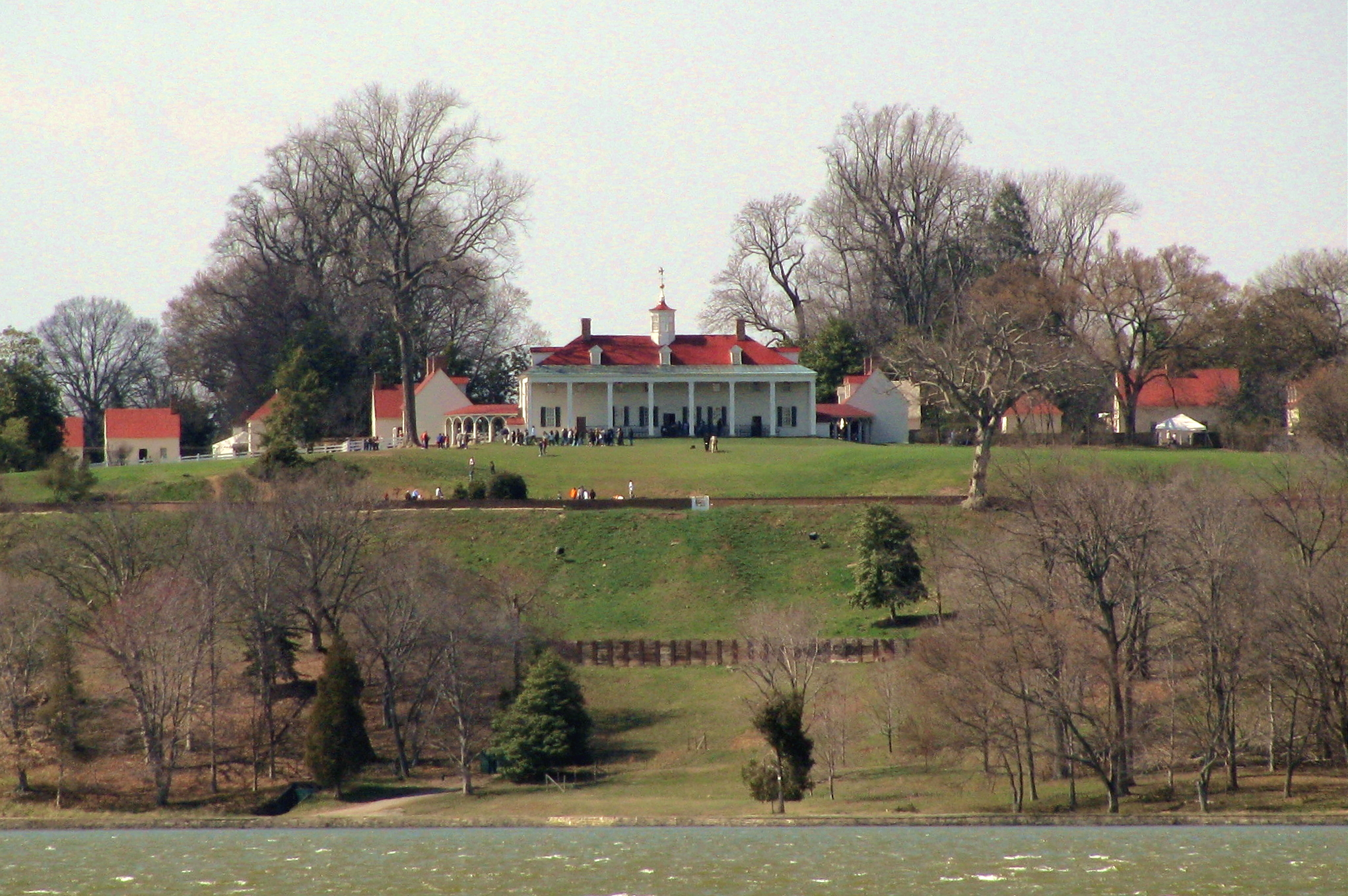
Indeed, it was while working at Washington's Mount Vernon plantation that Silence began to exhibit supernatural powers. Once, while attempting to corral a recalcitrant horse for shoeing, she physically picked it up and carried it over to the farrier. Later, while attempting to hold the animal steady, it kicked her in the head. She suffered no ill effects from the strike that would have killed an ordinary man. She seemed, as one farmer put it, "As healthy as the land itself." Her connection to the earth was more than symbolic; she seemed to understand it on an unconscious level, and her advice regarding where to plant and where to build became well-regarded.
But farming and architecture were not the extent of her skills. She possessed a voracious appetite for learning, and while the rest of the household was asleep she would read until dawn. Language, mathematics, philosophy, history; all subjects fascinated her, and while such pursuits were regarded as "unladylike," the nature of her origin and pedigree of her father granted her more leeway than a normal woman would receive. Still, she took the time to study the womanly arts of dancing, music, sewing, cooking, and child-rearing.
When the Library of Congress was created in 1802, Silence moved to Washington D.C. to become a full-time librarian and curator there. Chronologically 15 by this point, she served under John J. Beckley, the first Librarian of Congress, as his official assistant and unofficial mascot of the library. During the day, she would work in the stacks, cataloging and shelving; her great height, taller than any man, helped immensely in this. By night, she would read voraciously. Her goal, she once said, was "to learn everything about everything."
Side Note: she was also the official "shusher" of the library. If a 7 foot tall woman with hands that could palm your skull told you to be quiet, you shut up, even if she did it politely and with a smile. That she was named Silence, and worked in a library, was amusing until the patrons actually saw her. No one was ever late with returning their books.
Silence continued in this idyllic existence until 1814, when the British Army burned Washington D.C., including the Capitol Building which housed the Library of Congress. This rampant destruction of art and learning incensed her; it was the first time she had ever been truly angered. In a spirit of righteous outrage, she drew upon untapped reserves of power...
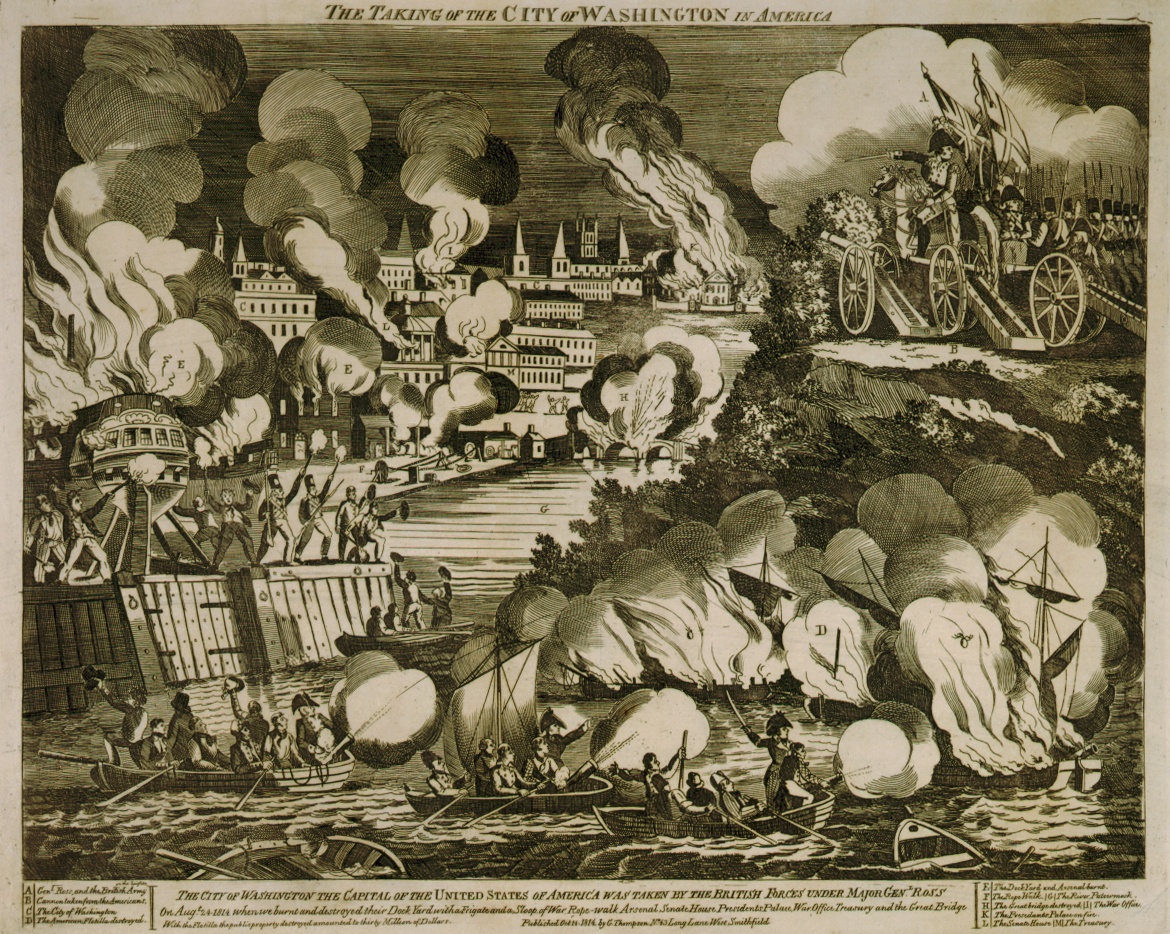
.. and saved the books. (What, you thought she would go out and fight the British when there was knowledge to be rescued?) This marks the first truly divergent point of history between Silence's world and ours: her invulnerability to fire, and growing abilities of earth control, enabled her to delay the conflagration enough that the entire Library of Congress could be saved. Once she had secured the books and other valuables in a fireproof location, Silence proceeded to direct firefighting efforts (using knowledge learned at Franklin's side) and rescuing those in harm's way. She never deliberately attacked the British army, though at least one of their number took a shot at her. She responded by striding over to him, calmly snapping his musket in two, bending her over his knee, and proceeding to humiliate him via spanking while instructing "One! Does! Not! Shoot! A! Lady!" While the official reason for the British retreat 26 hours after occupation was said to be a tornado which put out fires, tossed cannons, and forced a recall to their ships, at least some of that was due to the morale loss caused by "a resplendent giantess, garbed in American colors and immune to harm, chastising our soldiers as if naughty children disciplined by a strident schoolmarm."
In the wake of this assault, Major General Andrew Jackson was the first to Silence Do-Good as a military asset. He petitioned Congress to assign her to his command as a "historian and advisor", as the Library of Congress was in the process of being rebuilt and would not require her services as librarian for quite some time. It was during her time with Jackson that she began her study of warfare: strategy, tactics, and logistics. Her actual role in the Battle of New Orleans is unknown, for Jackson kept her behind the scenes as much as possible, but it is known that her abilities to move and shape the earth were instrumental in the transformation of Rodriguez Canal into heavily fortified earthworks which the British forces were unable to penetrate.
Side note: it is a matter of historical speculation whether or not Silence Do-Good was present during the Battle of Fort McHenry, and if so, if she was (partly or completely) the inspiration for Sir Francis Key's Star-Spangled Banner. Silence herself has remained, well, silent on this point. General consensus among historians is that, if speculation is true, she believes her presence would overshadow a patriotic victory and the deaths of those involved would be forgotten.
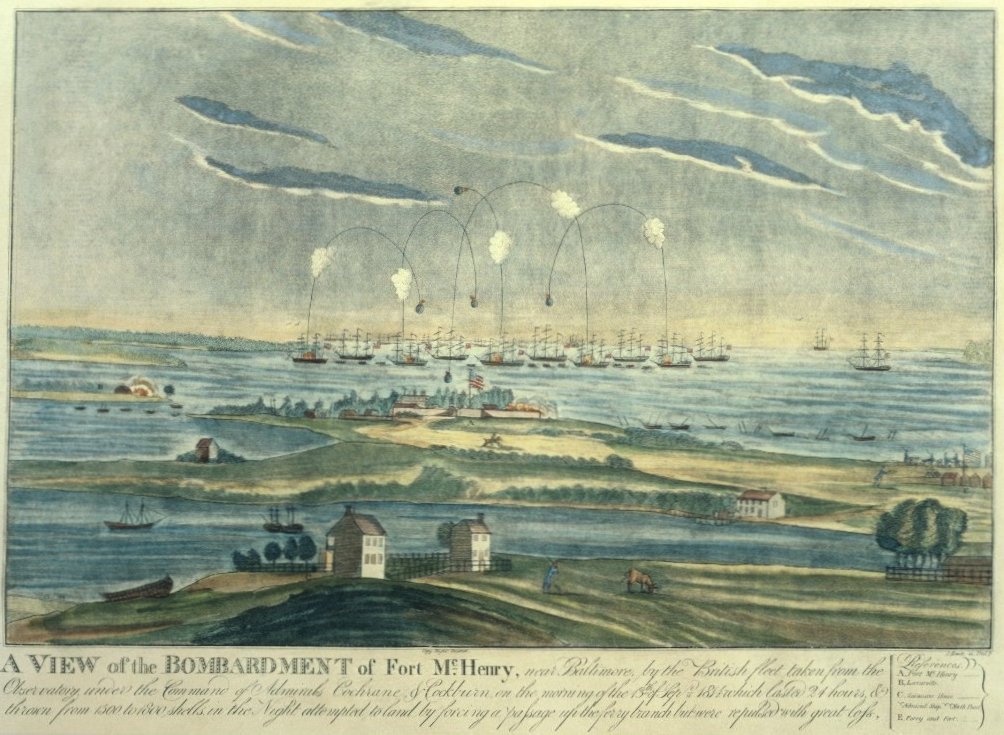
After the cessation of the war, Silence became fascinated by diplomacy (as well as war, called "diplomacy by other means" by Carl von Clausewitz) and was soon a fixture in the White House. She rarely spoke, preferring to listen and observe, but her breadth of knowledge made her an ideal advisor when her opinion was needed. She made frequent trips to both Great Britain and France as a goodwill ambassador.
Sadly, her knowledge and perspective did not help her at all during the Civil War of 1861-1865. As the embodiment of the nation, when America went to war with itself, so did Silence. For the first time in her life, she became ill, suffering the apparent effects of both consumption and madness, and was quietly packed away to a mental hospital in Bethesda, Maryland. For the duration of the war, she sat inside her room, screaming from agonies no one else could perceive and coughing up the blood of the dead.
NEXT: Reconstruction of Nation and of Mind
The character of Silence Do-Good is copyright Erin Palette 2011. All art in these sections is either public domain, or machinima from the City of Heroes MMO. I do not claim any ownership of art.
Monday, February 21, 2011
The Strange and Storied History of Silence Do-Good, part 1: Origin
Most people know that Benjamin Franklin was a brilliant philosopher, scientist, and statesman. A few know that he was a Master Mason. But hardly anyone knows that he was also a Kabbalist -- a practitioner of ancient Jewish ritualistic magic.

Franklin knew that the fledgling nation of America would need a protector if it were to survive in its bid for independence against the great British Empire. Appointed the Ambassador to France in December 1775, while in Europe he secretly visited the nation of Bohemia. There, in a clandestine meeting in the Jewish Quarter of Prague, an ancient rabbi thought to be Judah Loew gave him the final ingredient he needed to create a Golem -- the secret name of God. In return, Franklin shared with Rabbi Loew his secret for exceptional (some might say supernatural) virility, stamina, and eloquence.
After some consideration, he decided to give the golem a female appearance. The Spirit of Liberty, as exemplified by the French Revolution and immortalized by Eugène Delacroix's painting Liberty Leading the People, was a woman, and therefore the mystical symbolism was already strong. He also wanted his golem to be a diplomat and figurehead in addition to being a protector of America, and a lady of good breeding would be able to dazzle the aristocracy and turn chivalry to her political advantage. Finally, a strong woman of maternal bearing would easily rally the common folk and present a formidable image of a mother protecting her young.

He also made her 7 and a half feet tall and modeled it after his favorite French mistress, Madame Anne-Louise d'Hardancourt Brillon de Jouy, mostly because he was a lonely old man and a bit of a pervert.
It took years, but Franklin eventually created his golem, but instead of clay, he crafted it from the materials of the 13 Colonies. Her bones were New Hampshire granite; her muscles were Georgia red clay and her ligaments North Carolina tar. Mud from the Potomac and silt from the Delware formed her skin. Mink fur from New York became her long, lustrous hair; her coal-black eyes came from Pennsylvania, and her teeth were pearls from the cold waters of the Chesapeake Bay. Her tears were water from Boston Harbor, and her blood that of the dead patriots of Bunker Hill.
Her clothes were made of South Carolina cotton and dyed with native indigo (and, rumor has it, sewn by Betsy Ross herself); her gloves and boots were leather made from livestock grown in the fields of New Jersey. The circlet he used to conceal and protect the Hebrew word of life, "Emet", was made from Rhode Island silver crafted by none other than Paul Revere.
And on July 4th, 1787, during Connecticut's most fearsome summer thunderstorm, Benjamin Franklin brought his golem to life using a combination of scientific theory and Kabbalistic ritual. Discovering that she was already highly intelligent and with a voracious appetite for education, he named her Silence Do-Good after one of his more famous alter-egos and took her aboard a ship bound for the Constitutional Convention to meet the delegates.
Needless to say, the delegates were alternately shocked and amazed, thrilled and horrified. Some saw her as an abomination against God; others realized that she was a potent force for good and a powerful weapon for the fledgling democracy. Franklin argued before the others, saying, "None of us are born without sin, yet we all strive toward perfection and grace, even this creature before you. If this be sin, then it be upon my head; but how you make use of this gift is upon yours. Let not your foolish pride doom you and your country. I give you the incarnation of our country, and what you make of our nation, you make of her."
After much deliberation, it was agreed upon by the president of the Constitutional Convention, George Washington himself, that Franklin had indeed given the country a great and powerful gift, but one that needed refinement, and to that end Silence Do-Good would remain under the care of Franklin and would receive the best tutelage from the finest minds America had to offer.
She remained in academic seclusion until 1814.
NEXT: Silence Do-Good and the War Years
This work is licensed under a Creative Commons Attribution- Noncommercial- No Derivative Works 3.0 License.
Franklin knew that the fledgling nation of America would need a protector if it were to survive in its bid for independence against the great British Empire. Appointed the Ambassador to France in December 1775, while in Europe he secretly visited the nation of Bohemia. There, in a clandestine meeting in the Jewish Quarter of Prague, an ancient rabbi thought to be Judah Loew gave him the final ingredient he needed to create a Golem -- the secret name of God. In return, Franklin shared with Rabbi Loew his secret for exceptional (some might say supernatural) virility, stamina, and eloquence.
After some consideration, he decided to give the golem a female appearance. The Spirit of Liberty, as exemplified by the French Revolution and immortalized by Eugène Delacroix's painting Liberty Leading the People, was a woman, and therefore the mystical symbolism was already strong. He also wanted his golem to be a diplomat and figurehead in addition to being a protector of America, and a lady of good breeding would be able to dazzle the aristocracy and turn chivalry to her political advantage. Finally, a strong woman of maternal bearing would easily rally the common folk and present a formidable image of a mother protecting her young.
He also made her 7 and a half feet tall and modeled it after his favorite French mistress, Madame Anne-Louise d'Hardancourt Brillon de Jouy, mostly because he was a lonely old man and a bit of a pervert.
It took years, but Franklin eventually created his golem, but instead of clay, he crafted it from the materials of the 13 Colonies. Her bones were New Hampshire granite; her muscles were Georgia red clay and her ligaments North Carolina tar. Mud from the Potomac and silt from the Delware formed her skin. Mink fur from New York became her long, lustrous hair; her coal-black eyes came from Pennsylvania, and her teeth were pearls from the cold waters of the Chesapeake Bay. Her tears were water from Boston Harbor, and her blood that of the dead patriots of Bunker Hill.
Her clothes were made of South Carolina cotton and dyed with native indigo (and, rumor has it, sewn by Betsy Ross herself); her gloves and boots were leather made from livestock grown in the fields of New Jersey. The circlet he used to conceal and protect the Hebrew word of life, "Emet", was made from Rhode Island silver crafted by none other than Paul Revere.
And on July 4th, 1787, during Connecticut's most fearsome summer thunderstorm, Benjamin Franklin brought his golem to life using a combination of scientific theory and Kabbalistic ritual. Discovering that she was already highly intelligent and with a voracious appetite for education, he named her Silence Do-Good after one of his more famous alter-egos and took her aboard a ship bound for the Constitutional Convention to meet the delegates.
 |
| Silence practices a speech written by her father as she sails to the convention. |
Needless to say, the delegates were alternately shocked and amazed, thrilled and horrified. Some saw her as an abomination against God; others realized that she was a potent force for good and a powerful weapon for the fledgling democracy. Franklin argued before the others, saying, "None of us are born without sin, yet we all strive toward perfection and grace, even this creature before you. If this be sin, then it be upon my head; but how you make use of this gift is upon yours. Let not your foolish pride doom you and your country. I give you the incarnation of our country, and what you make of our nation, you make of her."
After much deliberation, it was agreed upon by the president of the Constitutional Convention, George Washington himself, that Franklin had indeed given the country a great and powerful gift, but one that needed refinement, and to that end Silence Do-Good would remain under the care of Franklin and would receive the best tutelage from the finest minds America had to offer.
She remained in academic seclusion until 1814.
NEXT: Silence Do-Good and the War Years
The character of Silence Do-Good is copyright Erin Palette 2011. All art in these sections is either public domain, or machinima from the City of Heroes MMO. I do not claim any ownership of art.
Subscribe to:
Posts (Atom)
The Fine Print
This work is licensed under a Creative Commons Attribution- Noncommercial- No Derivative Works 3.0 License.
Erin Palette is a participant in the Amazon Services LLC Associates Program, an affiliate advertising program designed to provide a means for sites to earn advertising fees by advertising and linking to amazon.com.