So, I've put up a poll, as you can no doubt see. Please, PLEASE give me your opinions; as a writer I really do live and die by feedback.
You will note that I have specifically left off an "Other" option. This is because "other" is too vague. If you have a preference which is not listed, then you'll have to leave me a comment below.
Heck, leave me a comment anyway! I love comments. Can't get enough of 'em. Tell me how great a job I'm doing, or how badly I suck, or that you want to have dirty filthy sex with me. Or all three, really. I'm not picky...

Friday, April 29, 2011

 PDF
PDF

Wednesday, April 27, 2011
WNW: Super Portal Bros.
Continuing the Portal mash-up theme from last week, today's WNW is Super Mario Bros (with a Portal Gun).
Tuesday, April 26, 2011
The Silence Saga
It's funny, really; I never intended for the story of Silence Do-Good's origin to be as long as it is. I figured I could tell her story in one post, maybe two if I got wordy, but the more I wrote the more I realized the sheer amount of history she was not only witness to, but also part of. The more I wrote, the more needed to be written. Frankly, I'm surprised I was able to stop at all.
I want to thank you for your interest in my centuries-spanning fictional biography, and for your patience in reading what felt like (to me, at least) something that would never end. Still, I did manage to finish it, which is a rare enough accomplishment for me, and I am justly proud of it.
I still worry that perhaps I made Silence a bit too Mary Sue-ish. If you agree, I can only apologize; I tried my damnedest to make her multi-faceted and interesting.
At any rate, the Silence Saga has its own page now, for ease of reading, and all entries in this blog have been made easily printable through a button at the bottom of each post. While the Saga itself is finished, I do intend to add to it, with art and addenda such as an "Official Handbook" version of Silence's powers and abilities.
I have every intention of returning to what I have begun calling "Poor Richard's Universe". Silence's tale may be told, but she has left an amazing legacy that deserves revisiting.
Thanks for reading, and don't shout in the library. ;)
PS: "El Capo" was Al Capone, which means that "Prohibitor and the Gangbusters" were Eliot Ness and his Untouchables. I'm surprised no one caught that.
I want to thank you for your interest in my centuries-spanning fictional biography, and for your patience in reading what felt like (to me, at least) something that would never end. Still, I did manage to finish it, which is a rare enough accomplishment for me, and I am justly proud of it.
I still worry that perhaps I made Silence a bit too Mary Sue-ish. If you agree, I can only apologize; I tried my damnedest to make her multi-faceted and interesting.
At any rate, the Silence Saga has its own page now, for ease of reading, and all entries in this blog have been made easily printable through a button at the bottom of each post. While the Saga itself is finished, I do intend to add to it, with art and addenda such as an "Official Handbook" version of Silence's powers and abilities.
I have every intention of returning to what I have begun calling "Poor Richard's Universe". Silence's tale may be told, but she has left an amazing legacy that deserves revisiting.
Thanks for reading, and don't shout in the library. ;)
PS: "El Capo" was Al Capone, which means that "Prohibitor and the Gangbusters" were Eliot Ness and his Untouchables. I'm surprised no one caught that.
Monday, April 25, 2011
Monday Gunday: Accesorize your Mosin
In last week's Monday Gunday, faithful reader and friend of this blog Nathan Tamayo asked:

Come to think of it, a bubblegum pink Mosin would be hilarious. Someone should get right on that.

The first accessory any Mosin owner should buy is that of a recoil pad. Put simply, this is a large rubber sleeve which slips over the buttstock and acts as a shock absorber between the rifle's metal buttplate (which was designed to crack skulls) and your shoulder. This item is essential, because not only does it make holding and firing your rifle far more comfortable, it also improves your aim. You won't wince as much as you pull the trigger, and reduced recoil allows you to get back on target at a faster rate.
These are also the cheapest accessories you can buy. I got mine at the local Wal-Mart for around thirty bucks (get the large size) but if you plan on keeping your original stock you can replace the buttplate with this nifty pad for half that price.

After that, whatever accessories you choose should be based upon what you want your rifle to do. Some people just like having a tough, heavy rifle around, in which case the recoil pad is all you need. If however you intend to sporterize it -- turn it into a precision shooter for competition or hunting -- you've got all sorts of options. So ask yourself these questions:
The first thing I did was replace the stock, because I am small and my tiny fingers couldn't comfortably reach the trigger. An aftermarket stock produced by ATI not only reduces the thickness of the handgrip, it also lowers the shooting hand to a more natural position, allowing me to keep my wrist mostly straight when I shoot.
In addition, it has lots of other nice features, such as a molded cheek swell for better aim; checkered patterns on both forestock and grip for better hold and control; integral swivel-mounts for a sling; and a built-in recoil pad. Yes, the limbsaver will slip over the mounted pad, giving you twice the recoil protection.
Shop around when looking to purchase this stock; it retails for around $70 but if you can find the right combination of discount and shipping you can get it for a lot less. It comes in both black and camouflage (camo costs about $10 more) and despite being made of glass-filled nylon it feels quite solid and comes with a lifetime guarantee.

Scopes are tricky business because of the bolt. You have two options here. The first is to pay lots of money to mount the scope in the traditional spot using a specialized scope mount, which will require drilling and tapping from a gunsmith. Then you have to replace your Mosin's straight bolt with a bent one so that it doesn't whack the scope; you have a variety of options for that, all expensive. And then, after all that expenditure, you can't use stripper clips and have to load the magazine one cartridge at a time.
Your second option, and by far my favorite, is to purchase what is known as a "scout scope". This is essentially a large pistol scope (to accommodate the very large eye relief required) with variable magnification, and you mount it by removing the rear leaf sight and screwing a Weaver rail in its place. This takes no gunsmithing at all and can be accomplished in 30 minutes. Best of all, it leaves no lasting changes to your Mosin, so you can easily return it to its natural state if necessary. I purchased mine on Amazon and got a bunch of nifty stuff along with it: weaver rail, scope rings, lens covers and cleaning kit.

Everything after this is pure preference. Here are the other things I have tricked Izzy out with:
 A buttstock shell holder and pouch. In addition to holding a full magazine's worth of bullets, the pouch is roomy enough to hold 2 additional stripper clips worth of ammo, a broken shell extractor and the funky combo tool that comes with most Mosins. It also provides some comfy padding for your cheek and will fit nicely over the ATI stock. Approximately $11 and worth every penny.
 A Universal Barrel Quad Weaver Base Mount. Not only can I put a bipod on my Mosin, but if I wanted I could mount other things, like a laser or a flashlight, to it as well. A steal at under $10.
Speaking of bipods, this is what I use. It's cheap, it's tough, and it works. The only drawback is that it might not elevate your rifle enough for your tastes.
Finally, you'll want some stripper clips, because loading bullets one at a time is slow and annoying. Just be careful not to cut your hand on what is essentially sheet metal.
While not strictly an accessory, be sure to get a user's manual for your Mosin so that you know how to properly field-strip and reassemble it. This is the one I use, but you won't suffer from a lack of options on Amazon. You can even download free PDFs here and here.
For the sake of completeness, I'll include a link to my favorite mail-order ammunition store, Ammunition To Go, where you can buy 100 rounds of military surplus ammo for $19.95 + S&H.
That about covers it. Thank you for the interesting question, Nathan, and if anyone else has any gun questions -- either about the Mosin-Nagant or anything else -- feel free to ask and I'll address them each Monday!

EDIT for those of you coming here from Oleg's blog: I am no longer using the aforementioned scope mount because it failed. I am using a much sturdier mount that has served me well for over a year now. You can find out more about it here.
This is great, is there way you could do a subsection for the individual accessory review? Good accessories can make all the difference.When it comes to accessories for your Mosin-Nagant, they inevitably fall into two categories: things which help you shoot better and things which make the gun more comfortable. Be warned, however, that there are quite a few rabid Mosin purists out there who, given the opportunity, will jump all over you for "desecrating a historic weapon." I, however, am of the school which says "Screw you, there are 17.5 million of these things, so they aren't rare. I paid my money and I can paint it pink if I damn well like."
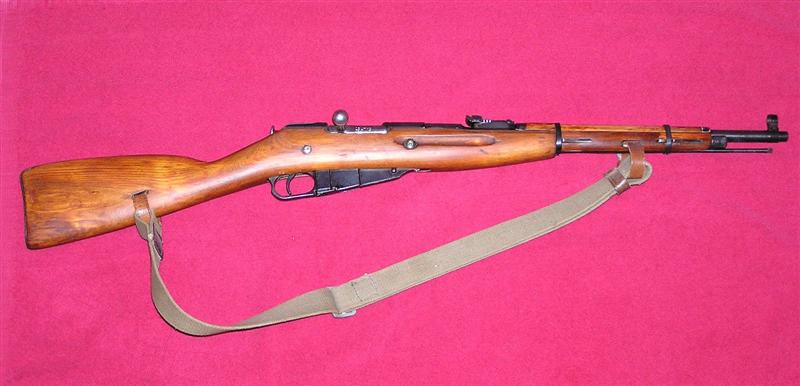
Come to think of it, a bubblegum pink Mosin would be hilarious. Someone should get right on that.

The first accessory any Mosin owner should buy is that of a recoil pad. Put simply, this is a large rubber sleeve which slips over the buttstock and acts as a shock absorber between the rifle's metal buttplate (which was designed to crack skulls) and your shoulder. This item is essential, because not only does it make holding and firing your rifle far more comfortable, it also improves your aim. You won't wince as much as you pull the trigger, and reduced recoil allows you to get back on target at a faster rate.
These are also the cheapest accessories you can buy. I got mine at the local Wal-Mart for around thirty bucks (get the large size) but if you plan on keeping your original stock you can replace the buttplate with this nifty pad for half that price.

After that, whatever accessories you choose should be based upon what you want your rifle to do. Some people just like having a tough, heavy rifle around, in which case the recoil pad is all you need. If however you intend to sporterize it -- turn it into a precision shooter for competition or hunting -- you've got all sorts of options. So ask yourself these questions:
- Do I want to reduce its ruggedness to make it lighter/more comfortable to handle?
- Do I want to use to a scope?
The first thing I did was replace the stock, because I am small and my tiny fingers couldn't comfortably reach the trigger. An aftermarket stock produced by ATI not only reduces the thickness of the handgrip, it also lowers the shooting hand to a more natural position, allowing me to keep my wrist mostly straight when I shoot.
In addition, it has lots of other nice features, such as a molded cheek swell for better aim; checkered patterns on both forestock and grip for better hold and control; integral swivel-mounts for a sling; and a built-in recoil pad. Yes, the limbsaver will slip over the mounted pad, giving you twice the recoil protection.
Shop around when looking to purchase this stock; it retails for around $70 but if you can find the right combination of discount and shipping you can get it for a lot less. It comes in both black and camouflage (camo costs about $10 more) and despite being made of glass-filled nylon it feels quite solid and comes with a lifetime guarantee.

Scopes are tricky business because of the bolt. You have two options here. The first is to pay lots of money to mount the scope in the traditional spot using a specialized scope mount, which will require drilling and tapping from a gunsmith. Then you have to replace your Mosin's straight bolt with a bent one so that it doesn't whack the scope; you have a variety of options for that, all expensive. And then, after all that expenditure, you can't use stripper clips and have to load the magazine one cartridge at a time.
Your second option, and by far my favorite, is to purchase what is known as a "scout scope". This is essentially a large pistol scope (to accommodate the very large eye relief required) with variable magnification, and you mount it by removing the rear leaf sight and screwing a Weaver rail in its place. This takes no gunsmithing at all and can be accomplished in 30 minutes. Best of all, it leaves no lasting changes to your Mosin, so you can easily return it to its natural state if necessary. I purchased mine on Amazon and got a bunch of nifty stuff along with it: weaver rail, scope rings, lens covers and cleaning kit.

Everything after this is pure preference. Here are the other things I have tricked Izzy out with:


Speaking of bipods, this is what I use. It's cheap, it's tough, and it works. The only drawback is that it might not elevate your rifle enough for your tastes.
Finally, you'll want some stripper clips, because loading bullets one at a time is slow and annoying. Just be careful not to cut your hand on what is essentially sheet metal.
While not strictly an accessory, be sure to get a user's manual for your Mosin so that you know how to properly field-strip and reassemble it. This is the one I use, but you won't suffer from a lack of options on Amazon. You can even download free PDFs here and here.
For the sake of completeness, I'll include a link to my favorite mail-order ammunition store, Ammunition To Go, where you can buy 100 rounds of military surplus ammo for $19.95 + S&H.
That about covers it. Thank you for the interesting question, Nathan, and if anyone else has any gun questions -- either about the Mosin-Nagant or anything else -- feel free to ask and I'll address them each Monday!

EDIT for those of you coming here from Oleg's blog: I am no longer using the aforementioned scope mount because it failed. I am using a much sturdier mount that has served me well for over a year now. You can find out more about it here.
Wednesday, April 20, 2011
WNW: Portal Kombat
For those of you unsure which long-awaited blockbuster game to play today -- Portal 2 or Mortal Kombat -- I offer you the following compromise:
Monday, April 18, 2011
Monday Gunday: The Black Russian
Since I seem to be going to the range every 3 weeks or so, I figure it will be worth my time to make "Monday Gunday" posts until, as is traditional for this blog, I get bored with it and stop the feature without warning.
Yesterday I took Izzy to the range. Izzy, aka The Black Russian, aka Crazy Ivan, is a Mosin-Nagant rifle that I bought shortly after my job with the 2010 Census ended. Piles of information about the Mosin-Nagant exist, so I'll hit you up with the executive summary:
So you can already see why I love this rifle: cheap, tough, and accurate. But there's just one problem with it as I discovered when I first took it shooting last year: It kicks like a goddamn mule on steroids.
We're talking serious ouch here. This is a big gun, y'all -- it's around 48 inches long, which is about, oh, FOUR FEET. And it fires a powerful round. The first time I shot Izzy was back in December, and the results were not pretty:
See that rise? I'm not sure what the technical term is, but that's partly from barrel vibration and partly from "Fucking OW my shoulder hurts." So one of the first things I did was buy an aftermarket stock for it and mount a decelerator pad on it. The Monte Carlo grip also made it easier for me to hold the rifle, which led to better overall control. And then, because I'm an accessory freak, I put a bipod and scope on it as well. Then I bedded the stock and floated the barrel, because at this point why not? I think I've spent as much on accessories for the gun as for the gun itself (which isn't as terrible as it sounds, since it was so cheap.)
Because of the coloration of the ATI, Izzy got his second name: The Black Russian.
Did I mention this was a LONG GUN? And that's not counting the bayonet it comes with (mostly because I can't get the damn thing to fit). If it did, that would be an extra foot or so of length.


So, suitably dressed up and hopefully tamed, I took the dread Black Russian out to the range. And guess what? Crazy Ivan is crazy accurate now.
This beast still has significant recoil, but now it's more like a strong shove than a sharp kick. And let me tell you, I got lots of looks when I pulled this sucker out of my case -- some were "What the hell is that?", some were "What did you do to that Mosin?" and some were "A tiny thing like you is going to shoot a huge rifle like that?"
Why yes. Yes I am. And let me tell you, after I shot a few rounds I had attained instant credibility ("range cred," if you will) and no few spectators. I think some of them came to watch me get pushed around by the recoil, but everyone appreciated my shot grouping.
So in conclusion: It's cheap, accurate, and tough as all get-out. It's easy to customize for whatever you want it to do. The bullet will destroy pretty much anything that isn't armored, and while modern commercial rounds will run you $20 for 20, you can get surplus ammo by the truckload -- I bought a hundred of them for $30, including shipping. This is a fun gun to shoot, and when you aren't shooting it you can use it to pole-vault, spear something in the next county, or hammer nails into wood.
And let me just say that the bolt makes a delightful thunk-clack when you work it.

Yesterday I took Izzy to the range. Izzy, aka The Black Russian, aka Crazy Ivan, is a Mosin-Nagant rifle that I bought shortly after my job with the 2010 Census ended. Piles of information about the Mosin-Nagant exist, so I'll hit you up with the executive summary:
 |
| Mine was made in the Izhevsk Arsenal in 1943. Hence the name "Izzy." |
- Originally developed in 1891 as a compromise between two competing rifle designs, submitted by Sergei Mosin and Léon Nagant.
- Churned out in large numbers for WW1. It was the standard Russian infantry rifle.
- Design was perfected in 1930. This is why most are called M91/30s.
- Rifle was re-issued with a scope in WW2 as a sniper weapon. This should give you an idea of its accuracy.
- It is the only rifle to have gone to war with itself, and won.
- Simo Häyhä, which is Finnish for "Badass motherfucker," killed over 500 Russians with it -- using only iron sights.
- It's chambered for 7.62x54R, which is the same round the Dragunov sniper rifle uses.
- Over a hundred years later, it is still being used in wars today. This is a testament to its accuracy, durability, and quality. The fact that the Russians churned out 17.5 million of them in WW2 alone didn't hurt, either, nor did the fact that you can buy one for as low as $75 today.
So you can already see why I love this rifle: cheap, tough, and accurate. But there's just one problem with it as I discovered when I first took it shooting last year: It kicks like a goddamn mule on steroids.
We're talking serious ouch here. This is a big gun, y'all -- it's around 48 inches long, which is about, oh, FOUR FEET. And it fires a powerful round. The first time I shot Izzy was back in December, and the results were not pretty:
 |
| Hey, at least I managed to hit the target. |
See that rise? I'm not sure what the technical term is, but that's partly from barrel vibration and partly from "Fucking OW my shoulder hurts." So one of the first things I did was buy an aftermarket stock for it and mount a decelerator pad on it. The Monte Carlo grip also made it easier for me to hold the rifle, which led to better overall control. And then, because I'm an accessory freak, I put a bipod and scope on it as well. Then I bedded the stock and floated the barrel, because at this point why not? I think I've spent as much on accessories for the gun as for the gun itself (which isn't as terrible as it sounds, since it was so cheap.)
Because of the coloration of the ATI, Izzy got his second name: The Black Russian.
 | |
| Purists can relax: I still have the original stock, undamaged. |
Did I mention this was a LONG GUN? And that's not counting the bayonet it comes with (mostly because I can't get the damn thing to fit). If it did, that would be an extra foot or so of length.


 |
| Shooter's-eye view. |
So, suitably dressed up and hopefully tamed, I took the dread Black Russian out to the range. And guess what? Crazy Ivan is crazy accurate now.
 | |
| 25 yards with scope & bipod. |
Why yes. Yes I am. And let me tell you, after I shot a few rounds I had attained instant credibility ("range cred," if you will) and no few spectators. I think some of them came to watch me get pushed around by the recoil, but everyone appreciated my shot grouping.
So in conclusion: It's cheap, accurate, and tough as all get-out. It's easy to customize for whatever you want it to do. The bullet will destroy pretty much anything that isn't armored, and while modern commercial rounds will run you $20 for 20, you can get surplus ammo by the truckload -- I bought a hundred of them for $30, including shipping. This is a fun gun to shoot, and when you aren't shooting it you can use it to pole-vault, spear something in the next county, or hammer nails into wood.
And let me just say that the bolt makes a delightful thunk-clack when you work it.
Sunday, April 17, 2011
The Strange and Storied History of Silence Do-Good, part 9: The End
In the wake of her visit to the Senate (in what Chicago Tribune reporter Max Fairfield called "The Constitutional Clobbering"), Silence avoided politics* to concentrate on what she did best: Doing Good.
*With one exception: She became the figurehead for repealing prohibition, not only because she felt it would reduce crime but also because, according to her father, "Beer is proof that God loves us and wants us to be happy." However, her duties in this vein were limited to appearing at various functions and giving interviews; at no time did she engage in any active campaigning or politicking.
Without access to the government intelligence reports which had previously made her nearly omniscient, she was forced to take a different stance when it came to fighting crime. Her ability to act as role-model and figurehead was not lost upon her, and so she concentrated her efforts upon becoming the most effective symbol of justice and integrity possible. In this endeavor she was quite successful, and her popularity rose with her recognition. When she was not fighting crime, averting disasters, or rescuing people from harm (which she could do on a near-constant basis because as a construct she had no need for food or sleep), she was promoting patriotism, civic awareness, and the importance of selfless contribution to society.
She soon became the All-American Golem Girl, and the people loved her. One could hardly go a week without seeing her face on a magazine (she was especially beloved by The Saturday Evening Post and LIFE, appearing on their covers at least once a month), hearing her interviewed on the radio, or seeing young girls emulate her. In cities across the country, she was granted ceremonial keys and honorary police officer status; elementary schools and libraries were named in her honor. She frequently appeared at military and patriotic functions (had the USO existed at the time she would surely have been involved), and her 4th of July appearances in Boston, Washington D.C., and other Revolutionary War locations were the stuff of legend.
She was equally beloved by crime-fighters, who by this time had started organizing into groups that were part civic association, part fraternal order, and part neighborhood militia. Calling themselves "Silent Partnerships," they assembled to pool their resources and aid one another in taking down organized crime. In most of these organizations, Silence Do-Good was elected to an honorary position such as Sergeant-at-Arms or Chief Librarian. In this manner she became a constant but subtle reminder to "fight the good fight".
The rest of the 1920s passed without significant historical alteration. The Great Depression still happened, albeit slightly earlier due to the economic downturn of the First World War; similarly early was the repeal of prohibition. The 1930s, however, saw a booming population of costumed characters on both sides of the law. Inspired by the actions of El Capo, many criminals adopted fantastic aliases and outlandish costumes. Not only did this grant instant recognition and help quell resistance during the commission of their vile deeds, but it also allowed them to move freely among the population in their secret identities. Some of the more popular villains of the time included:
As this tide of villainy rose, so did the number of heroes who dedicated their lives to fighting it. The decade saw a change in heroes as well, as the original World War 1 veterans retired or died in the line of duty, and others --who had not been soldiers -- took their places. Some were stage magicians who used sleight of hand and the power of suggestion; others were scientists or mechanics who exploited the fringe ideas of the day to gain an upper hand. Gentleman adventurers and death-defiers replaced grizzled veterans; science and showmanship became the order of the day.
Silence, however, did not change one whit. Stoic as ever, she stayed the course, the only change in her life being what she did in her off-time. When not fighting super-villains, she was using her knowledge of agriculture and earth-moving abilities to combat the devastation of the Dust Bowl (a super-catastrophe if ever there was one) or planting trees alongside the Civilian Conservation Corps.

When a reporter asked her which task she thought was more important, she answered "That is like asking which is more important, water or shelter, when you are in the desert. Clearly a man needs both. Do not think that because I fight crime I am just a crime-fighter. I am the defender of this nation, and will do whatever is necessary to protect its present and safeguard its future."
Unfortunately, all of this changed in 1941.
On December 7, Imperial Japan declared war on the United States by bombing Pearl Harbor. Silence, through her magical connection to American soil, instantly knew of the attack the moment the bombs began detonating, and immediately transited to ground zero of the disaster. While unable to aid the burning ships along Battleship Row -- they were in the water, after all -- she was able to do something about the bombs still falling on the naval base. Assuming her Golem Form, she began extinguishing fires, shifting rubble, and swatting bombs out of the sky with her gigantic stone hammer.
Unfortunately, the Japanese were waiting for this exact event, because lingering high overhead was a dive bomber carrying an extraordinary payload. When it was reported that the American hero had arrived, this Aichi D3A began streaking towards it target: Silence Do-Good.
It detonated as she was directing the fall of a water tower towards an out-of-control fire. The experimental weapon -- designed by Nazi science, and built by the Japanese -- was specifically designed to destroy golems. It emitted an intense, high-frequency vibration which temporarily liquefied Silence Do-Good's armored form and melted the Jewish word "Emet" which, inscribed upon her brow, animated her and gave her life.
The magic disrupted, she dissolved into her component parts. A secondary charge obliterated them. Silence Do-Good, America's first super-hero, was dead.

It was well-known at the time that Silence Do-Good's strength came from her country, and Japan felt that link could work both ways: by destroying the beloved figure, the tragedy would compound the major tactical defeat, and America would be both weakened and demoralized.
They thought wrong. Americans were heartbroken at their loss, but also angered at her murder. As one people, they rose up to avenge her death. Costumed Crusaders enlisted alongside their civilian counterparts and were placed in elite, free-roving units as super-commandos. Their battle-cry of "Silent No More!" was heard on the battlefield as often as "Remember Pearl Harbor" and "Give 'em hell, boys!"
Surprisingly, it was during the Second World War that other super-powered individuals began to emerge. It is thought that, as the magic which animated her drained away, Silence's last remaining wish -- to protect the United States -- was absorbed by the earth of Hawai'i and transmitted across American soil, imparting a portion of that magic to all who would stand up and defend their country.
The first super-hero was dead, but the era of the super-human had begun.
This work is licensed under a Creative Commons Attribution- Noncommercial- No Derivative Works 3.0 License.

*With one exception: She became the figurehead for repealing prohibition, not only because she felt it would reduce crime but also because, according to her father, "Beer is proof that God loves us and wants us to be happy." However, her duties in this vein were limited to appearing at various functions and giving interviews; at no time did she engage in any active campaigning or politicking.
Without access to the government intelligence reports which had previously made her nearly omniscient, she was forced to take a different stance when it came to fighting crime. Her ability to act as role-model and figurehead was not lost upon her, and so she concentrated her efforts upon becoming the most effective symbol of justice and integrity possible. In this endeavor she was quite successful, and her popularity rose with her recognition. When she was not fighting crime, averting disasters, or rescuing people from harm (which she could do on a near-constant basis because as a construct she had no need for food or sleep), she was promoting patriotism, civic awareness, and the importance of selfless contribution to society.
She soon became the All-American Golem Girl, and the people loved her. One could hardly go a week without seeing her face on a magazine (she was especially beloved by The Saturday Evening Post and LIFE, appearing on their covers at least once a month), hearing her interviewed on the radio, or seeing young girls emulate her. In cities across the country, she was granted ceremonial keys and honorary police officer status; elementary schools and libraries were named in her honor. She frequently appeared at military and patriotic functions (had the USO existed at the time she would surely have been involved), and her 4th of July appearances in Boston, Washington D.C., and other Revolutionary War locations were the stuff of legend.
 |
In 1934 she even threw out the first pitch of the New York Giants' home opener. Needless to say, it made it across the plate. |
She was equally beloved by crime-fighters, who by this time had started organizing into groups that were part civic association, part fraternal order, and part neighborhood militia. Calling themselves "Silent Partnerships," they assembled to pool their resources and aid one another in taking down organized crime. In most of these organizations, Silence Do-Good was elected to an honorary position such as Sergeant-at-Arms or Chief Librarian. In this manner she became a constant but subtle reminder to "fight the good fight".
The rest of the 1920s passed without significant historical alteration. The Great Depression still happened, albeit slightly earlier due to the economic downturn of the First World War; similarly early was the repeal of prohibition. The 1930s, however, saw a booming population of costumed characters on both sides of the law. Inspired by the actions of El Capo, many criminals adopted fantastic aliases and outlandish costumes. Not only did this grant instant recognition and help quell resistance during the commission of their vile deeds, but it also allowed them to move freely among the population in their secret identities. Some of the more popular villains of the time included:
- The Jackrabbit
- Creepy
- Pretty Boy Blue
- Baby Faced Killer
- Machine Gunner (the Thompson SMG he carried was taken from the dead body of the youngest Callaghan brother, aka Pvt Quiet of the Quiet Men)
- Cache & Carrie
- The Owl
- Oklahoma Jack
- Blonde Tigress
- The Baron
- Mad Dog
As this tide of villainy rose, so did the number of heroes who dedicated their lives to fighting it. The decade saw a change in heroes as well, as the original World War 1 veterans retired or died in the line of duty, and others --who had not been soldiers -- took their places. Some were stage magicians who used sleight of hand and the power of suggestion; others were scientists or mechanics who exploited the fringe ideas of the day to gain an upper hand. Gentleman adventurers and death-defiers replaced grizzled veterans; science and showmanship became the order of the day.
Silence, however, did not change one whit. Stoic as ever, she stayed the course, the only change in her life being what she did in her off-time. When not fighting super-villains, she was using her knowledge of agriculture and earth-moving abilities to combat the devastation of the Dust Bowl (a super-catastrophe if ever there was one) or planting trees alongside the Civilian Conservation Corps.

When a reporter asked her which task she thought was more important, she answered "That is like asking which is more important, water or shelter, when you are in the desert. Clearly a man needs both. Do not think that because I fight crime I am just a crime-fighter. I am the defender of this nation, and will do whatever is necessary to protect its present and safeguard its future."
Unfortunately, all of this changed in 1941.
On December 7, Imperial Japan declared war on the United States by bombing Pearl Harbor. Silence, through her magical connection to American soil, instantly knew of the attack the moment the bombs began detonating, and immediately transited to ground zero of the disaster. While unable to aid the burning ships along Battleship Row -- they were in the water, after all -- she was able to do something about the bombs still falling on the naval base. Assuming her Golem Form, she began extinguishing fires, shifting rubble, and swatting bombs out of the sky with her gigantic stone hammer.
Unfortunately, the Japanese were waiting for this exact event, because lingering high overhead was a dive bomber carrying an extraordinary payload. When it was reported that the American hero had arrived, this Aichi D3A began streaking towards it target: Silence Do-Good.
It detonated as she was directing the fall of a water tower towards an out-of-control fire. The experimental weapon -- designed by Nazi science, and built by the Japanese -- was specifically designed to destroy golems. It emitted an intense, high-frequency vibration which temporarily liquefied Silence Do-Good's armored form and melted the Jewish word "Emet" which, inscribed upon her brow, animated her and gave her life.
The magic disrupted, she dissolved into her component parts. A secondary charge obliterated them. Silence Do-Good, America's first super-hero, was dead.
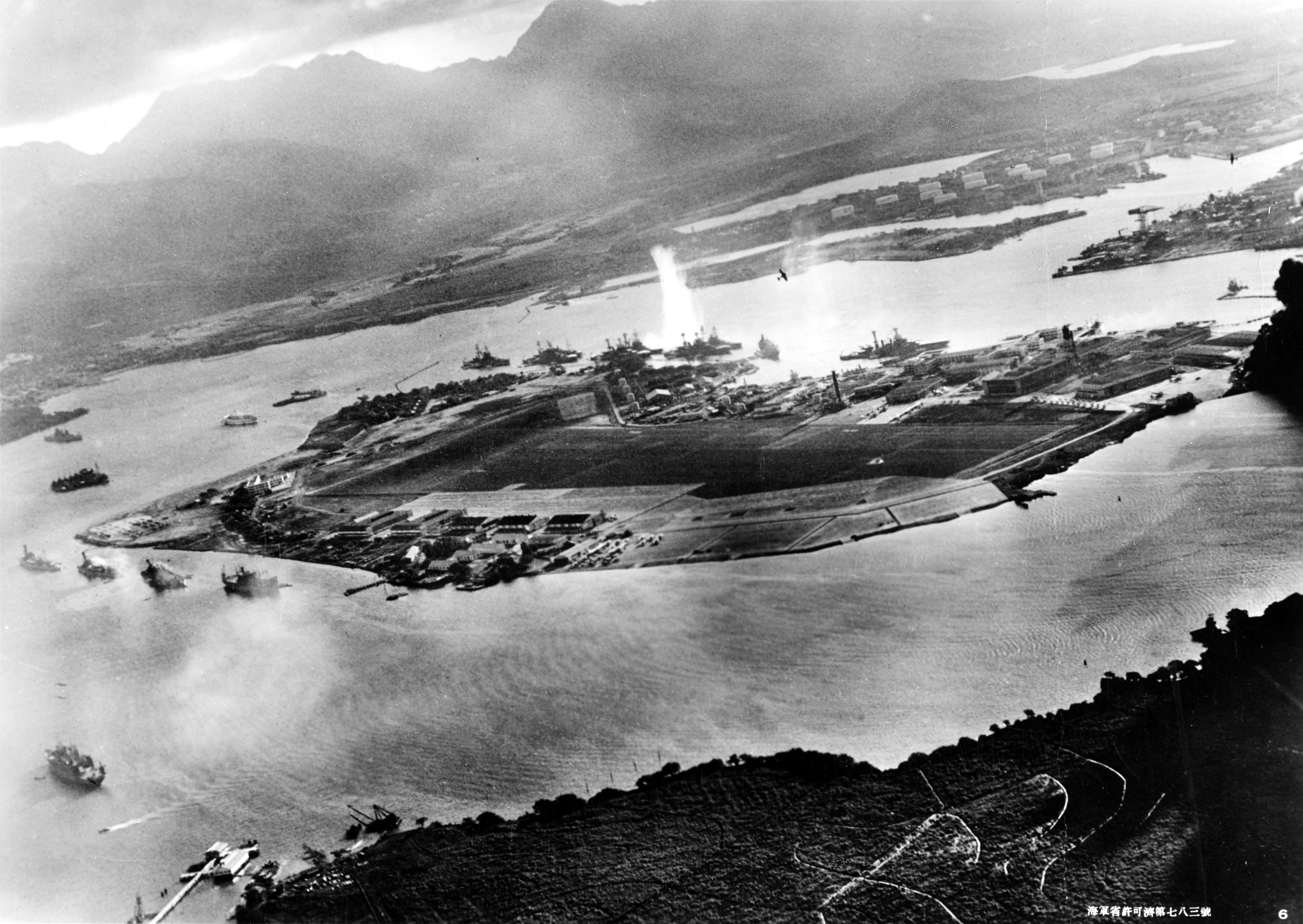
It was well-known at the time that Silence Do-Good's strength came from her country, and Japan felt that link could work both ways: by destroying the beloved figure, the tragedy would compound the major tactical defeat, and America would be both weakened and demoralized.
They thought wrong. Americans were heartbroken at their loss, but also angered at her murder. As one people, they rose up to avenge her death. Costumed Crusaders enlisted alongside their civilian counterparts and were placed in elite, free-roving units as super-commandos. Their battle-cry of "Silent No More!" was heard on the battlefield as often as "Remember Pearl Harbor" and "Give 'em hell, boys!"
Surprisingly, it was during the Second World War that other super-powered individuals began to emerge. It is thought that, as the magic which animated her drained away, Silence's last remaining wish -- to protect the United States -- was absorbed by the earth of Hawai'i and transmitted across American soil, imparting a portion of that magic to all who would stand up and defend their country.
The first super-hero was dead, but the era of the super-human had begun.
The character of Silence Do-Good is copyright Erin Palette 2011. All art in these sections is either public domain, or machinima from the City of Heroes MMO. I do not claim any ownership of art.
Subscribe to:
Posts (Atom)
The Fine Print
This work is licensed under a Creative Commons Attribution- Noncommercial- No Derivative Works 3.0 License.
Erin Palette is a participant in the Amazon Services LLC Associates Program, an affiliate advertising program designed to provide a means for sites to earn advertising fees by advertising and linking to amazon.com.