Wednesday, August 13, 2014

[AFHOTWTTGS] Agents of Chaos

I haven't forgotten about the system review. It's coming, I swear. I'm just a bit busy this week, and my freelance work eats away at the same set of mental resources that are involved in learning/running/reviewing an RPG. In the meantime, have some sketchy ideas for villains.

Scribbling up ideas for an adventure in a location which affords at least two historical moments to faff around with - maybe three if we count the original entombment of the Silurians - has me thinking about time-travelling meta-villains, the guiding hand between three separate adventures in the same location; one for each system, almost.

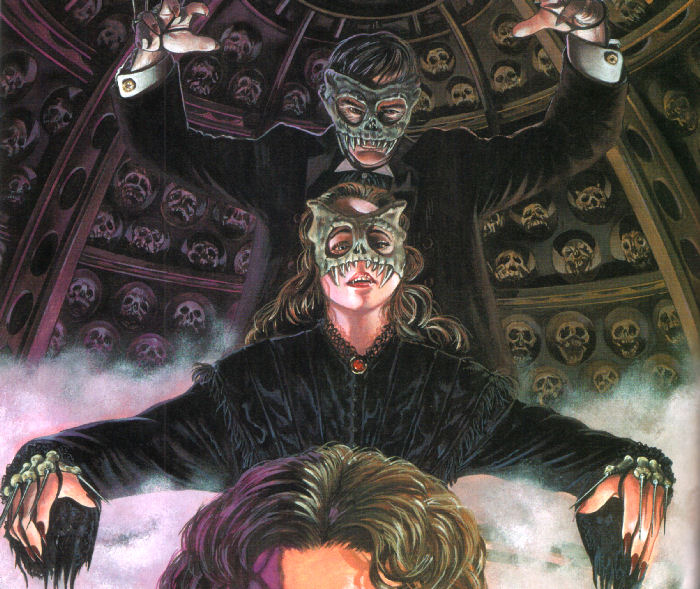
'Time travelling meta-villains', of course, gets me thinking about Faction Paradox. Who are Faction Paradox? I couldn't possibly comment on that, but if you want an immediate visual idea of what's going on with Faction Paradox, you could do worse than this:


Schemes layer upon schemes, strings tangle with strings. What is seen is seldom what is meant. There's an air of the macabre and theatrical about the whole business, and a distinct sense of the convoluted, and an investment in the history of a planet that will one day become their refuge.

Of particular interest, perhaps, is the idea of the eighteenth century; beginning with the end of the Restoration (a setting of history back on its proper track, perhaps) and the Enlightenment, and concluding with Revolutions (American, of course, and later French).

The French Revolution presents us with an archetype who easily slides into the Faction's conceptual armoury - I give you Madame Guillotine, ladies and gentlemen.

Image by Zoe Lacchei and used utterly without permission.
The flamboyant, elaborate costume needs but a demure little skull mask (opera-derived, anyone?) and she's ready to go; a charming murderess with the hint of a French accent. I'm not sure about the squirrel yet. It's probably a spy. Squirrels are beyond suspicion.

The other idea I've had knocking around for a Who antagonist, for the longest time, has been... well, again, you'll see.


The Plague Doctor; the mask is worn to prevent the ingestion of contaminated air, and the role is to intercede in outbreaks of the most fatal diseases. I see this one as a grand vizier figure; a power behind a throne, a necessary evil, a sort of Rasputin character. The presence of the Plague Doctor seems to grant unnaturally long life and great vitality, and his counsel verges on the omniscient.

Of course, neither of them fits remotely in the Middle Ages. Perhaps that's the point; wilful anachronism. Research continues, as does the process of statting this stuff up; it's useless unless it's rendered gameable, after all.

Tuesday, August 12, 2014

Two-Part Traveller Tuesday: Un-kinking the Kinunir

And here is Part 2.


This is not whining. This is complaining.

Before I begin, I'm going to pre-segue into a mild rant about energy weapons in Mongoose Traveller. You see, in the core book, we get this chart:


Okay, that's all good and fine. Then High Guard, Traders and Gunboats, and Fighting Ships come out, all with ships of various sizes, and many of them (typically warships) sporting triple turrets of particle beams.

Then errata for High Guard comes out, and one erratum in particular says:


Why yes, Mongoose, I'm immediately going to correct all of the ships in all of the books put out since you forgot to implement this rule in HG. (Not.)

So in my Traveller universe, I ignore this ruling. Not only is it easier for me, but I also have a good rationale for it.  You see, on exactly the same page in the core rules as the Turret Weapons table, we also have this:


Kindly note how the triple turret is Tech Level 9 whereas a Particle Beam, above, is TL 8. And THAT glaring inconsistency hasn't been errata'd either*, so I feel completely justified in saying that my TL 15 Imperium has figured a way to cram three particle accelerators into a turret, thank you very much.

I bring this up mainly so that when I show you my ship designs, you won't say "Did you forget that you can only have one PA per turret?"  My answer is that I didn't forget; I have instead quite plainly chosen to ignore it.


The Kinunir

With that out of way, I'm going to show you how I fixed the Mongoose version of the Colonial Cruiser.
I fixed it up because 1) I expected it would feature heavily in a recent adventure of mine -- alas, it did not -- and 2) the stats are not only full of errors (such as having quadruple upgrades where rules-as-written only allow for triple) but are also poorly designed.

Therefore, here is my version of the Colonial Cruiser, where I merged Mongoose rules with what I felt the Classic Traveller version intended.

I expect there will be some disagreement about these stats among purists, so here is my reasoning for the changes:
  • Tech Level 15 seemed a bit odd, but the cruiser is a new design, and both Classic and Mongoose decree that it's TL 15. 
  • Numbers of crew and marines aboard are taken from Classic Adventure 1. 
  • This ship, by dint of having impressive weapons and a marine platoon (one squad of which is Orbital Assault), is pretty obviously designed for both space combat and light planetary invasion. Therefore I gave it both Reflec coating and Radiation Shielding, because why not add "free" armor?  It doesn't cost tonnage, just money, and when did the military ever give a fig about spending too much?
  • Added a Nuclear Damper for similar reasons. 
  • Also, I can't understand why ANY ship isn't self-sealing to help prevent explosive decompression. 
  • Jump 4 for a ship that's basically designed to kill pirates and invade breakaway backwaters seems excessive. Reducing jump rating to 3 frees up quite a lot of space, and puts it in the same jump range as the Type T Patrol Cruiser, with which it normally operates as a flotilla.** 
  • This allows me to up the Thrust to 5 Gs. We now have quite a respectable anti-piracy, anti-insurgency ship. 
  • Weapon upgrades -- okay, these are probably overkill, and the ship would do fine with just regular weapons. But hey, Mongoose started it, and I figured I could do better. "Accurate" or "Variable Range" make more sense to me than "Resilient", as the ship should be actively trying NOT to get hit. Being able to engage at greater range or with greater accuracy increases ship survivability without sacrificing combat effectiveness. 
  • I broke down the staterooms by rank mostly so that it made sense to me.  Note that there are no spare staterooms; I figure a ship like this is going to be pretty cramped and can't afford to have rooms standing empty.  If a notable passenger needs a room, they can double up with one of the officers. Non-notable passengers can just curl up on the barracks floor.
  • Added things like a medbay, briefing room, repair shops etc because it just plain makes sense. 
  • Emergency low berths added for those medical cases who can't be fixed by the ship's sawbones. 
  • Orbital drop capsules added to comply with classic version. 
  • Added an air/raft, because the Marine commander probably wants to travel on his own without depriving the armor squad of its G-Carrier. 
  • I replaced the fairly useless Pinnace with the MUCH more useful and versatile Raptor OSV from Noah Ternullo's excellent Apparition Class Starship, Multirole Deep Intruder. (Stats not included because you really ought to buy his PDF!) It performs the same functions as the pinnace regarding shuttle duties, orbital insertion and boarding hostile vessels, but it's also armored and can provide fire support for marines. The only thing that's lost in this manner is cargo hauling capacity, and since the Kinunir itself is streamlined and can make landfall, I don't think this is an issue.
  • Oh, hey, escape pods!  That's a good idea for a warship.  No, there aren't enough for everyone aboard, but between the pods, the Raptor, and the orbital assault capsules, I'm confident that everyone alive can make it off the ship.  

So, there you go. That's how I'd turn the Kinunir from a joke to a credible pocket warship. 


Art by the always-excellent Ian Stead. 


* Obviously, the answer is that at TL 8 the only way one can mount a particle beam on a ship is by using a barbette, but could they be arsed to mention that?  Nope.

** I thought I had read that somewhere but now I can't find the source. Still, it makes sense to me:  a flotilla of 3-5 400 dton Patrol Ships being headed by a Kinunir makes for a dandy pocket fleet.

Two-Part Traveller Tuesday: More on Missiles

Since I didn't write anything yesterday, I give you two entries today. Both are for Traveller, as it's what has been occupying my mind lately. Part 2 will show up later tonight.


So, back to missiles.  Last year I fixed the issue with thrust and time to target (link to handy spreadsheet here), and now I find myself thinking about their potential additive properties.

Allow me to explain.  In the core book of Mongoose Traveller, we are given three types of missiles for starships:
  • Basic. TL 6, does 1d6 damage, costs 15,000 for 12. 
  • Smart. TL 7, does 1d6 damage, costs 30,000 for 12. 
  • Nuclear. TL 6, does 2d6 + crew hit damage, costs 45,000 for 12. 
My question is, quite simply, Why can't a nuclear missile also be smart?  We've already established that if you can built a smart missile you can build a nuke, and we can clearly see that the price difference for smart-izing a missile is 15,000.  So why not make Smart Nukes that are TL 7, do 2g6 damage, and cost 60,000 for 12?  It only makes sense. 

And that line of thinking naturally led me to consider all the other missiles from High Guard et al (again, found at the spreadsheet link) and wonder "What's keeping me from making a smart, long-range, multi-warhead nuke?"

The answer, naturally, is "Not much."  So here are some quick and dirty rules for getting the most out of missiles in Traveller, assuming you don't mind spending gobs of money on one-use items. 

1)  We start with the assumption that all missiles are Basic (Tl 7, 1d6 damage, 15,000) and build from there. 

2)  We add whatever improvements we want. All additions and subtractions are cumulative. 
  • Making a missile Smart costs 15,000 and doesn't affect payload, range, or endurance. Requires TL 8 and may only be shot from a TL 8+ launcher. 
  • Making a missile Nuclear costs 30,000, adds 1d6 + crew hit to damage. Endurance and thrust unaffected.
  • Making a missile Long Range costs 10,000, subtracts 1 from all damage rolled, and missile now uses thrust and endurance of baseline long range missiles. 
  • Making a missile Multi-warhead costs 25,000, adds "x 1d6" to all damage to represent multiple warhead strikes. It uses thrust and endurance of baseline multi-warhead missiles (unless this is improved with the Long Range addition). 
  • Making a missile Decoy costs 20,000, subtracts 1 from damage, and uses thrust and endurance per baseline decoy missiles. Requires TL 9. 
So if I really wanted to, and had enough money (like the military), I could indeed have a TL 8 Long Range, Multi-Warhead, Smart Decoy Nuke that moves at thrust 5 for 7 turns, has a -2 to be shot down by point defense, and does (2d6-2 + crew hit) x 1d6 damage, and costs a whopping 115,000 per group of 12. 

3) Now let's look at some of the specialty missiles and how they could be upgraded. 
  • Fragmentation missiles may utilize all upgrades, although some of them (such as decoy and nuclear) may be of questionable benefit, while others are pure overkill.
  • Jumpbreaker missiles may be made smart, long range, and decoy, but do not benefit from further upgrades as this missile isn't intended to cause damage in the first place. 
  • Shockwave missiles, because they attack sand clouds, only benefit from being smart, long range, and decoy. 

With me so far?  Okay, now it's time to get mean. Look at the rules for Advanced Technology in High Guard and notice how weapons systems can have benefits like "accurate" or "high yield". 

On the one hand, it seems patently silly that by upgrading the missile launcher one is able to make the missiles go further or do more damage, especially when we already have long range missiles that can be loaded into any launcher of any tech level. (I'm okay with "accurate" as I assume that the launcher is painting the target with a laser or otherwise using advanced avionics to steer the missile to the target.)

However... there's nothing to stop one from upgrading the missiles directly, is there? Well, other than money, of course. 
  • Both missiles and their launchers may be upgraded to Accurate. I imagine the to-hit modifiers would be cumulative. 
  • Easy to Repair  is just silly and should not be allowed. 
  • Both High Yield and Very High Yield* are possible. Yes, you can have VHY nukes. Be afraid.
  • Long Range  and Variable Range both make no sense as I don't see how a launcher could make a missile go further. Besides, we already have a missile add-on for just that thing. 
  • Resilient seems silly until you realize that it creates a missile that must be hit twice before point defense kills it. Combine this with my evil idea from last week and you've got one hell of a party. (Special thanks to one my players for thinking this up.)
I believe that these rules nicely highlight the difference between civilian-grade (what the market can bear) and military-grade (goverments can throw tons of money at something and not blink) weapons systems.

Want a Resilient, High Yield, Long Range, Multi-Warhead, Smart Decoy Nuke?  Sure thing, just fork over 230,000 per dozen. Be sure to listen for that cash register "ka-ching" sound every time you shoot one!

* I can't think of a reason why Sandcaster barrels can't be made High Yield or VHY either. Make the launcher Accurate and you have a very potent, if very expensive, anti-laser system. 

Friday, August 8, 2014

SHTFriday: Potassium Permanganate

I finish up Blue Collar Prepping's first ever theme week (water purification) with a discussion about one of the many uses of Potassium Permanganate.  Seriously guys, this is like the Swiss Army Knife of chemicals.


Actually, just read the entire week, especially if you live in Ohio or Michigan. Or Utah, for that matter.

Thursday, August 7, 2014

Salem Watches A Movie: Guardians of the AAAHH IIIIEEE AHHH HOOKED ON A FEELING

I'm high on believing. That I'm in love with this film.

Now that I've gotten that out of the way...

     So the last few times I've watched a movie for Erin's blog, it hasn't turned out well. I was rendered nearly unintelligible by World War Z, and simply confused by Age of Extinction. I'm happy to report that, this time around, I can not only recommend, but heartily urge anyone who hasn't seen Guardians of the Galaxy to go see it. I'll try to avoid spoilers. I've only lightly skimmed the comics myself, so I'm not overly familiar with the characters. I know who they are, but I don't know how accurately they are portrayed. I can say, however, that they stand on their own without prior knowledge of the team. I described this film as Han Solo guest-starring in the greatest episode of Farscape ever, and I stand by that description.

     The tone of this film is set from the very first moments where the main protagonist, Chris Pratt's “Star Lord” (aka Peter Quill) clomps menacingly onto the screen only to press play on an ancient Walkman, pop his mask, and proceed to lipsync and, in glorious fashion, shuck and jive his way through the ruins of an ancient city to the tune of Redbone's “Come And Get Your Love,” punctuated by moments of catching alien rats and using them as cod-microphones. This movie steadfastly refuses to take itself too seriously, and it benefits greatly from it. It's not technically a comedy, and it's not technically a space opera, but it's got enough of both to succeed as either simultaneously.

     On paper, this really shouldn't have worked, either. I mean, yes, it's a Marvel film. It had budget behind it and momentum from Marvel's previous films, but on paper? It's a smaller, niche group of characters with less exposure. Iron Man? Lot of people know him. Captain America? His death in the comics hit mainstream news. Guardians of the Galaxy? Totally niche, and to the rest of the public evokes such cinematic disasters as "Masters of the Universe" or "Prisoners of the Lost Universe." It's directed by a guy that used to make films for Troma Films. TROMA. Toxic Avengers. The team has a wrestler, two CGI characters, and a TV comedy actor. Zoe Saldana is the only one with major mainstream success in the main cast. But it all falls together. It all works.

     This is a team of distinct protagonists with great chemistry between each character. Dave Bautista's performance was probably the weakest, and he was still a great character. Vin Diesel managed to take a CGI character with one (repeated) line and give it so much depth that it made cry a little at one point. Chris Pratt was the perfect balance of absurdity and competency. Zoe Saldana's Gamora was menacing, dangerous, and a little bit vulnerable. And Bradley Cooper's (cast for his voice, known for his face) Rocket stole every scene he was in. Even the bit players, like the Nova Corp or Space-Merle (Michael Rooker's portrayal of Yondu) were memorable.

     The villains were a little on the weak side. Thanos, the big bad teased at the end of Avengers, was very sinister and threatening, but Ronan and Nebula could have been handled better. By the end of the film, I'm still not sure (besides possible religious zealot) what Ronan's motivations are. Nebula was excellent (angry shouty stabby Scottish cyborg) and came across as a very competent baddie, but I just kept wanting to see more of her than Ronan, especially the scenes where she and Gamora interact. There's chemistry between these two that I can only hope we'll see in later installments. The menace was there from the baddies in the film, but they could have had more impact.

     Early on in the Marvel Cinematic Universe, I kept thinking things like “How can they make an Iron Man movie?” “How can they make a Thor movie?” “These characters aren't big enough to headline their own films.” But this one? This could be Marvel's Star Wars. Guardians of the Galaxy and its success (92% fresh rating on RT, $94 million opening weekend) has proven, at least in my mind, that Marvel can make films out of any of its properties.

    Or even resurrect a previously shamed one. Stay after the credits, folks.

Wednesday, August 6, 2014

[AFHOTWTTGS] The Terror of Llanberis

For those not in the know, I've recently spent ten days on holiday, in the mist-wreathed mountainous wilderland of North Wales (and it made a lovely change from the sun-baked nightmare-scape that London becomes in the summertime, too). Leaving aside the part where I got engaged to the lovely and infinitely patient Hark (although that happened, and it was terribly cute, even the part where she headbutted me in the chest four times before she could say yes), I've also spent a good week of that time living in a Doctor Who serial - probably a Pertwee-era one, all location filming and quarries and stock footage of gorgeous Welsh scenery.

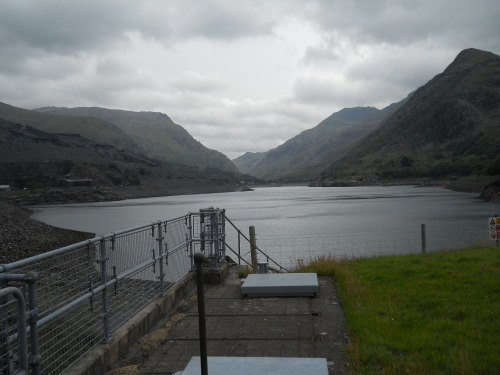
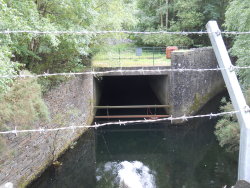
Don't believe me? Have a dekko at this lot.


At the foot of Mt. Snowdon lies an ominous-looking artificial lake at the bottom of a foreboding slate valley. At the far end, if you squint, you can just about make out a small village; I'd check the name, but Google Maps is being an arse today and I didn't write it down. I know it's not Llanberis, because that's at the end where this photo was taken.


On one side of the reservoir, for such it be, we have the First Hydro power station. Lovely place to work, surrounded by glorious scenery and with the National Slate Museum just up the road. (Tell me you can't hear any companion of the last ever uttering the words "the National Slate Museum? Sounds fascinating" in tones of low dudgeon and great sarcasm. Except Barbara or Evelyn, who would pop inside quite cheerfully for a potter around and a nice cup of tea and doubtless discover a Clue there. If I were a cruel bastard, I might put a plot hook in there just to see if any Who RPG players would take the bullet. Your Call of Cthulhu group would be on that.)


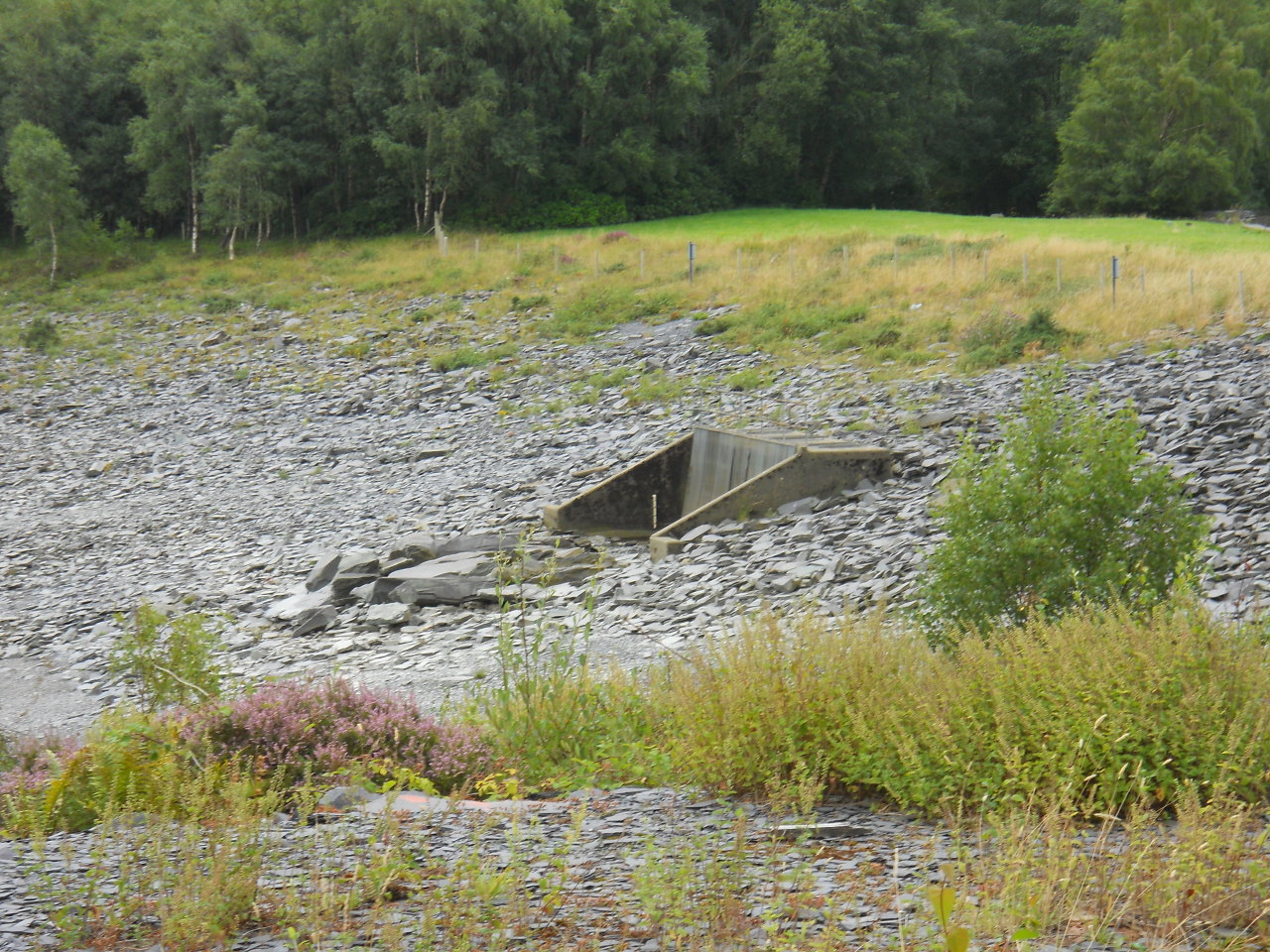
The beaches around the reservoir are honeycombed with these little outflow tunnels, some of which look like nobody's gone near them since they were dug. I wonder what might have burrowed its way into that network, or been inadvertently disturbed? Obviously, I default to Silurians, although Silurians in Wales has been done to frustrating effect by our Mr. Chibnall of contemporary Who fame. I welcome the nerd fight over which Silurians are best, given that either three-eyed heat-rayed weirdos or scaly Neve McIntosh are fine by me.


Overlooking the whole ensemble, you have Castell Dolbadarn, built by Llewelyn the Great in 1220, and final seat of the kingdom of Gwynedd before its conquest by the English (hawk, spit, up the Celtic Nations etc. etc.) Here's where you get your time travel on. Somehow, Dafydd ap Gruffydd, in the last years of Welsh independence, could well be swept up in one of those change-the-course-of-history plots; imagine if the English army had been broken by scaly wossnames from the deep, and the Welsh resistance aligned with its 'demonic' allies...

'liberated' from Dominic Self
Incidentally, the Monk is pulling my GM face. That said, I don't think this is a Monk story. It's more of a Faction Paradox plot... and if it is, I have just the agent for it. Stay tuned.


Tuesday, August 5, 2014

Ramdamalla, Petty God of Drama and Miscommunication

Special thanks to Jeff Rients, Faoladh, and Kapitan Von for help with this Pettiest of Petty Gods.


Name: Ramdamalla

Symbol: An inverted pyramid balanced on its tip,
looking simultaneously like an eruption (such a geyser or a volcano) and also like a great weight about to fall.

Alignment: Chaotic Evil


Summary
Ramdamalla is the third leg of an unofficial triumvirate of petty gods that contains Manidono and Dickanus and might, in modern times, be called "Deities of the Postmodern." Alongside the Slacker God and the Asshole God, Ramdamalla is the Drama God -- no, not the drama of theater, but the petty dramas and stupid arguments and useless conflicts that afflict everyone's lives. However, while Dickanus is sophomorically self-centered and Manido doesn't care much about anything, Ramdamalla takes a perverse glee in ruining the everyday lives of people just for laughs. 

Ramdamalla is sometimes referred to as "That Motherfucking God," as speaking its name tends to invoke its attention. It has no one preferred form; rather, it is a mass of chortling chaos that shifts forms as whim and circumstance dictate. Known avatars in the past have been a rockslide, a seething mob, a torrent of vomit, a mountain of excrement, a herd of alpaca, and a grotesque troll. 


Worshippers

"That Motherfucking God is invoked by accident and served by fools."  -- old proverb

No sane individual worships Ramdamalla; like many deities of ill-fortune, it is propitiated in the hopes that it will stay away from those who make the proper offerings. Those who do worship it (mostly its clergy, although there are always a few "champions" of Ramdamalla who terrorize cities, towns and countrysides) are unstable or disturbed in some manner; usually one of the various forms of sociopathy, although masochism is also common.

It is worth noting that Ramdamalla does not specifically endorse violence (but neither does it disapprove); it is not a god of murder or warfare. Neither is it a parallel to Eris, whose portfolio of Strife also encompasses the concepts of Chaos and "breaking down the established order." No, the only concepts important to Ramdamalla are arguments, hurt feelings, and wasted energy; feuding cliques between schoolchildren over clothing or popular culture are just as important to it as as fighting between politicians in the halls of government. To Ramdamalla, we are all just ants scurrying about after our anthill was kicked away, and it finds our frantic attempts to repair our lives to be humorous antics.

There are no grand temples to Ramdamalla; even among its clergy, there is too much discontent and misunderstanding to accomplish such a thing. (Centuries ago, there was a major schism over whether to call themselves "Ramdamallans" or "Ramdamallites.") Instead, shrines to the Drama God are found in caves, or basements, or other "hole in the wall" locations, usually maintained by a single priest. There may occasionally be an apprentice being trained by the priest, but inevitably there will be a falling-out between the two and one of them will leave.

There are no feast days or festivals; priests worship their deity through starting fights and enabling drama, all while declaring that they wish to be left alone. Ironically, Ramdamalla doesn't even need worship, or even followers; it gains its strength from factionalization and petty fights, with which humans provide it aplenty.

"Why would anyone be a priest of this god that ruins lives?" Look in a mirror, you fool". -- another proverb, this one attributed to Ramdamallan scripture.


Invocation and Abilities
Don't try to invoke Ramdamalla; you'll succeed, and then you'll be sorry.

There's no table to roll, no percentage chance to see if it reacts well to you. If you speak its name, it will bestow its attention on you, and it will never be a good thing. The DM is encouraged to inflict the pettiest, most soap-operatic thing that can happen to the invoker -- and his friends and/or compatriots, if possible.

Instead, Ramdamalla can be made to go away (un-invoked, if you will) by one of two methods: ignoring it, or giving it attention.  There is a 50% chance that the method chosen is the correct one; the other will only make the situation worse.

Attention: This is best accomplished through ritual sacrifice, whereby the petitioner seeks to symbolically substitute objects of value for time that would be spent dealing with the problem. Every 100 gold pieces' worth of sacrificial items (money, jewels, livestock, magical items) equals a 10% chance that Ramdamalla will be satisfied and go away. A blood sacrifice can also be performed; sacrificing a hit point (the petitioner's own, not that of other beings) also equals 10% chance of propitiation -- but this damage must heal on its own, not via magic or potions, or else the sacrifice will not be considered favorable and the trouble will come back to the petitioner, doubled in intensity. Blood and goods may be combined in a single sacrifice, if desired.

Ignoring it: There is a commonly-known gesture that is believed to shield the performer from Ramdamalla's attention. By clapping one's hands together in front of one's chest, and then pushing palms-outward in the shape of a V, the drama is believed to be redirected back to its source.  However, this gesture (known as the Niemo JemaÅ‚py in an obscure dialect) usually exacerbates the problem as the conflict is redirected onto itself.


The Author wishes to point out that this entry is not aimed at any one individual -- claps hands, "Niemo Jemałpy", etc -- but rather came to fruition because it seems like the world is going to hell and the internet, blogosphere, Facebook etc are turning on themselves and becoming whirlpools of strife and stupid arguments.

The Fine Print


This work is licensed under a Creative Commons Attribution- Noncommercial- No Derivative Works 3.0 License.

Creative Commons License


Erin Palette is a participant in the Amazon Services LLC Associates Program, an affiliate advertising program designed to provide a means for sites to earn advertising fees by advertising and linking to amazon.com.